
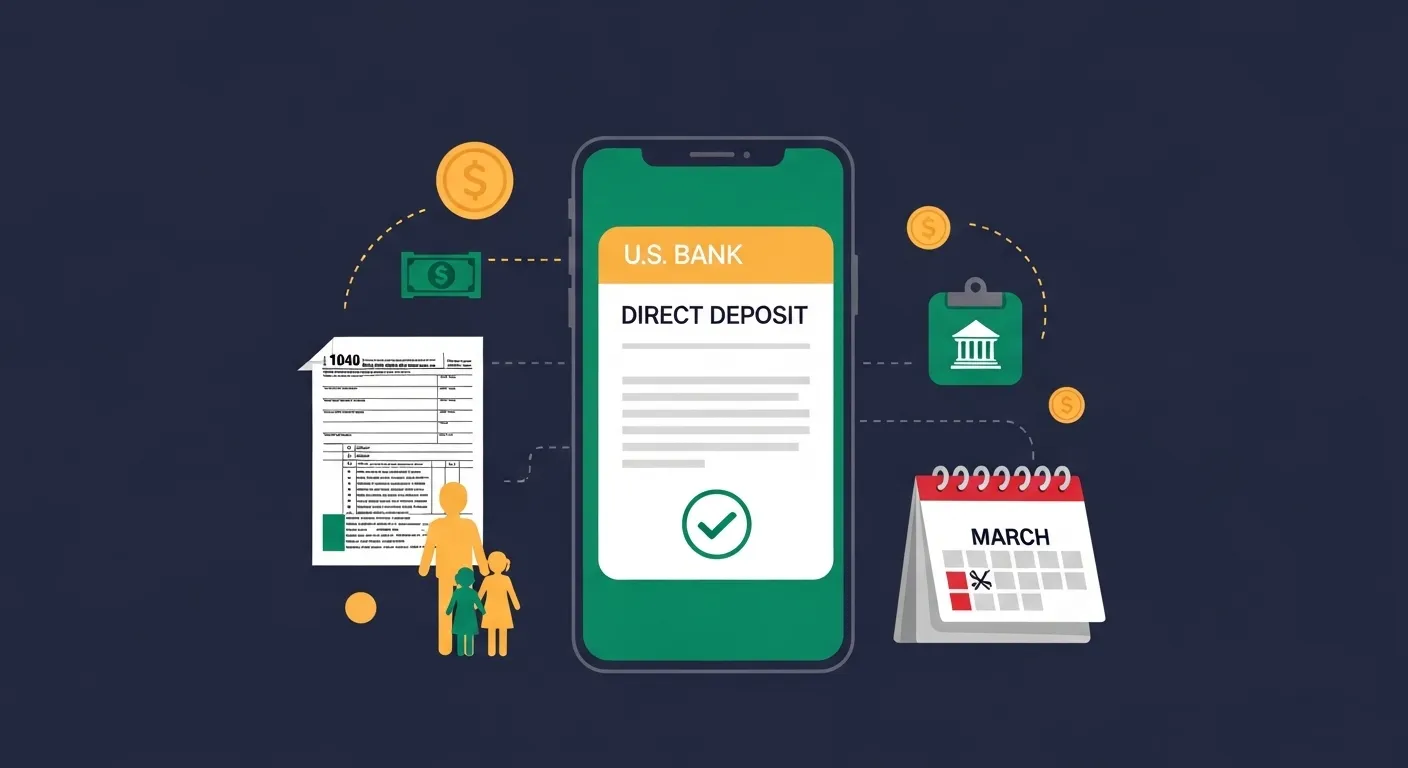

You’ve probably seen the number floating around — $4,983. Maybe on social media, maybe in a headline, maybe a friend brought it up. And now you’re wondering: is this real, and could it actually land in my bank account?
Short answer: yes, it’s real — but it’s not a check the government mails to everyone. This specific dollar amount reflects a realistic high-end tax refund that certain filers receive through a combination of refundable tax credits, particularly the Earned Income Tax Credit (EITC) and the Additional Child Tax Credit (ACTC). The exact amount depends heavily on your income, filing status, and the number of qualifying dependents you have.
The frustrating part? A lot of taxpayers who actually qualify for close to this amount walk away with far less — or nothing at all — simply because they didn’t know which boxes to check. They miss credits, file late, or get tripped up by avoidable errors that freeze their refund for weeks.
This guide cuts through the noise. We’ll show you exactly who qualifies for the $4,983 direct deposit, what you need to file correctly for the 2025 tax year (due April 2026), and how to make sure the money hits your account as fast as possible.
Who Qualifies for the $4,983 Direct Deposit Amount?
This isn’t a one-size-fits-all payment. The $4,983 figure represents what a taxpayer ends up with after applying specific refundable credits to their return. Here’s what determines whether you land near that number.
Income Thresholds That Make the Math Work
The IRS caps EITC eligibility at an Adjusted Gross Income (AGI) of roughly $59,899 for a single parent with two kids in 2025. However, the sweet spot for reaching a refund near $4,983 is usually an AGI somewhere between $20,000 and $45,000. Earn too little and the credits phase in slowly; earn too much and they phase out just as fast.
For those using IRS Free File, the AGI ceiling sits at $89,000 in 2026, meaning a wide chunk of working families qualify for free tax preparation tools that make claiming these credits much simpler.
How Your Filing Status Affects the Total
Filing as Head of Household or Married Filing Jointly gives you access to higher credit amounts than Single filers. A married couple with two children, for example, can stack a larger EITC against a substantial ACTC and realistically hit a combined refund at or near the $4,983 mark. Head of Household filers — typically single parents — are also well-positioned if their income sits in the right band and they have one or two qualifying children.
The Credit Combo That Drives This Number
The two credits doing the heavy lifting here are the EITC and the ACTC. For tax year 2025, the EITC has increased — maxing out at $7,152 for two qualifying children and $8,046 for three or more. When you factor in phase-outs and any tax owed, a family with two kids in a mid-range income bracket routinely ends up with a net refund squarely in the $4,000–$5,000 window. Layer in the ACTC — worth up to $1,700 per qualifying child in 2025 — and hitting that $4,983 target is very achievable for mid-income families.
Key Eligibility Requirements You Need to Meet in 2026
The IRS doesn’t hand out $4,983 to anyone who files a return. There’s a checklist, and every box matters.
Residency and Dependency Rules
You must be a U.S. citizen or a resident alien for the full tax year. To claim the EITC and ACTC at their higher credit levels, you need at least one qualifying child — someone under 19 (or under 24 if a full-time student) who lived with you for more than half the year and who you can claim as a dependent. The child must also have a valid Social Security number.
Social Security Work Credits in 2026
For taxpayers accessing disability or survivor-related benefits that interact with their tax filing, the 2026 Social Security credit threshold is $1,890 per earned credit, up slightly from prior years. While this doesn’t directly change EITC or ACTC math for most filers, it’s worth knowing if your household income includes any Social Security disability payments. One important note: Social Security benefits themselves don’t count as “earned income” for EITC purposes. But if you worked part-time while receiving them, those wages do qualify — meaning you may still be eligible.
You’re Filing for Tax Year 2025
This is a point that trips people up all the time. When you hear “2026 payment,” what that actually means is a refund based on your 2025 income and expenses, filed in early 2026. The tax year and the filing year are always one step apart. So when you sit down to do your taxes between January and April 2026, you’re reporting what happened in calendar year 2025.
How to Claim Your $4,983 Direct Deposit: Step-by-Step
Getting the money into your account requires more than just filing correctly. The how and when of your submission matters just as much as the what.
Step 1: E-File — It’s Practically Non-Negotiable in 2026
The IRS has been phasing out paper check refunds for years, and in 2026 that trend accelerates. If you want your refund in less than 21 days, you have to e-file. Paper returns can sit unprocessed for months due to IRS backlogs. E-filing with direct deposit is the fastest path, period. Use IRS Free File if your income qualifies, or go through a reputable tax software provider.
Step 2: Double-Check Your Routing and Account Numbers
This is where more refunds go sideways than you’d expect. One transposed digit in your routing number and your refund bounces back to the IRS. They’ll then issue a paper check, which adds weeks to the timeline. The IRS sends a CP53E Notice when a direct deposit fails — not a great letter to receive when you were counting on that money. Verify your bank’s routing number on their website before submitting, not just from memory.
Step 3: Know the PATH Act Calendar Before You Expect Anything
Here’s something many first-time EITC and ACTC claimants don’t realize until it’s too late: the IRS is legally required to hold refunds that include these credits until mid-February. This is the PATH Act at work — it gives the IRS time to verify returns and combat fraud. Even if you filed on January 26th (Opening Day), your refund won’t move before mid-February. For the 2026 season, the IRS expects most of these deposits to land by March 2, 2026. If your ‘Where’s My Refund?’ status hasn’t updated by February 21st, don’t panic — that’s the standard update window. Plan your finances accordingly.
Tracking Your $4,983 Direct Deposit Payment
Using the “Where’s My Refund?” Tool Correctly
The IRS Where’s My Refund tool at irs.gov is your best friend here, but only if you use it right. The tool updates once per day, usually overnight. There’s no point in checking it multiple times a day — it won’t reflect real-time changes. To use it, you’ll need your Social Security number, your filing status, and the exact refund amount shown on your return. The tool shows three stages: Return Received, Refund Approved, and Refund Sent.
Once it shows “Refund Sent,” give it one to five business days to actually appear in your bank account. Some banks post deposits earlier than others.
What to Do If Your Refund Appears “Frozen”
If the tool shows your refund is stuck, or you receive a CP53E Notice, pay close attention to the timeline. Under Executive Order 14247, the IRS in 2026 is now freezing refunds that lack valid direct deposit information rather than automatically issuing a paper check. You have 30 days to respond online before your refund gets stuck for six weeks or more. Don’t procrastinate. Use the IRS online identity verification portal, call the number on the notice, or respond by mail — but do it fast.
Common Myths and Scams Around the $4,983 Payment
Anywhere there’s money involved, there are people trying to take a cut of yours. Let’s clear up some dangerous misconceptions.
No, This Is Not a Stimulus Check
Social media loves to frame tax refunds as “stimulus payments” because that language gets more clicks. But calling it a stimulus is misleading. Stimulus checks were separate government distributions that didn’t depend on your filing status or income in the same way. What we’re talking about here is a tax refund — money that comes back to you because you overpaid taxes or qualified for refundable credits that exceeded your tax bill. It comes from your own financial circumstances, not from a new government program.
No One Can “Unlock” Your Refund Faster for a Fee
This scam resurfaces every tax season. A company or individual tells you they have a special relationship with the IRS and can get your refund released faster — for a fee of $50, $100, or more. They cannot. The IRS timeline is the IRS timeline. No third party can speed it up. If someone is offering to do this, they’re either going to take your money and disappear or, worse, file a fraudulent return in your name and pocket the refund themselves. Report anything like this to the IRS at irs.gov/fraudreferral.
The Bottom Line: File Early, File Right, Get Paid
If there’s a “perfect filer” profile for the $4,983 direct deposit, it looks something like this: a working parent or couple with one or two qualifying children, an AGI somewhere between $20,000 and $45,000, filing as Head of Household or Married Filing Jointly, e-filing with direct deposit as early in the season as possible.
That combination of high refundable credits plus smart filing mechanics is what gets the money moving fast. The EITC and ACTC don’t require you to jump through extraordinary hoops — they just require that you file accurately and on time.
The April 15th deadline is the absolute last resort. Filing in January or early February puts you ahead of the processing rush and gives you the most breathing room if the IRS sends any verification requests. Beat the deadline, e-file, double-check your bank info, and let the IRS do the rest.
Ready to see what you qualify for? Head to irs.gov, use the EITC Assistant to check your eligibility, and start gathering your documents today. Your $4,983 — or whatever your number turns out to be — isn’t going to claim itself.
FAQ
Is the $4,983 direct deposit guaranteed if I qualify?
Not exactly. The $4,983 represents a realistic refund amount for certain filers, but your exact number depends on your income, number of dependents, filing status, and any taxes already owed. You could end up higher or lower depending on your specific situation. Use the IRS EITC Assistant at irs.gov to get a personalized estimate before you file.
When exactly will the direct deposit arrive?
If you claim EITC or ACTC and e-file with direct deposit, expect your refund no earlier than late February and most likely in the first week of March. The IRS cannot legally release these refunds before mid-February under the PATH Act. Non-EITC/ACTC refunds can arrive within 10 to 21 days of e-filing.
What if I didn’t claim EITC in previous years — can I go back?
Yes. The IRS allows you to amend prior year returns and claim missed credits for up to three years back. If you qualified for EITC in 2022, 2023, or 2024 but didn’t claim it, you can file amended returns (Form 1040-X) and potentially receive those refunds. The deadlines for each year differ, so act soon.
