









The year 2025 saw many new blossoms in the tree of amazing discoveries, knowledge, inventions and artificial intelligence to further expand the world of technology. It is a fact that research and inventions are two important aspects of development of any country because without them development is not possible.
Experts have discovered new planets in the world of astronomy in 2025 and introduced several features of artificial intelligence. Developed a small robot to clean the arteries in the human body and many more came to the fore.
What else happened in the world of technology in the year 2025, you will get an idea of it by reading this overview report of inventions.
World’s fastest USB

Chinese researchers have developed the world’s fastest USB in 2025. It is a brilliant flash memory device capable of storing data at an extraordinary speed. At a speed of one bit per 400 picoseconds, the device sets a new standard for semiconductor storage performance.
Dubbed PoX, the memory technology significantly outperforms even the fastest computer memory types such as static random access memory and dynamic random access memory, which typically require 1 to 10 nanoseconds to store one bit of data. A picosecond is one trillionth of a second or one thousandth of a nanosecond.
Although computer memory is better, it loses data once the power is disconnected, making it unsuitable for sensitive applications. In contrast, traditional flash memories such as USB retain data without power, but modern technologies fail to meet the high-speed data access requirements, especially of artificial intelligence (AI) systems.
Bacteria Turns Plastic Into ‘Pain Color’
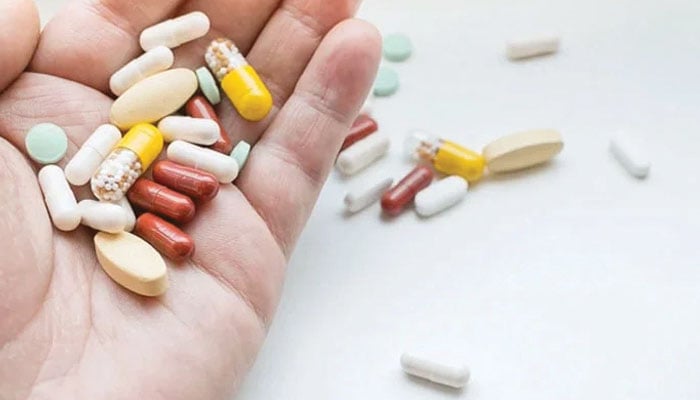
In 2025, scientists discovered that a common type of bacteria can convert plastic waste into pyr-acetate moles. This discovery will help lead to new methods of recycling. Fine particles of plastic, called microplastics, are linked to a number of health problems.
Scientists are experimenting with various methods to make plastic waste sustainable and reusable. By using microbes and inc a metabolic chemicals in various industries, existing methods of chemical production that depend on fossil fuels can be reduced.
In this study, the researchers used a variety of methods to dissolve polyethylene terephthalate (PET) plastic bottles, to create the starting molecule necessary for the leucine rearrangement chemical reaction.
This metabolic process inside cells can change the shape of PET. According to the researchers, this molecule made from plastic can be used as a starting material to make paracetamol in E. coli with 92 percent yield.
Solar panel generating electricity from artificial light
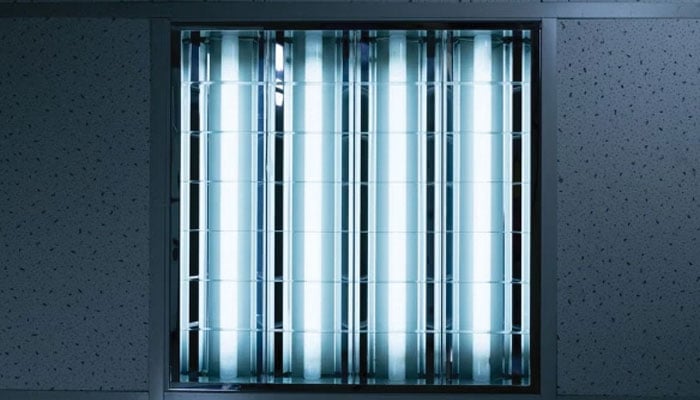
Last year, scientists invented a new type of solar panel that can generate electricity from artificial light inside a room. These new types of solar cells are made using perovskite, which is prized for its ability to convert renewable energy.
The use of this material is increasing due to its superior rate of converting sunlight into electricity compared to solar panels made of silicon. By adjusting this material, energy can also be generated from light bulbs or other artificial lights in the room.
A team from Taiwan’s National Ying Ming Chiao Tung University has solved the problem using a chemical method, making these solar cells suitable for everyday use.
This method, called bandgap adjustment, is not possible in silicon solar cells. According to the researchers, remote control and wearable devices can be charged using this technology.
Bee Mind Control Device
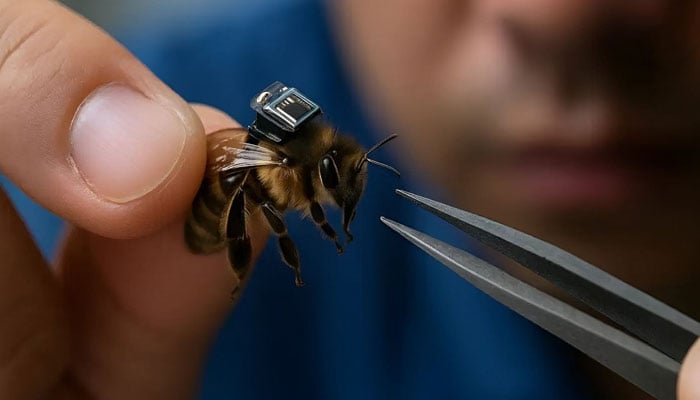
Chinese scientists have developed the lightest device to control the mind of bees in 2025. This tiny mind control device weighs only 74 mg. According to the Beijing Institute of Technology team led by Professor Zhao Jieliang, the device system connects directly to the bee’s brain.
When the device is placed on the bee’s back, three needles are inserted into the bee’s brain, after which operators can send electrical pulses into the bee’s brain and issue instructions to fly in desired directions.
A material that makes smartwatches run out of batteries
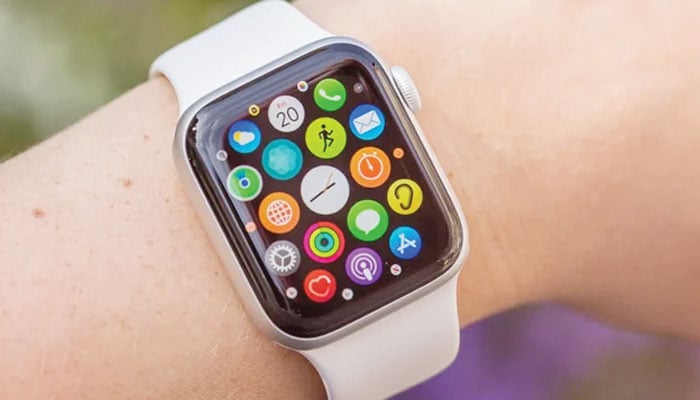
Last year, Chinese scientists created a polymer that converts the heat generated by its stretching into electricity. This development could help create smartwatches that can power themselves.
According to scientists at Peking University in China, this innovative material (which is similar to a rubber band) effectively converts its elasticity (the property in which a material springs back to its original shape after deformation) into electricity. This material works on the principle of thermoelectricity, according to which heat is converted into electricity.
Until now, all high-quality thermoelectric materials have been characterized by flexibility (the property in which a material can be bent into a different shape without breaking) rather than elasticity, experts say. Currently, wearable devices such as smartwatches require batteries or regular charging. This new material can provide continuous power to devices without charging.
A new way to charge batteries faster
MIT researchers have introduced a method to rapidly charge electric vehicles and devices in 2025. This discovery relates to the fundamental reaction of all lithium-ion batteries.
These batteries, which power everything from smartphones to electric vehicles, work by moving particles called lithium ions in and out of solid electrodes.
This process happens thousands of times over the life of the battery. The speed of this reaction determines how quickly the battery charges and how much energy it can deliver.
However, the MIT researchers observed in the study that this reaction relies on a coupled ion-electron transfer process. Thus the lithium ions effectively move across the electrode.
Atmospheric water absorbing paint
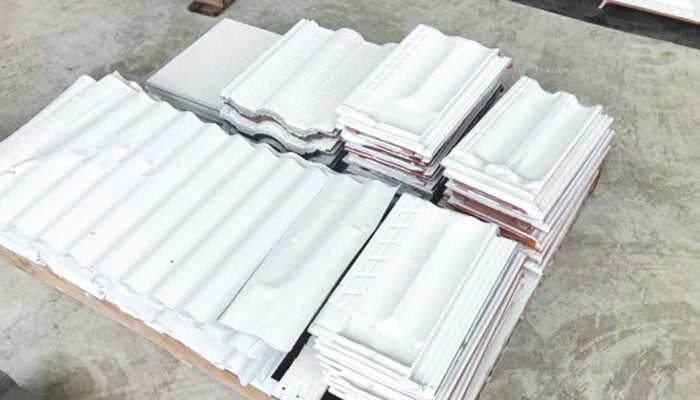
Last year, researchers at the University of Sydney developed a new type of outdoor paint that can reduce temperatures by up to 6 degrees Celsius by extracting fresh water from the atmosphere. Developed by an Australian team and company Dewpoint Innovations, the invention could help cool buildings in extreme weather as well as combat water shortages in arid regions.
According to experts, a six-month trial of the material revealed that the coating can absorb 390 ml of water per square meter per day, meaning that one person’s daily drinking needs can be met by the paint on a 12 square meter surface.
According to Professor Chiara Neto from the University of Sydney’s Nano Institute, this technology not only advances the science of cool roof coatings, but also opens the door to sustainable and low-cost sources of fresh water.
Which is an important need in view of climate change and increasing scarcity of water. Humid conditions are ideal for this, water can form through the paint even in arid and semi-arid areas.
Where humidity increases at night. It will provide water when other sources become limited. The paint works by reflecting up to 97 percent of sunlight and dissipating heat into the surrounding air.
The most tangible signs of life on another planet have been discovered
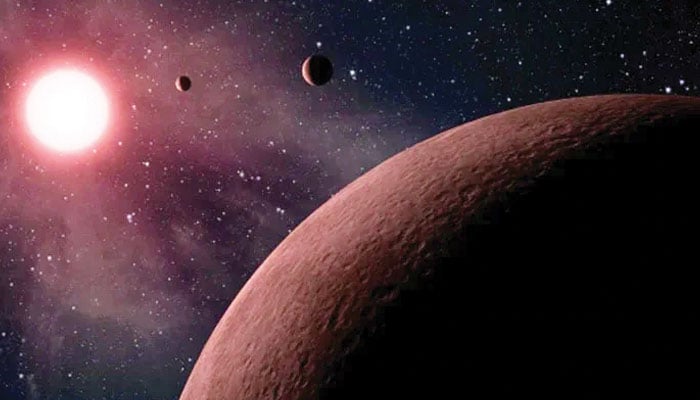
Last year, scientists discovered the largest ever evidence of life on a distant planet other than our own. According to the team of researchers, this is the strongest indication of life beyond our Earth so far.
According to experts, these signs of life are not found in our own solar system, but on a planet known as K2-18b. This planet orbits a star 120 light years away from Earth. Using the James Webb Space Telescope, researchers have detected two gases, dimethyl sulfide and dimethyl disulfide, in the atmosphere of K2-18b.
On Earth these gases are mainly produced by microbial life such as marine phytoplankton. Their discovery points to biological processes rather than true organisms and further observations are needed.
According to Nikko Madhusudhan, an astrophysicist at the University of Cambridge and lead author of the study, published in the Astrophysical Journal Letters, these are the first hints we have of an alien world that might exist.
This is a turning point in the search for life outside the solar system where we have demonstrated that with current facilities it is possible to detect biosignatures in potentially habitable planets, we have entered the observational era of astronomy.
Nanorobot for cleaning arteries in the human body
In 2025, experts at the Swiss University, ETH Zurich, have developed a micro-robot smaller than 2 mm that moves around the blood vessels and veins in the human body to clean the accumulated fat. The doctor will inject the drug into the robot to get rid of the tumor.
In this way, the human being will get rid of expensive and complicated operations. The structure of the robot is made of special steel nanoparticles, so that the doctor sitting outside can control it inside the human body with the help of a magnetic device and deliver it to the destination.
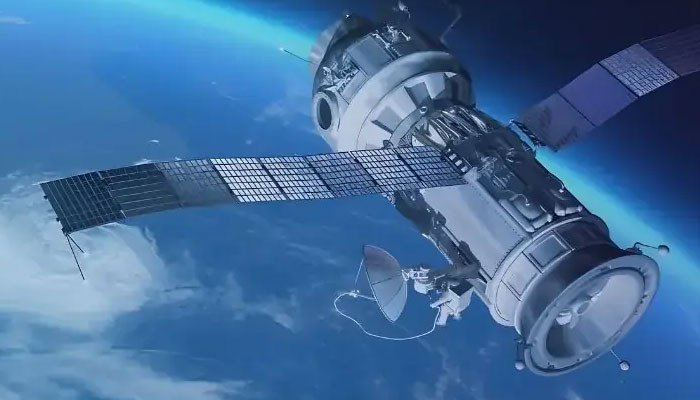
“HS. One “Pakistan’s first hyperspectral satellite
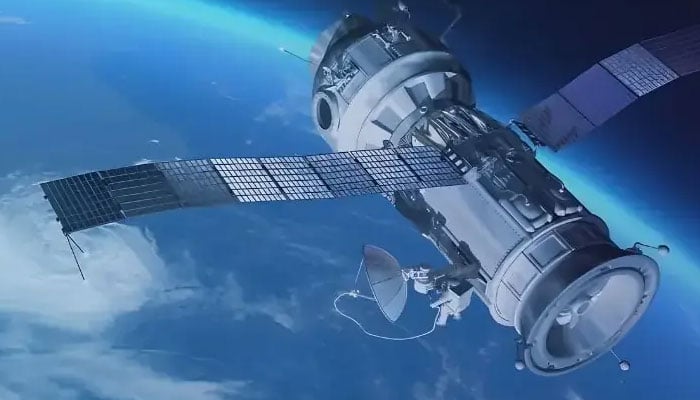
Pakistan has launched its first ‘hyperspectral satellite’ into space using a Chinese satellite station. This satellite is called “HS”. One (HS-1) has been named. According to Sparco, a Pakistani space research organization, it was successfully launched from Jiuquan Launch Center in northwest China. H.S. One satellite is equipped with advanced hyperspectral technology and can provide detailed data on agriculture, climate change and land structure.
Apart from this, it will also help in urban planning, management during natural calamities. Hyperspectral imaging satellite HS1 covers 130 bands. Modern satellites are capable of obtaining accurate images in hundreds of optical bands.
This technology differs from ordinary satellite cameras, as ordinary cameras capture only a few colors (such as red, green, and blue), while hyperspectral cameras record hundreds of very fine color bands, allowing for optical differences that cannot be seen by the human eye or ordinary satellites.
Equipped with advanced hyperspectral imaging technology, the satellite is capable of acquiring data in hundreds of fine spectral bands. HS One will open new avenues for infrastructure mapping and urban planning. This mission of Pakistan is an important milestone of National Space Policy and Vision 2047.