









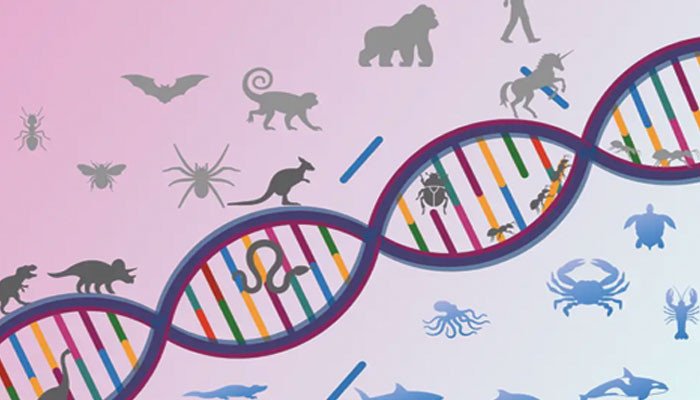
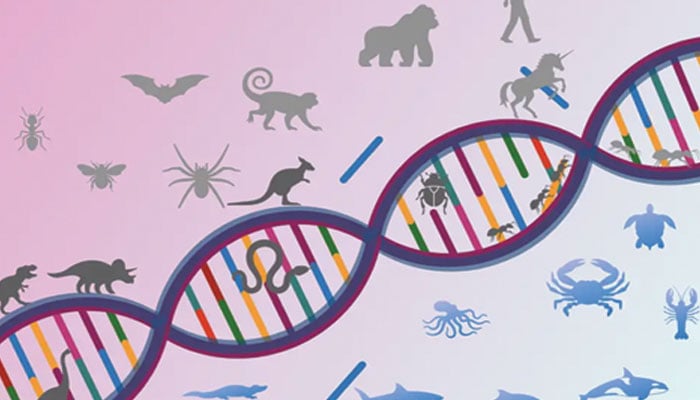
This universe, whose vastness is beyond the limits of human understanding, contains not only a multitude of galaxies, planets and stars, but also a delicate life is buried in it, which is on a journey of eternal change. This journey makes noise and does not raise a revolutionary manifesto, but quietly runs in the veins of every soul, dirt in its cells, money in its genes. The world knows this journey by the name of “evolution”. A scientific concept, which is not only the basis of biological understanding, but also a manifestation of human intellectual evolution.
Studying biology without understanding evolution is like reading a book from its cover. And just hearing the name of evolution and closing your eyes is tantamount to intellectual suicide. Because evolution is not just a theory, it is the essence of observation, experience and millions of years of evidence. The French biologist, Jean-Baptiste Lamarck laid the intellectual foundation of evolution and opened a new window of thought.
He said that organisms adapt themselves to the demands of their environment and these changes are heritably passed down from generation to generation and called it the “use-disuse theory”. For example, the giraffe, which plucked leaves from tall trees with its long neck, continued to grow in length and this trait was passed down through its generations. But modern genetics has questioned this notion, as no physical change can be passed on to the next generation without a change in the genetic code.
Although Lamarck’s theory was conceptually revolutionary, its scientific foundations proved less compelling. However, despite this, his thinking paved the way for later evolutionary theories. Charles Darwin, the traveler of knowledge, who traveled to the Galapagos Islands on the ship “Beagle” read the text of nature, which was hidden in rocks, animals and birds.
In 1859, he presented the concept of “Natural Selection” in his revolutionary book, “The Origin of Species”. According to Darwin, nature is a judge, judging organisms according to their merits. Organisms that adapt to their environment survive, reproduce, and pass on their useful traits to the next generation, while less vigorous or unfit organisms are subject to natural selection. Not only was this theory simple and logical, but it provided a solid foundation for biological science, but over time science gave evolution a more complex but complete form.
After Darwin, the science of heredity, genetics and molecular biology deepened the theory of evolution and today we know that DNA is the basic code, in which the secret of life is hidden, and small changes (mutations) in this code lead to evolutionary changes over time, for example, factors like genetic drift, genetic seduction, rearrangement and the birth of species are the mechanical means with the help of which life has been changing its forms. The question arises in some minds that if evolution is a blind process, then how did human intellect, aesthetic sense, ethics and religious tendencies come into being?
Could genetic variation alone have produced these superior mental traits? This question is not simple, but the door of scientific research always opens as a result of these questions. Fields such as neuroscience, sociobiology, and cultural evolution are seeking answers to these questions. The structure of the human brain, the interconnections of neurons and the interaction with the external environment, all together constitute the characteristics that distinguish us from other organisms.
Another delicate but important question here is whether evolution contradicts religion. The fact is that evolution is a scientific theory, not a belief. And religion is a spiritual, moral and spiritual framework. It is cognitive immaturity to weigh both in the same scale. Many thinkers and scientists considered the two to be compatible, including Allama Iqbal, Ibn Sina and modern Muslim scientists. Philosophy teaches us that reality has many layers. One layer scientific, one philosophical and one spiritual. Evolution is the name of one of these layers, which provides an understanding of the material journey of life.
If evolution is a theory, evolution is its strongest witness. When we look at fossils, they remind us of the sounds of the past. The remains of trilobites, ammonites, archaeopteryx and human ancestors all mark a continuum.
These bodies are silent witnesses that life is not static, but is evolving into a new order every moment. Fossils tell us how an aquatic creature came to land. How the birds appeared from the reptiles and how the human ancestor descended from the trees and looked up at the sky.
Today, as the world moves towards artificial intelligence, genetic engineering and bionic organs, the question is not whether evolution is true; The question is, how do we deal with this fact? Can we improve our health, economy and society by understanding natural selection? Can we build a balanced society in harmony with science? Evolution teaches us that change is life. Static ideas, prejudiced thinking and limited understanding lead to annihilation, while research, change and understanding result in survival.
Unpublished works and their authors for the “Miscellaneous” page.
* Ghazi Abdooz (Muhammad Kashif, New Karachi, Karachi) * Islamic System (Salam Aziz, Chaubarji Park, Samanabad, Lahore) * Tobacco, Nicotine Products (Allah Ditta Anjum, Kahror Pakka, Lodhran) * Peace (Shubia Mumtaz, Rawal Pindi) * True Philosophy of Sacrifice, Characteristics of Sacrificial Animals, Tens of Dhu al-Hajj (Maulana Qari Muhammad Salman Usmani) * Prohibition on Marriage (Dr. Mohammad Riaz Alimi, New Karachi, Karachi) * Role of youth in natural disasters (Syed Athar Naqvi) * Tears of the dark night (Rana Ejaz Hussain Chauhan).