








Image source: Netflix/Titmouse
Few anime houses have a history with Netflix as strong as Titmouse. The relationship between the studio and the streamer dates back to 2013 with the debut of the series Turbo fast And it continued to pay off with shows like Big mouth, The Midnight Gospel and The Epic Tales of Captain Underpants.
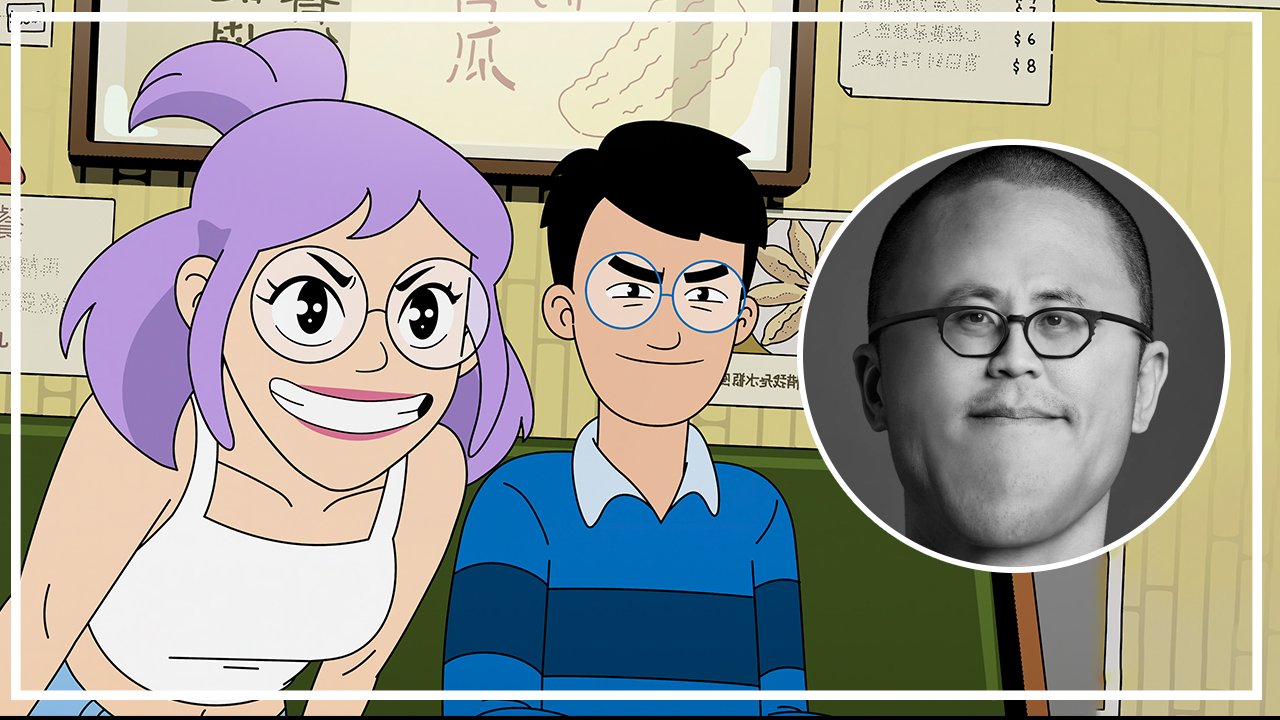
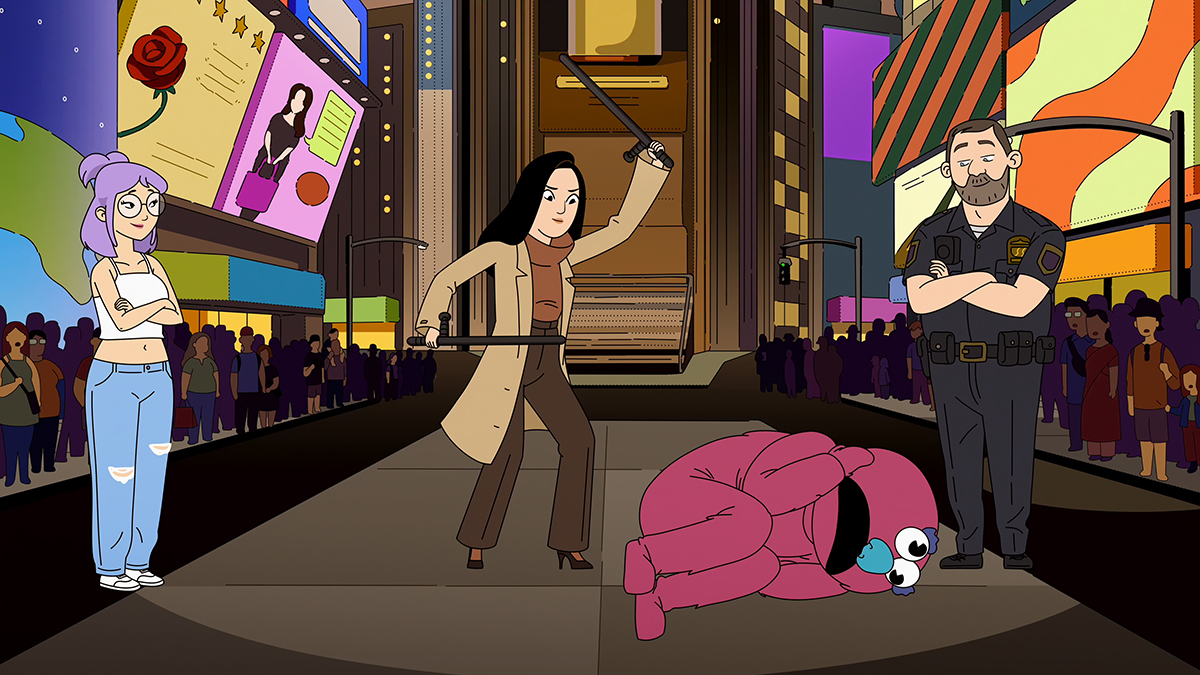
Throughout that trip, head coach Otto Tang was almost ever present. A veteran of the studio, Tang has been responsible for the distinctive looks of some of Netflix’s most popular animated series, while also directing short films outside of his work at Titmouse. Now, Tang is turning his attention to Netflix’s latest Titmouse collaboration, Dang!Where he works again as technical director. Dang! It follows three Asian-American siblings in New York: the younger, brash and reckless, and their professional older sister, whose life is falling apart.
We caught up with Tang to discuss the vision he had Dang!His journey through the industry and what the future holds.
What first got you into the world of animation?
I always loved drawing, but I didn’t know I could work in animation at all. I grew up in Hong Kong and then went to film school in Vancouver. I had a degree in film, and I wanted to be a director, so I moved to Hollywood. I worked at an animation company and then somehow, the company I worked for got hired to do something with Titmouse. That’s when I discovered that I could actually be in animation and then when the opportunity came I jumped ship.
Titmouse is the rare studio that works on a wide range of productions, not just animation intended for children or just adults. Is that one of the reasons you stayed for so long?
certainly. Titmouse is the only animation studio I’ve ever worked at, so I don’t know what’s out there, but I was very lucky to be with them because they allow artists to express themselves. When I started, Titmouse was a lot smaller with everyone in the same space and you had to see how the show was put together. That’s the benefit of working for a company that starts out just like you, you grow with them and watch how they develop.
What is your first reaction to hearing this concept Dang!?
It’s great to see a TV show with an Asian American title. It’s hard to find something I can relate to. It felt good when it landed on my desk because you are always waiting for something meaningful and important.
What are the first visual ideas that come to your mind?
I’m not from New York, so the first thing I did was take my family there to see it again. I wanted to be there to try and feel the city. I look at it like I’m weird, and being an Asian American, I look at American culture as weird too. I like to make it personal to me because I think that’s where the soul comes from in art.
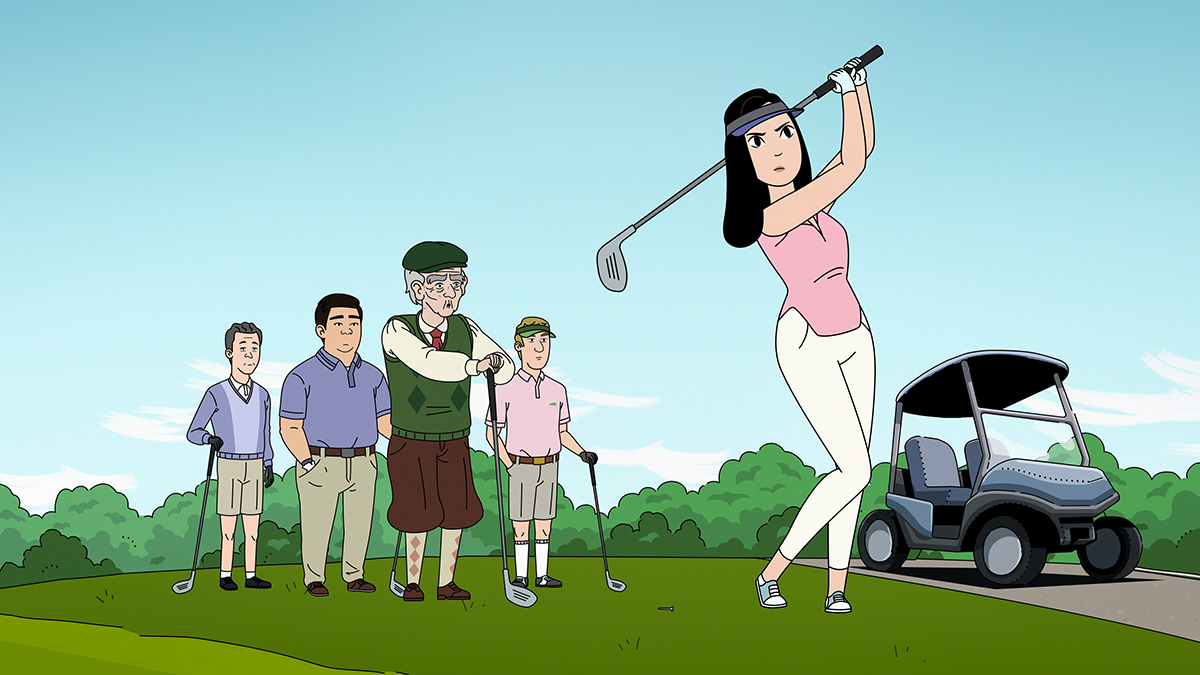
Dang! S1. Stephanie Hsu as Ruthie Dang in Dang! S1. Cr. Courtesy of Netflix © 2026
We’ve become very familiar with the standard look of an adult animated sitcom. Was there an intention to develop this style and make it more dynamic?
I don’t think we were going towards dynamism and cinematic. These are terms that always get thrown out because when we hear them, we think they mean “good.” For this one in particular, I’ve been trying to do less. I was trying to step back and see how little I could get on the screen. If I can describe something with two lines, I don’t want to draw the third line. The reason all the shows we claim are similar is because they go through the same path, and after working in the industry for almost 20 years now, I feel like I understand the path enough to know where I can exercise my creative power and where I should step back. If I need to teach 20 artists who are not in the office, mostly outside, to draw something I have in mind, it has to be simple and effective.
What are some visual ideas you were excited to introduce?
Background style for display. I leaned heavily on some of the New Yorker covers, Adrian Tomine, and artists like that, because I really love when you get those magazine covers, and it looks like something you want to embrace. There is something special about them. The show content gets crazy at times, but there’s that urban feel that I’m always drawn to, it’s simple, effective and puts you in a good mood. It’s very sad, really. It’s a strange thing to say for an outrageous comedy, but I think it adds another layer to it.
What are some of the biggest challenges?
In animated sitcoms, we end up designing a lot of apartments, living rooms and bedrooms. New York apartments have a uniqueness that is difficult for me to understand. I also need to design a production-friendly space; It has to work with where the director wants to put the camera. That’s always the hardest thing, no matter where it is, even if you’re working on a fantasy show. It is very difficult to design a bedroom and living room, especially in the first season. You don’t really know the character; Even the creator may not have a clear idea of who the character is. So we have to do a lot of drawings and image references to figure out where we want these characters to live because we’re going to be seeing these things constantly, like in… friends With sofa. We want to recreate that in every showing, so we want something unique about the sofa in the middle of the room.
Is there a balance that can be found between making sure the background is detailed enough to be authentic but not too busy?
The one thing I found difficult was drawing a desk full of stuff because you want to make room for movement, but there are so many stories when you look at someone’s desk. It took a while to find the living room, but when we did, I put some of my personal items in there. I think every artist puts a little bit of themselves into the backgrounds and you can tell when an artist loves something they draw.
Dang! S1. (L-R) Bobby Liu as Eunice Dang and Stephanie Hsu as Ruthie Dang in Dang! S1. Cr. Courtesy of Netflix © 2026
How much influence did you have on character design?
this [project]Especially a lot. When it first started, we had sketches of the three main characters, but they were more illustrative than cartoonish. We had to simplify it to make it convenient to implement, and I think that’s where we try to simplify it. For example, with the character Andrew, I didn’t draw his glasses arm; It’s strange that we don’t have it, but if we have it, it creates a lot of problems. I have more hands on the design in this show than most others.
Can we expect more personal projects from you away from Titmouse?
I’m doing a short story with my girls and putting it on Patreon for free. It’s called Okay, okay, look who’s here. The film revolves around a tadpole that lives in a well and the people it meets in the well. I developed this so I could make something with my girls and I could remember this time with them before they were teenagers and thought I was lame. I don’t know if anyone will get it, maybe it’s just for them, but I had a good time making it.