

Next Fed Meeting Date: What to Watch Until Then
Following the first Federal Reserve meeting of 2026, the central bank has signaled a shift into “wait and see” mode. After a series of rate cuts to close out 2025, the Federal Open Market Committee (FOMC) has hit the pause button, leaving investors and businesses in a period of high-stakes observation.
The window between FOMC meetings is rarely “quiet.” Instead, it is a period where every data point is scrutinized for hints about the next move. With economic growth remaining surprisingly solid but inflation showing signs of sticky behavior due to recent tariffs, the stakes for the next meeting are already climbing.
When Is the Next Fed Meeting?
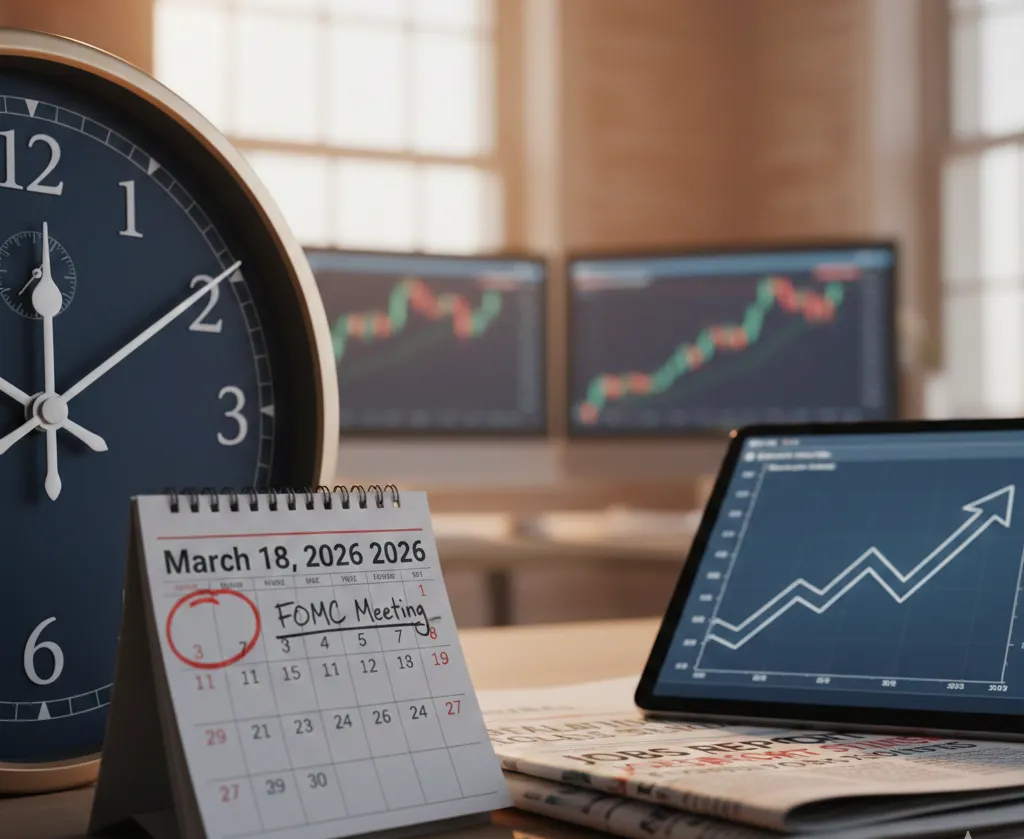
The Federal Reserve has officially scheduled its next FOMC meeting for March 17–18, 2026.
This meeting is particularly significant because it is a “Summary of Economic Projections” (SEP) meeting. This means that in addition to the standard policy statement, the Fed will release an updated “Dot Plot,” showing exactly where individual committee members expect interest rates to be through the end of the year.
- Date: March 17–18, 2026
- Announcement: Wednesday, March 18 at 2:00 PM ET
- Press Conference: Chair Jerome Powell will hold a live press conference at 2:30 PM ET to discuss the decision.
What the Fed Is Watching Right Now
The Federal Reserve is currently navigating a “dual mandate” that feels more balanced—and more difficult—than it has in years. Here is their current dashboard:
- Inflation Trends: While headline inflation has cooled significantly from its peaks, Core PCE (the Fed’s preferred metric) remains slightly above the 2% target. Policymakers are watching to see if recent tariffs on goods lead to a permanent price floor or just a “one-time” bump.
- Labor Market Conditions: The unemployment rate stood at 4.4% as of late December. The Fed is looking for “stabilization”—they want a market that is cool enough to curb inflation but strong enough to avoid a recession.
- Consumer Spending: Despite higher rates, US consumer spending has remained resilient, though recent sentiment surveys suggest some mounting pressure on households.
- Financial Stability: Amid ongoing legal and political scrutiny of the Fed’s leadership, the committee is hyper-focused on maintaining market order and institutional independence.
Key Economic Data to Watch Before March
Between now and the March 18 decision, several “red-tier” reports will hit the wires. Mark these on your calendar:
1. Inflation Reports (CPI & PCE)
The Consumer Price Index (CPI) release on February 11 will be the first major test. Following that, the PCE Price Index at the end of February will provide the definitive look at whether inflation is truly trending back toward 2% or stalling.
2. Jobs Data
The January Jobs Report (Non-Farm Payrolls) is scheduled for February 6. After adding only 50,000 jobs in December, the Fed will be looking to see if hiring bounces back or if the cooling trend is accelerating into a freeze.
3. GDP & Growth Indicators
Advanced estimates for Q1 growth will begin to trickle in. The Fed noted a “solid” pace of growth in January; any sharp deviation from this would immediately put a rate cut back on the table.
4. Sentiment Surveys
Keep an eye on the University of Michigan Consumer Sentiment and ISM Manufacturing reports. These serve as early warning systems for shifts in business investment and consumer behavior.
Powell’s Recent Guidance: “Meeting-by-Meeting”
In his January press conference, Chair Jerome Powell played it safe. He emphasized that the Fed is not on a pre-set course.
“We are well-positioned to wait and see how the economy evolves,” Powell stated, suggesting that the era of predictable, back-to-back rate cuts may be over for now.
The Bottom Line: Powell did not commit to a cut in March. He made it clear that while policy is currently “neutral,” the Fed is prepared to stay restrictive for longer if inflation does not continue its descent.
How Markets May React Before the Meeting
Expect the “inter-meeting” period to be characterized by volatility.
- Stocks: Equities may struggle to find a clear direction if data comes in “mixed.” Stronger-than-expected data could actually hurt stocks by delaying future rate cuts.
- Bond Yields: The 10-year Treasury yield will likely react sharply to every inflation print. If CPI comes in hot, expect yields to climb as the market bets on a longer pause.
- Gold & Crypto: These “risk-on” assets are sensitive to the US Dollar. A “hawkish pause” (staying at current rates while sounding aggressive) generally pressures gold and Bitcoin.
Scenarios Going Into the Next Meeting
| Scenario | Data Outcome | Likely Fed Move |
| The Goldilocks | Inflation falls, Jobs stay stable | Continued Pause (Wait for May/June) |
| The Reheat | Inflation surprises higher (Tariff impact) | Hawkish Pause (Rates held, “higher for longer” talk) |
| The Hard Landing | Unemployment jumps above 4.6% | 25bps Rate Cut |
What Would Change the Fed’s View?
The Fed’s “Wait and See” stance isn’t set in stone. Three “shocks” could force their hand before March:
- A Sharp Labor Weakening: If monthly payrolls turn negative, the Fed will pivot to “rescue mode” and cut rates regardless of inflation.
- A Global Financial Stress Event: Any systemic banking or credit market stress would trigger an immediate liquidity response.
- An Inflation Rebound: If PCE begins to trend back toward 3.5%, talk of further rate cuts will vanish entirely.
Why This Waiting Period Matters
Markets don’t wait for the Fed to act; they trade on expectations. By the time the March 18 meeting arrives, mortgages, business loans, and stock valuations will likely have already “priced in” the decision. For investors, this period is about managing risk and ensuring your portfolio can survive a “higher for longer” environment if the data doesn’t cooperate.
The March 18 meeting is the most important date on the Q1 calendar. Until then, the data is the driver. Watch the February 6 jobs report and the February 11 CPI print—these two days will likely dictate the Fed’s next move.
