
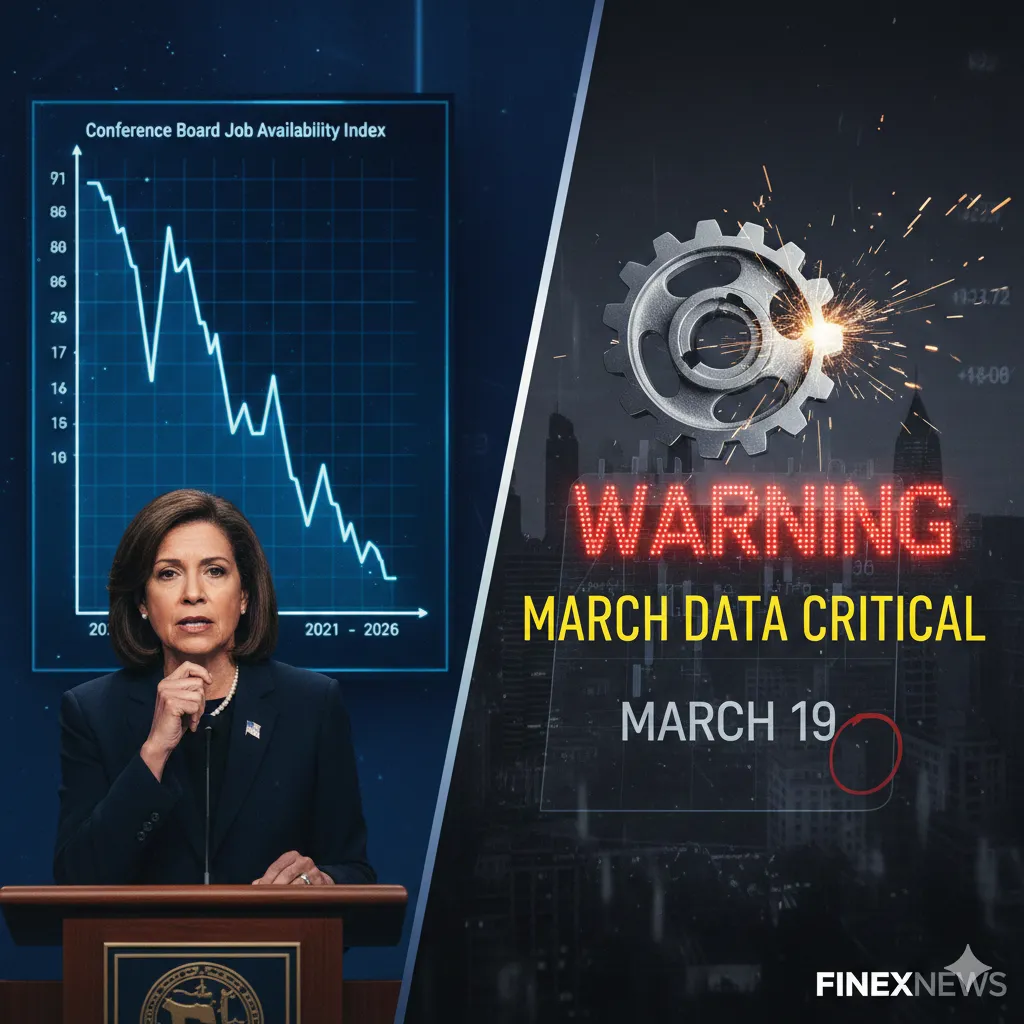

The Federal Reserve just passed on a rate cut that Vice Chair Michelle Bowman admits she seriously considered making.
Her decision to wait—and the reasoning behind it—reveals more about how the Fed actually makes decisions than a dozen economics textbooks ever could.
This wasn’t about being hawkish or dovish. It wasn’t about sticking to some predetermined plan. It was about data quality, strategic patience, and the value of certainty in uncertain times.
Let’s walk through the logic that led Bowman to support holding rates in January, even though she’s planning three cuts for 2026.
The Decision on the Table
At the January FOMC meeting, Bowman faced a real choice. This wasn’t a formality or an easy call.
On one hand, she could vote to cut rates immediately, continuing the momentum from the 75 basis points of cuts the Fed implemented in late 2025. This would move policy closer to neutral faster—possibly reaching her neutral estimate by the April meeting.
On the other hand, she could vote to hold rates steady and gather more information before making the next move.
She chose to wait. But it wasn’t straightforward.
“I could have voted in favor of continuing to remove policy restraint in order to hedge more against the risk of further labor market deterioration,” Bowman acknowledged. “It was not a straightforward decision.”
So why hold?
The Two Reports That Changed Everything
Here’s the key sentence from Bowman’s speech: “Given that by the time of our March meeting we will have received two additional inflation and employment reports, I saw merit in waiting to take action.”
Two more inflation reports. Two more employment reports. That’s what tipped the scales.
Let’s break down exactly what data the Fed will receive between now and the March meeting:
| Report Type | January Data | February Data | Release Timing |
|---|---|---|---|
| Employment Situation | Jobs added, unemployment rate | Jobs added, unemployment rate | Before March FOMC |
| CPI Inflation | Consumer price changes | Consumer price changes | Before March FOMC |
| PCE Inflation | Core inflation measure | Core inflation measure | Before March FOMC |
| Weekly Claims | Layoff trends | Layoff trends | Ongoing visibility |
By waiting until March, the Fed gets twice the data to work with. That might not sound like much, but in Bowman’s calculation, it’s everything.
The Data Quality Problem
The bigger issue wasn’t just about having more data. It was about having reliable data.
And right now, the Fed doesn’t trust what they’re seeing.
Bowman was blunt about this: “I am also reluctant to take meaningful signal from the latest data releases given the statistical noise introduced by the government shutdown.”
The shutdown created measurement chaos. Economic surveys got disrupted. Response rates dropped. Data collection became inconsistent. The normal reliability of official statistics took a hit.
But it gets worse. Even beyond the shutdown effects, the Current Population Survey (CPS)—which produces the unemployment rate—has seen its response rate fall below pandemic lows.
Think about that. During COVID, when people were locked down and surveys were extremely difficult to conduct, response rates were higher than they are now.
When fewer people respond to the survey, the margin of error increases. The data becomes less representative. Conclusions become shakier.
“I am not taking much signal from the employment and prices data given increased measurement challenges in the wake of the government shutdown,” Bowman explained.
So the Fed is flying somewhat blind. And Bowman’s view is: when you can’t see clearly, don’t make irreversible moves.
The Strategic Value of Waiting
Bowman framed the decision in terms of preserving optionality: “We can afford to take time and ‘keep policy powder dry’ for a little while.”
That phrase—”keep policy powder dry”—comes from military strategy. It means keeping your ammunition ready but not firing it yet, so you have maximum flexibility when you really need it.
Here’s what waiting accomplishes:
1. Better assessment of previous cuts: The Fed already reduced rates by 75 basis points in late 2025. Those cuts take time to flow through the economy. Waiting lets them observe how those changes are affecting financial conditions and the labor market.
2. Clearer economic picture: By March, the statistical noise from the government shutdown should diminish. Data quality improves. The true state of the economy becomes more visible.
3. More complete information: Two additional months of inflation and employment data provide a much clearer trend line than single data points.
4. Preserved credibility: If the Fed cut rates in January based on noisy data, then had to reverse course based on clearer March data, it would undermine confidence in their decision-making.
Bowman put it this way: The choice was between “continuing to remove policy restraint and arriving at my estimate of neutral by the April meeting, or moving policy to neutral at a more measured pace throughout this year.”
She chose the measured pace.
What Could Have Changed Her Mind
Bowman made clear that her decision to wait had boundaries. There are conditions under which she would have voted to cut immediately.
If the labor market had shown clear, unambiguous deterioration—not just noisy data suggesting possible weakness—she likely would have acted.
“I could have voted in favor of continuing to remove policy restraint in order to hedge more against the risk of further labor market deterioration,” she said.
The key word there is “could have.” She considered it seriously. The labor market risks haven’t disappeared. But the tentative signs of stabilization, combined with data quality concerns, made waiting the better choice.
Here’s what would have triggered an immediate cut in her view:
- Unemployment jumping significantly (not just edging around current levels)
- Mass layoffs across multiple sectors
- Clear evidence of financial conditions tightening unexpectedly
- Unambiguous deterioration in hiring that wasn’t explainable by statistical noise
None of those conditions materialized clearly enough to override the value of waiting for better data.
The Inflation Consideration
Bowman didn’t ignore inflation in her calculus. Even though she believes underlying inflation is close to 2% (after removing tariff effects), the headline number still shows inflation “somewhat elevated.”
This created a balancing act:
Labor market risks: Point toward cutting rates now Inflation still above target: Suggests patience might be prudent Data quality issues: Make it hard to assess either risk clearly
“Ultimately, also considering that inflation remains somewhat elevated, at this meeting I decided to lean in favor of waiting for the upcoming sequence of data releases,” Bowman explained.
Notice the phrasing: she “leaned in favor” of waiting. This wasn’t a slam-dunk decision. It was a close call where multiple factors pushed in different directions.
The March Timeline Makes Sense
Let’s walk through why March specifically matters:
| Timeframe | What Happens | Why It Matters |
|---|---|---|
| Early February | January employment report | First post-shutdown jobs data with cleaner measurement |
| Mid-February | January CPI/inflation data | First inflation read of 2026 |
| Early March | February employment report | Second data point confirms or refutes January trends |
| Mid-March | February CPI/inflation data | Second inflation read shows if January was anomaly |
| March 18-19 | FOMC Meeting | Decision made with full view of Q1 trends |
By mid-March, the Fed will know:
- Whether January employment data was distorted by shutdown effects
- Whether February confirmed or contradicted January trends
- Whether inflation is accelerating, decelerating, or stable
- Whether the labor market is genuinely stabilizing or quietly deteriorating
That’s enormously more certainty than they have right now.
The Seasonal Volatility Factor
Bowman added another wrinkle: first-quarter data tends to be volatile anyway, even without government shutdowns.
“I am aware that first-quarter data tend to be more volatile,” she noted.
This is a real phenomenon. Seasonal adjustment factors often struggle in January and February. Retail employment swings after the holidays. Construction activity depends on weather. Tax-related economic activity creates distortions.
In normal years, the Fed accounts for this. In a year where you’ve also got shutdown effects AND survey response rate issues, the volatility becomes even more problematic.
Bowman specifically warned about January inflation: “We should also not immediately react if we see inflation go up in January, which has been common in recent years and could reflect residual seasonality or additional statistical noise from the government shutdown and ongoing measurement challenges.”
Translation: Even if January inflation comes in hot, don’t panic. It might just be statistical noise.
But by March, with February data in hand, the Fed can distinguish between real trends and temporary volatility.
What This Means for Future Meetings
Bowman’s logic for waiting in January doesn’t mean she’ll wait in March. In fact, her comments suggest the opposite.
She made clear that if the March data shows labor market deterioration, action will follow: “We should not rely on these data as a reason to delay policy action if we see a sudden and significant deterioration in labor market conditions.”
This is important. The wait-for-March-data strategy is specific to the current situation where:
- Recent cuts need time to take effect
- Data quality is questionable
- Labor market shows tentative stabilization signs
If those conditions change—particularly if the labor market clearly weakens—the calculus shifts entirely.
Bowman was emphatic about not signaling extended inaction: “We should also not imply that we expect to maintain the current stance of policy for an extended period of time because it would signal that we are not attentive to the risk that labor market conditions could deteriorate.”
In other words: we’re waiting for better data, not waiting indefinitely.
The Broader Decision-Making Framework
What makes Bowman’s explanation valuable is that it reveals how Fed officials actually think through policy decisions.
It’s not about following a Taylor Rule formula. It’s not about sticking rigidly to projections. It’s not even primarily about the latest data point.
It’s about:
1. Assessing data quality: Can we trust what we’re seeing?
2. Evaluating marginal value of information: What will we know in six weeks that we don’t know now?
3. Considering reversibility: Is waiting costly? Or does it preserve flexibility?
4. Balancing risks: Which mistake is worse—acting too soon or too late?
5. Strategic timing: When is the optimal moment to move given information flow?
In this case, Bowman determined that:
- Data quality is poor enough to warrant caution
- Two additional reports provide significant marginal information
- Waiting is low-cost given recent cuts already implemented
- The risk of premature action (based on bad data) exceeds the risk of delayed action
- March timing allows for informed decision-making
That’s sophisticated decision-making under uncertainty.
What the Market Misunderstands
Markets often interpret Fed inaction as hawkishness or a shift away from easing. That’s not what’s happening here.
Bowman still projects three cuts for 2026. She still sees policy as moderately restrictive and believes it needs to move toward neutral. She still considers labor market risks significant.
The January hold doesn’t change any of that. It’s tactical patience, not strategic shift.
The clearest evidence? Her discussion of the April meeting. She mentioned that one option was “continuing to remove policy restraint and arriving at my estimate of neutral by the April meeting.”
That means she could easily support cutting in March, skipping April, then cutting again later. Or cutting in both March and May. The pattern isn’t predetermined—it depends on what those two additional reports show.
The Contrarian Take
Here’s what almost nobody is discussing: Bowman’s decision to wait might actually be more dovish than cutting in January would have been.
How? Because it preserves the Fed’s ability to move more aggressively if needed.
If they had cut in January based on questionable data, then March data showed serious deterioration, they’d be limited in how fast they could respond. Markets would question why they didn’t see it coming. Credibility would suffer.
By waiting and preserving that “policy powder,” the Fed can cut 25 basis points in March, assess quickly, and potentially cut another 25 in May if conditions warrant—all while maintaining that they’re responding to clear data rather than panicking.
It’s patience in service of potential urgency.
The Bottom Line
Why did the Fed choose to wait for March data rather than cut in January? Bowman’s logic comes down to four core points:
1. Data reliability: Government shutdown effects and survey response issues make current data questionable.
2. Information value: Two additional employment and inflation reports provide substantially clearer picture of economic trends.
3. Strategic patience: Recent 75 basis points of cuts need time to affect financial conditions; no urgency to act immediately.
4. Preserved flexibility: Waiting allows for more informed, credible action in March while maintaining optionality.
This wasn’t indecision. It wasn’t hawkish pushback. It was calculated patience based on recognizing when you don’t have enough good information to make an irreversible choice.
The March meeting will be telling. If employment data confirms labor market weakness and inflation data confirms the underlying trend toward 2%, expect Bowman to support cutting rates. Her January wait wasn’t about avoiding cuts—it was about timing them right.
And in monetary policy, timing is everything.
The lesson here isn’t that the Fed is hesitant or uncertain about its path. It’s that they’re willing to wait six weeks for substantially better information rather than acting on noisy data that could lead them astray.
That might frustrate those hoping for immediate rate relief. But it’s probably the smarter play.
After all, you only get to spend your policy powder once. Better to aim carefully than to shoot in the dark.
