








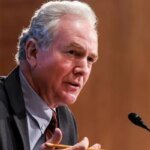


When Bill Ackman talks, markets listen. And right now, he’s talking loud.
Over the weekend, the billionaire founder of Pershing Square Capital Management took to X with a message that cut through the market noise like a foghorn: “Some of the highest quality businesses in the world are trading at extremely cheap prices. One of the best times in a long time to buy quality. Ignore the bears.”
That’s a bold call. Markets have been rattled by geopolitical tensions — including the ongoing conflict with Iran, which has roiled energy prices and investor confidence — plus lingering concerns about whether the AI-fueled stock market rally of the past three years can sustain itself. The S&P 500 has shed meaningful ground from its highs, and several major indexes have dipped into correction territory.
But Ackman, who has built a career on high-conviction contrarian bets, sees the chaos not as a warning sign — but as a sale rack. So should you listen to him?
Who Is Bill Ackman, and Why Does His Opinion Matter?
Bill Ackman isn’t your typical fund manager. He runs Pershing Square Capital Management, a hedge fund he founded in 2003 with $54 million. Today, the firm manages a concentrated portfolio of just 11 stocks valued at over $15.5 billion.
Ackman is best described as a hybrid: part Warren Buffett-style value investor, part corporate activist. Like Buffett, he looks for high-quality businesses with durable competitive advantages and steady cash flows. Unlike Buffett, Ackman often takes large stakes and then pushes hard for operational changes, board reshuffles, or strategic pivots. When it works, it works spectacularly — his early bets on Chipotle and Lowe’s delivered outsized returns. When it doesn’t, he takes public lumps (see: his ill-fated Herbalife short).
His investment thesis is anchored in a simple but powerful idea: buy great businesses when the market is panicking, then wait for the panic to pass.
“One of the best times in a long time to buy quality. Ignore the bears.”— Bill Ackman, via X (formerly Twitter), March 30, 2026
Ackman’s commentary carries weight partly because he’s willing to be specific. He doesn’t just tell people to “stay the course” — he names names, stakes positions, and puts his reputation on the line. That transparency is rare in the hedge fund world, and it’s why millions of retail investors track his moves.
What Exactly Did Ackman Say — and What Does He Own?
His Sunday night X post was straightforward: quality stocks are cheap, the market is overreacting, and now is a buying opportunity. In follow-up posts, he got more specific — singling out Fannie Mae (FNMA) and Freddie Mac (FMCC), both down roughly 40% this year, as “stupidly cheap” with asymmetric upside. His exact words: “They could be a 10X and it could happen soon.”
Michael Burry of “The Big Short” fame chimed in with a bullish reply, lending further credibility to Ackman’s thesis. Both investors believe that the Trump administration will eventually release the two government-sponsored entities from federal conservatorship — a move that would unlock massive value for shareholders.
But Fannie and Freddie are just two pieces of the puzzle. Ackman’s broader portfolio reflects his conviction in large-cap tech and consumer stalwarts:
What Do the Valuations Actually Show?
Here’s where it gets genuinely interesting — and where the picture is more nuanced than Ackman’s bullish headline might suggest.
The S&P 500 now trades at roughly 20.6 times forward earnings — down from 22 times at the start of the year, but still comfortably above the long-term historical average of the mid-to-high teens. So the index as a whole isn’t exactly “cheap” in a traditional sense.
But Ackman’s argument is more surgical than that. He’s not saying the whole market is dirt-cheap — he’s saying that the 10 to 20 highest-quality businesses in the world have been indiscriminately sold off alongside everything else, creating temporary mispricings in specific names.
Look at the top 10 S&P 500 names. Their forward P/E ratios range from about 19.6x (Meta Platforms) to 184x (Tesla), with most large-cap tech names sitting in the mid-20s. That sounds expensive — until you layer in the earnings growth story. Ackman points out that these 10 giant companies are expected to grow earnings per share by more than 20% on average over the next two years. At that growth rate, paying 25x forward earnings starts to look a lot more reasonable.
Quick math check: A company trading at 25x forward earnings with 20% annual EPS growth is effectively trading at around 17x two-year-out earnings. That’s right at — or even below — historical average multiples. Which is exactly Ackman’s point.
His conclusion in his most recent shareholder letter: “The market’s P/E multiple is justified and can remain sustainably higher than historic averages” given the structural advantages of today’s mega-cap leaders — their global scale, dominant market positions, access to cheap capital, and leadership in AI.
What’s Actually Driving the Market Turbulence?
To understand Ackman’s opportunity thesis, you need to understand why markets have stumbled.
Two main forces are at work. First, the U.S.-Iran conflict has spooked global markets, driving uncertainty in energy prices and investor risk appetite. Second, AI stocks — which led the market higher through 2023, 2024, and 2025 — were already under pressure before the geopolitical flare-up, weighed down by concerns about excessive capital spending on AI infrastructure and questions about near-term return on investment.
Recession fears have also ticked up. Prediction markets currently put the odds of a U.S. recession by year-end at just under 30% — elevated, but far from a coin flip in either direction.
Ackman’s read: the conflict will end, the peace dividend will be real (“one of the most one-sided wars in history,” he wrote), and the AI infrastructure buildout will prove its worth over the next decade even if near-term ROI is lumpy. In his view, the market is pricing in permanent damage when the damage is temporary.
The Risks Ackman Isn’t Shouting About
Here’s where we have to be honest with you. Ackman’s enthusiasm is infectious — but it comes with real caveats that every investor should weigh before acting on his advice.
| Risk | What It Means for You | Level |
|---|---|---|
| Concentration risk | Pershing Square holds just 11 stocks. That’s fine for a professional fund with sophisticated risk management — but dangerous for retail investors to blindly copy without understanding each position deeply. | High |
| Ackman’s own fund is down sharply | Pershing Square Holdings is off ~19% year-to-date. Even if he’s ultimately right, you may have to endure significant short-term pain. Can you stomach that? | High |
| Fannie/Freddie speculation | The privatization thesis is compelling — but it’s been compelling for years. Government timelines are unpredictable. These are speculative bets, not value investments in the traditional sense. | High |
| Iran conflict escalation | Ackman calls the war “one-sided” — but geopolitical conflicts have a way of surprising everyone. An escalation, Strait of Hormuz closure, or energy shock would hurt portfolios significantly. | Medium |
| AI investment overhang | The mega-cap tech thesis depends on AI spending paying off. If enterprise AI adoption disappoints or the regulatory environment tightens, growth multiples could compress further. | Medium |
| Valuation still above average | At 20.6x forward earnings, the broader S&P 500 isn’t cheap by historical standards. A multiple compression back to long-term averages would imply another 15–20% drawdown from current levels. | Medium |
Disclaimer: This article is for informational purposes only and does not constitute financial advice. Investing in individual stocks involves significant risk, including the potential loss of principal. Always consult a licensed financial advisor before making investment decisions.
So What Should Regular Investors Actually Do?
This is the part most financial news articles skip — the practical “okay, now what?” section. Let’s fill that gap.
1. Don’t copy the Fannie/Freddie bet (unless you really understand it)
Ackman’s Fannie Mae and Freddie Mac position is a high-octane, binary political bet. If privatization happens, you win big. If it doesn’t, or if it gets delayed another five years, you’re holding an illiquid position that generates no dividend and depends entirely on government action. This is not a position for most individual investors. Leave it to the professionals with longer time horizons and deeper pockets.
2. Do look for quality businesses that have been collateral damage
This is Ackman’s core message, and it’s a good one. When markets sell off broadly, good companies get sold alongside bad ones. If you own — or have been watching — a well-run business with strong fundamentals, a competitive moat, and predictable cash flows, and that stock is now significantly cheaper than it was six months ago, that’s worth a second look. The key question: has anything actually changed about the business? Or is the only thing that changed the market’s mood?
3. Think about dollar-cost averaging, not all-in timing
No one — not even Ackman — can call the exact bottom. Instead of trying to time a single entry, consider spreading purchases over the next several months. This strategy, called dollar-cost averaging, reduces the risk of going all-in right before another leg down.
4. Keep your eyes on earnings, not headlines
The Magnificent Seven stocks that Ackman holds — Alphabet, Amazon, Meta — all have Q1 2026 earnings coming up. If their business fundamentals remain strong despite the macro noise, that’s meaningful signal. If earnings disappoint, that changes the thesis. Read the earnings reports. Watch management commentary on AI monetization and consumer demand. Let the data, not the drama, guide your decisions.
5. Don’t let fear or hype drive either direction
Ackman says “ignore the bears.” That’s useful advice about not letting panic drive you to sell great businesses at the wrong time. But “ignoring the bears” shouldn’t mean ignoring risk altogether. The best investors in the world — Ackman included — lose money sometimes. The goal isn’t to blindly follow conviction; it’s to build your own, grounded in research.
The Bottom Line
Bill Ackman has a long track record of finding value when others see only chaos. His call that quality U.S. stocks are “extremely cheap” isn’t baseless — the market has pulled back meaningfully, specific large-cap names have seen meaningful multiple compression, and if the geopolitical situation stabilizes, a recovery could be sharp and fast.
But Ackman is also a hedge fund manager who can afford to be wrong in the short term and ride out years of drawdown. Most individual investors can’t, or shouldn’t have to.
The smartest takeaway from his comments isn’t “go buy Fannie Mae tomorrow.” It’s this: volatility creates opportunity for patient, informed investors who focus on quality and have the discipline to hold through the noise. If you’re that kind of investor, the current environment — however uncomfortable — may indeed be one worth leaning into, selectively and carefully.
As Ackman himself put it in a previous shareholder letter: “Buying great businesses at reasonable prices, not chasing expensive momentum trades.” That’s the part worth listening to — regardless of what the market does next week.

