

KEY TAKEAWAYS
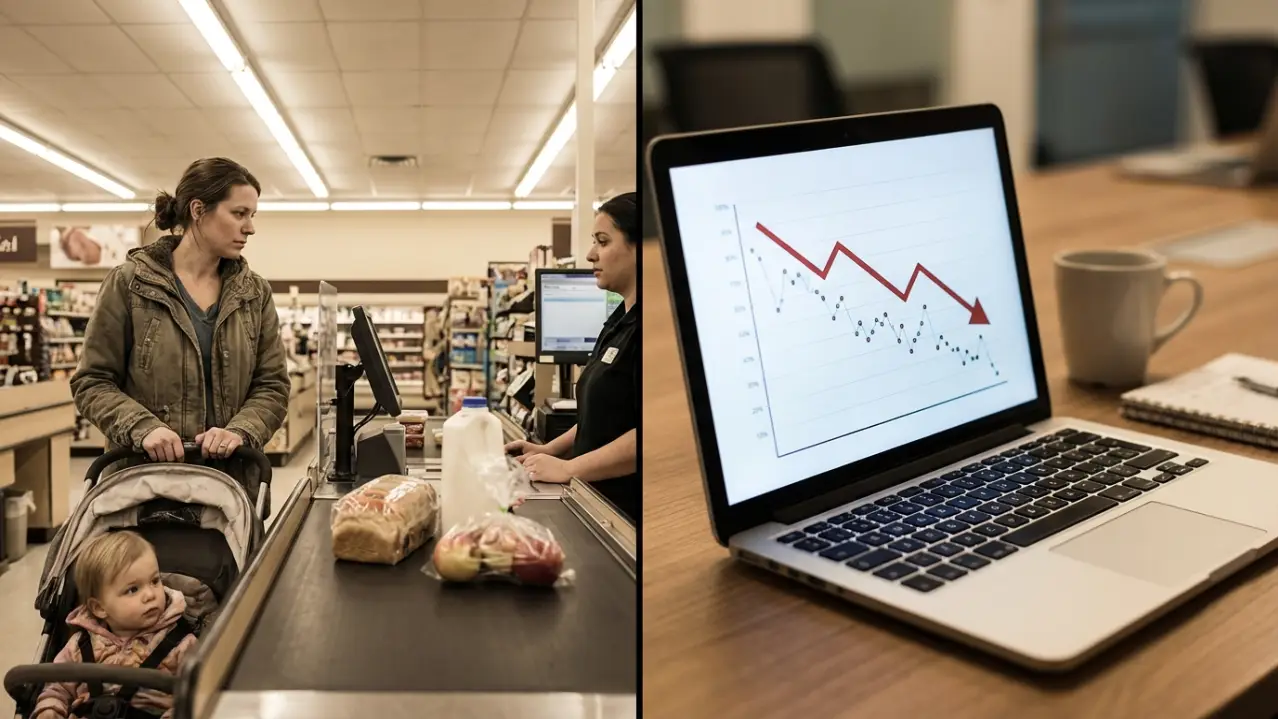
- 47.9 million people lived in food-insecure households in 2024 — about 1 in 7 U.S. households — with 14.1 million of them children, according to the USDA’s final annual food security report.
- Food insecurity costs the U.S. economy at least $160 billion per year in healthcare expenses and lost productivity, according to research by the Food Research & Action Center.
- Food-insecure children visit emergency rooms at rates 20–50% higher, with asthma and mental health issues rising disproportionately, and math scores falling 17.5%, threatening the quality of America’s 2040 workforce.
- Every $1 billion in SNAP benefits increases GDP by $1.54 billion and supports 13,560 jobs, according to USDA Economic Research Service modeling.
- Black households face food insecurity at a rate of 24.4%, and Latinx households at 20.2% — both more than double the rate for non-Hispanic white households at 10.1%.
- The USDA announced it will no longer issue its annual food security report after 2024 — eliminating the only consistent national benchmark for tracking hunger in America.
Food insecurity isn’t just a poverty story. It’s an economic one — and the bill runs into the hundreds of billions of dollars each year.
In 2024, 1 in 7 U.S. households (13.7 percent) experienced food insecurity — a lack of reliable access to affordable, nutritious food. That translates to 47.9 million people, including 14.1 million children.These aren’t abstract statistics. They represent a persistent drag on workforce participation, public health spending, educational outcomes, and long-run economic growth.
Understanding the full economic cost of food insecurity — and the evidence behind programs designed to address it — matters for anyone thinking about public policy, social investing, or the underlying health of the U.S. labor market.
The Scale of the Problem: Who Goes Hungry in America
An estimated 86.3% of U.S. households were food secure throughout 2024, meaning they had access at all times to enough food for an active, healthy life. The remaining 13.7% were food insecure at least some time during the year.
Food insecurity in the U.S. looks different from hunger in lower-income countries. It rarely means complete starvation. Instead, it means relying on the cheapest, lowest-nutrient foods available — skipping meals when money runs out, making trade-offs between food and rent, and never quite being certain tomorrow’s meals are covered.
Within that 13.7%, 5.4% of households (7.2 million) experienced very low food security — the more severe range where normal eating patterns were disrupted, and food intake was reduced at times during the year.
The demographic disparities are sharp and persistent. Nearly 1 in 4 (24.4%) Black households and 1 in 5 (20.2%) Hispanic households were food insecure in 2024 — at least double the rate for non-Hispanic white households (10.1%). Nearly 1 in 3 (30.9%) American Indian and Alaska Native households were food insecure.
Geographically, the prevalence of food insecurity ranged from 9% of households in North Dakota to 19.4% in Arkansas for the three years 2022–2024. Southern states consistently report the highest rates of any region.
The Workforce Cost: What Hungry Workers Can’t Give
A workforce that can’t eat well can’t perform well. This is one of the most direct — and least discussed — economic costs of food insecurity.
When workers lack adequate nutrition, chronic illness rates rise, absenteeism increases, and productivity falls. Food insecurity costs affected Americans at least $160 billion annually in medical expenses and foregone wages, stagnating GDP through illness and absenteeism.
The mechanism is straightforward. Sustained malnutrition contributes to higher rates of diabetes, cardiovascular disease, hypertension, and other chronic conditions. Each of those conditions generates missed workdays, reduced output per hour, and increased disability claims.
There’s also the problem of presenteeism — workers showing up sick because they can’t afford to miss a shift. A worker distracted by hunger or managing a chronic illness contributes less per hour than a healthy, well-fed colleague. Companies that measure productivity as output per labor hour quietly absorb that gap through reduced competitiveness, and the cost spreads across the entire economy.
Labor force participation — the percentage of working-age Americans actively employed or seeking work — is a key economic indicator. Food insecurity suppresses it. Workers managing untreated chronic illness, caregivers whose children are too sick to attend school, and young adults who lack the educational foundation to qualify for skilled positions all represent potential labor capacity the economy can’t access.
The Long-Term Productivity Leak: How Today’s Hunger Becomes Tomorrow’s Workforce Deficit
Household food insecurity affected 18.4% of households with children in 2024 — nearly 1 in 5. That’s not just a welfare issue. It’s a slow-draining leak in the country’s future productivity.
Hunger impairs concentration and memory, with research showing math scores dropping 17.5% and school attendance falling by 1.5 days per year among food-insecure children. Food-insecure children also show elevated rates of anxiety and depression that further hinder academic performance.
Think about what a 17.5% drop in math performance means at scale. A generation of children entering kindergarten cognitively behind their well-fed peers doesn’t just lag in school — they enter the workforce in 2035 and 2040 less qualified for the skilled, high-wage positions that drive economic growth. The gap between a food-secure child and a food-insecure child doesn’t close at graduation. It compounds.
A child whose brain development is disrupted by inadequate nutrition at age three is statistically less likely to complete a four-year degree, less likely to earn above the median wage, and more likely to need public assistance as an adult. Every one of those outcomes represents economic output that never gets produced — tax revenue never collected, innovation never generated, consumption never driven.
The economic literature on early childhood nutrition consistently shows it among the highest-return investments a society can make. Not as charity. As human capital formation that pays dividends for 60 years.
Parents often shield their children from the worst effects of food insecurity — in about half of food-insecure households with children, only the adults experienced food insecurity. But in 9.1% of households with children, both children and adults were food insecure at some point during the year.
Those are the households where the long-term productivity leak runs deepest.
Healthcare Costs: The Biggest Hidden Bill
Chronic illness driven or worsened by food insecurity represents one of the largest — and most preventable — costs in the U.S. healthcare system. A single comparison puts the scale of this in perspective:
| Average SNAP benefit per meal (2024) | ~$2.84 |
| Average diabetes-related ER visit | $2,500+ |
| The math | Feeding someone is roughly 880x cheaper than treating them |
The maximum SNAP benefit per meal in the contiguous 48 states was $2.83 in 2024, with a national population-weighted average of $2.84, according to the Urban Institute’s analysis of USDA data. That’s what the federal government spends to keep a person fed for one meal. One diabetes-related emergency room visit costs hundreds of times more, and people with food insecurity face significantly elevated odds of developing diabetes in the first place.
This isn’t a rhetorical flourish. It’s the core economic argument for preventive nutrition. Every dollar not invested in SNAP or school nutrition programs doesn’t disappear. It reappears, multiplied, in emergency rooms, dialysis centers, and disability claims.
Diabetes is the starkest example. It’s among the chronic conditions most closely linked to food insecurity, as people with limited food budgets tend to consume higher-calorie, lower-nutrient diets that contribute to elevated blood sugar and weight gain. Diabetes already accounts for roughly $1 of every $4 spent on U.S. healthcare, including about a third of Medicare drug spending.
In 2024, the CFPB’s Consumer Credit Card Market Report noted that consumers were assessed $160 billion in interest charges as debt burdens climbed. The hunger health bill runs to the same figure — at least $160 billion annually in healthcare costs and lost earnings — and yet receives a fraction of the policy attention that consumer debt does, despite its direct connection to the same households.
Food-insecure households face disproportionately elevated risks of obesity, diabetes, and cardiovascular disease. Children in food-insecure households experience anemia, weakened immunity, and developmental delays at higher rates. SNAP participation has been shown to reduce healthcare costs for low-income adults, and the WIC program lowers infant mortality and improves maternal nutrition outcomes. Food-insecure kids visit ERs more, with asthma and mental health issues rising 20–50%.
People who lack food access are also less likely to have health insurance, less likely to seek preventive care, and more likely to arrive at the emergency room with advanced-stage conditions that cost exponentially more to treat. The compounding effect turns a $2.84 meal gap into a five-figure medical event.
SNAP: Economic Stabilizer, Not Just Safety Net
The Supplemental Nutrition Assistance Program is the largest federal food assistance program and the most politically contested. The economic evidence for its effectiveness is more consistent than its political treatment suggests.
USDA Economic Research Service modeling estimates a GDP multiplier of 1.54 for SNAP benefits during a slowing economy — meaning every $1 billion in SNAP spending generates $1.54 billion in GDP growth and supports 13,560 additional jobs, including nearly 500 in agriculture.
The mechanism is simple. SNAP recipients spend their benefits almost immediately and almost entirely on food. That spending flows through grocery retailers, distributors, processors, and ultimately to farmers. Each dollar circulates through multiple economic hands before it stops, creating what economists call a multiplier effect. This is why SNAP is formally classified as an “automatic stabilizer” — it expands during recessions when more people qualify, injecting spending into a contracting economy, and contracts during recoveries as incomes rise and fewer people need assistance.
The federal government spent approximately $101.7 billion on SNAP in fiscal year 2025 — about 1.4% of all federal spending. At the USDA’s estimated 1.54 multiplier, that spending supported roughly $156 billion in economic activity.
In FY 2024, SNAP served an average of 41.7 million participants per month, with benefits averaging $187.20 per participant per month. That’s roughly $6.24 per person per day — still not enough to cover the cost of three modestly priced meals in 99% of U.S. counties, according to the Urban Institute.
The program keeps tens of millions of Americans functional as workers, students, and consumers. Cutting it doesn’t eliminate the need it addresses — it transfers the cost to emergency rooms, school systems, and disability programs, where the bill arrives with interest.
The Policy Shift That Could Make the Numbers Worse
Two developments in 2025 signal that the food insecurity picture may deteriorate — and that measuring its impact will become harder.
First, the budget reconciliation law enacted in July 2025 includes the largest cuts to SNAP in the program’s history, threatening to strip food assistance from millions of Americans as food prices continue rising, partly due to tariffs.
Second, the USDA announced it will no longer issue its annual Household Food Security report after 2024 — eliminating the primary national benchmark for tracking food insecurity. The USDA’s report assessing that 13.7% of U.S. households were food insecure in 2024 marked the highest prevalence of U.S. food insecurity in nearly a decade. According to the USDA, this will be its last such report.
Experts suggest the administration may want to avoid culpability for a continued rise in food insecurity. Food insecurity has been increasing since 2021, driven by the economic shocks of the COVID-19 pandemic and persistently high food prices. Alongside elevated food prices, a stagnating job market and SNAP cuts are likely to push the rate higher in 2025 and 2026.
Without consistent national data, policymakers, researchers, and investors will have a harder time measuring how policy changes affect the millions of households at the margin. That data void is itself an economic liability — you can’t fix what you can’t measure.
Food’s Role in the Broader Economy
Food production and distribution represent a substantial slice of U.S. economic output. Food-related industries make up about 5.5% of U.S. GDP, and food accounts for roughly 12.9% of household budgets, according to USDA figures. Those numbers connect food insecurity directly to consumer demand, agricultural output, and the retail sector’s health.
Food waste compounds the problem. Spoilage, overproduction, and disposal all add costs to the supply chain — costs that eventually show up in consumer prices. Wasted food also represents a direct missed opportunity to direct nutrition to food-insecure households, making the efficiency loss doubly damaging.
Even with SNAP, food costs exceed benefits in 99% of U.S. counties. The average meal still costs $0.57 more than the national average maximum benefit of $2.84, creating a monthly shortfall of $53.01 per eligible household. That shortfall doesn’t disappear. Families cover it by cutting meal quality, reducing portions, or going into credit card debt — each of which carries its own downstream economic cost.
The Bottom Line
Food insecurity functions like a slow-moving tax on economic productivity — one paid not by the food-insecure alone, but distributed across the healthcare system, the education system, and the labor market.
47.4 million affected Americans lose $160 billion yearly in medical costs and foregone wages, stagnating GDP through illness and absenteeism. That figure doesn’t include the long-run cost of children who enter adulthood without the educational and health foundation to participate fully in the workforce — the math scores that didn’t improve, the skills that didn’t develop, the careers that never reached full potential.
Programs like SNAP don’t just feed people. They function as economic infrastructure — injecting spending into the economy when it contracts, reducing healthcare costs for the most vulnerable, and preserving the human capital the country depends on for future productivity.
The economic case for addressing food insecurity isn’t primarily moral. It’s fiscal. Feeding someone today costs $2.84. Not feeding them costs hundreds of times more — in ER visits, lost productivity, and a workforce that arrives in 2040 less capable than it could have been.
