









[ad_1]

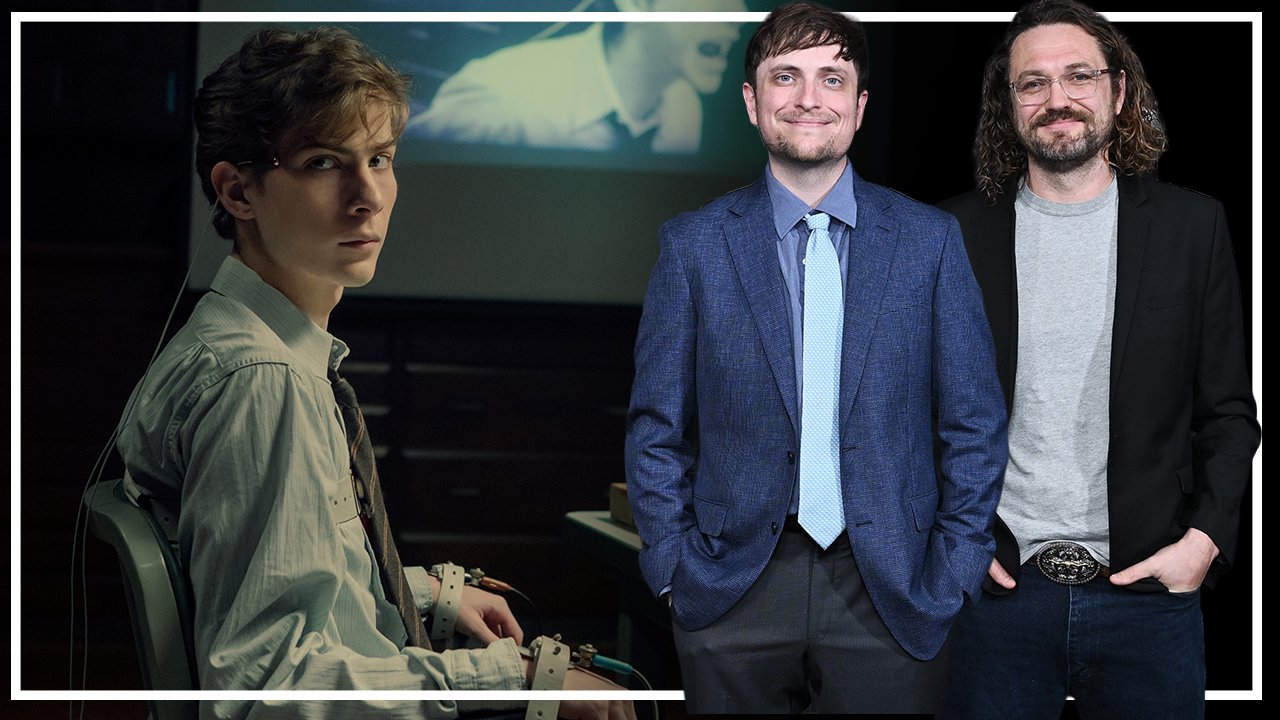
Image credits: Netflix/Sam Chalsen (left) and Nelson Greaves (right)
Sam Chalson and Nelson Graves walked to the subjects of the new film, Unabomberan act. The duo attended Harvard University, the primary setting for the film. The film depicts Ted Kaczynski (Jacob Tremblay) during his time at university, where he is subjected to intense psychological experiments run by Professor Henry Murray (Russell Crowe).
When people talk about the notorious domestic terrorist, they don’t often mention Murray’s name. It’s an integral part of Kaczynski’s journey, perhaps even his worldview. It’s a psychologically frightening relationship that Chalsen and Graves bring to the fore Unabomber.
Recently, the two screenwriters spoke with What’s on Netflix about exploring Professor Henry Murray’s psychological experiments and bringing him to the screen.
What struck you both immediately, that you felt like this was a really cinematic story, especially his relationship with Professor Murray?
Nelson Graves: A lot of it actually came from research into Henry Murray and his background. Obviously, for us, it was very interesting to explore what it was like for Ted Kaczynski to be at Harvard when he was 16 years old.
Looking into this Murray guy, he’s one of the most respected American psychologists of all time. But when you start reading his biography and Christiana Morgan’s biography, you start to see this guy was kind of a crazy guy. There were all these other parts of his personality and his personal life that were not at all the kind of gentleman and respectable man that he presented to the world.
And then we realized that, coupled with him doing these experiments on these little kids at Harvard, suddenly we were able to see this story, wow, this is a very big story that happened among them. There was this level of drama that was happening between Henry and every student he was performing these experiments on. He showed us that there was a movie here and let us dive into it.
Even if you are familiar with the Unabomber, I don’t think most people know about Dr. Henry Murray. Were there any anecdotes or stories about him that maybe didn’t appear in the film, but shaped the way you wrote it?
Sam Chalson: Murray W [his wife] Christina [Morgan] He had a very unusual sexual dynamic. In the movie they’re clearly in a relationship of some kind, but in real life it was more of a true sadomasochistic relationship, a long-term sadomasochistic relationship where they had alternate identities. There was probably some level of cross-dressing and all kinds of role playing. And it continued for years.
In the film, all of these experiences revolve around the duality between one person submitting to another person and the nature of this dual relationship. Their true partnership was one of these dualities where Murray considered himself the dominant force and she was submissive. I think the real dynamic between them also informed our larger theme of these relationships, the duo between Ted and Murray.
We have these two timelines that talk to each other. It’s the nature of it that it’s about submitting oneself to authority, and also speaking to TED’s own statement. I think the whole line of thought is definitely everywhere in the movie, even if we don’t have some of the sex scenes that might have been in it if we were strictly adapting Murray’s memoir.
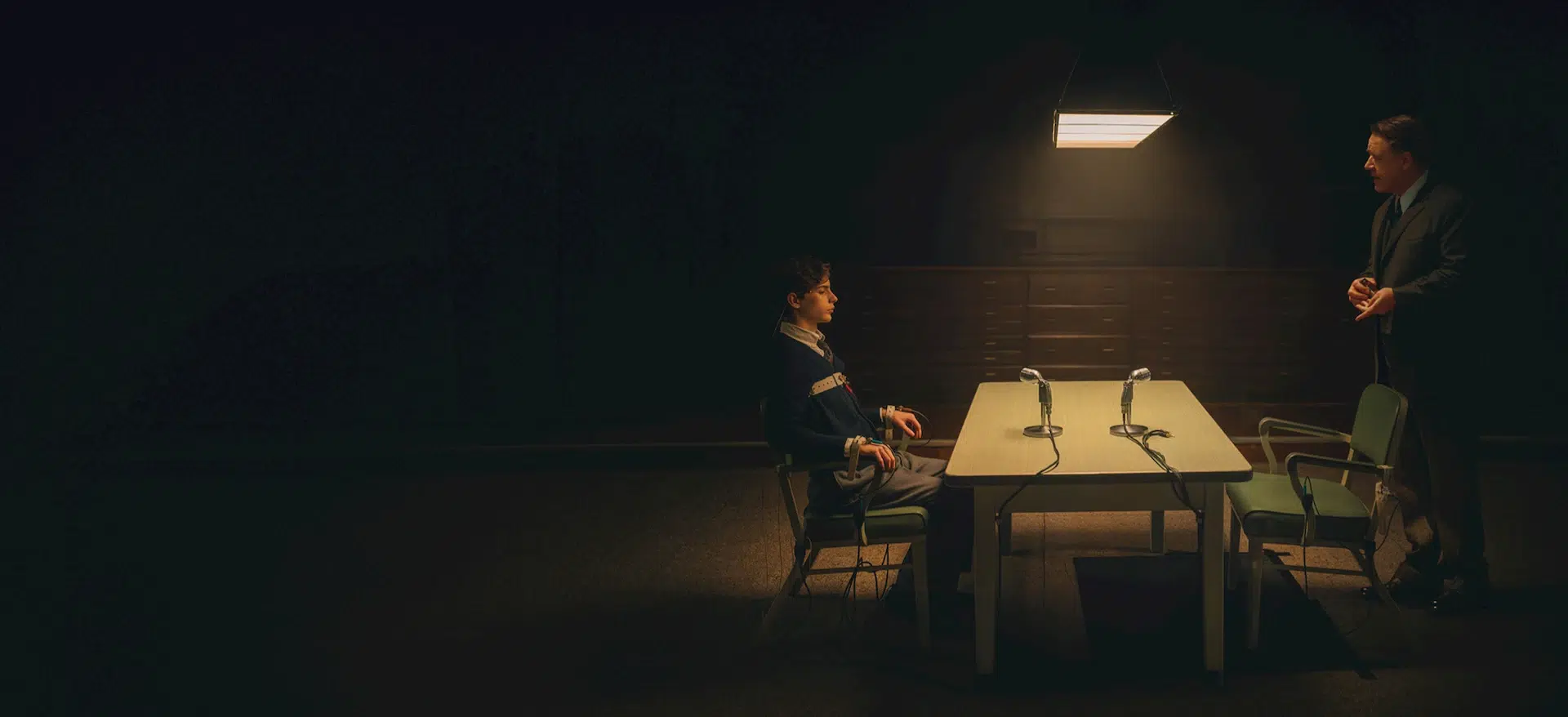
Image credit: Netflix
Did he write about that relationship in his memoirs?
Sam Chalson: Morgan wrote about it, and it was then covered in Murray’s autobiography.
Nelson Graves: Her biography really touches on her intensity, and a lot of the details are not rosy. Another thing that drives Henry Murray crazy is that he spent time with Carl Jung, which is referenced in the movie. He actually built a replica of this tower that Carl Jung built on the lake in Geneva. He built a replica of this at his home in Massachusetts, and this was also where he set up his sex dungeon. And so, yeah… very interesting guy.
Was there, in anything you read, any sense of remorse or remorse as to how he handled the trials and how far he went?
Nelson Graves: Not real. One of the things that impressed us about him as a character was the idea of ego. This man was very arrogant; It was all about fame and prestige. When you look at Ted and his story, it’s very similar. The most important thing for him is to spread his statement so that people can fawn over him and adore how smart he is.
The similarity between the professor who was desperate to obtain and publish the perfect study, in order to curry favor with him, and this terrorist, who was desperate to have people praise him for his own philosophical thesis – there was an incredible parallel there that actually existed in real life.
Did Ted acknowledge, either in interviews or in his writing, how much of an influence Murray had on him?
Sam Chalson: There’s nothing concrete about Murray, but we know from David’s own memoirs, I think, or at least from some interviews with David Kaczynski, that the idea at the end of the movie… Ted says the equivalent of, “Oh, I kept coming back to these experiences,” because in real life, he did that for four years in college.
Why didn’t he stop?
He keeps coming back to show them he can do it. I’m sure this is the thing he told his brother about. I think he is perhaps alluding to what his relationship with Henry Murray was like.
Nelson Graves: At one point David talks about how Ted went to Harvard and that he came back different from Harvard. I think Harvard…it’s a very competitive place, and there are a lot of people with big egos. You don’t have to be a troubled 16-year-old to come back from that place changed.
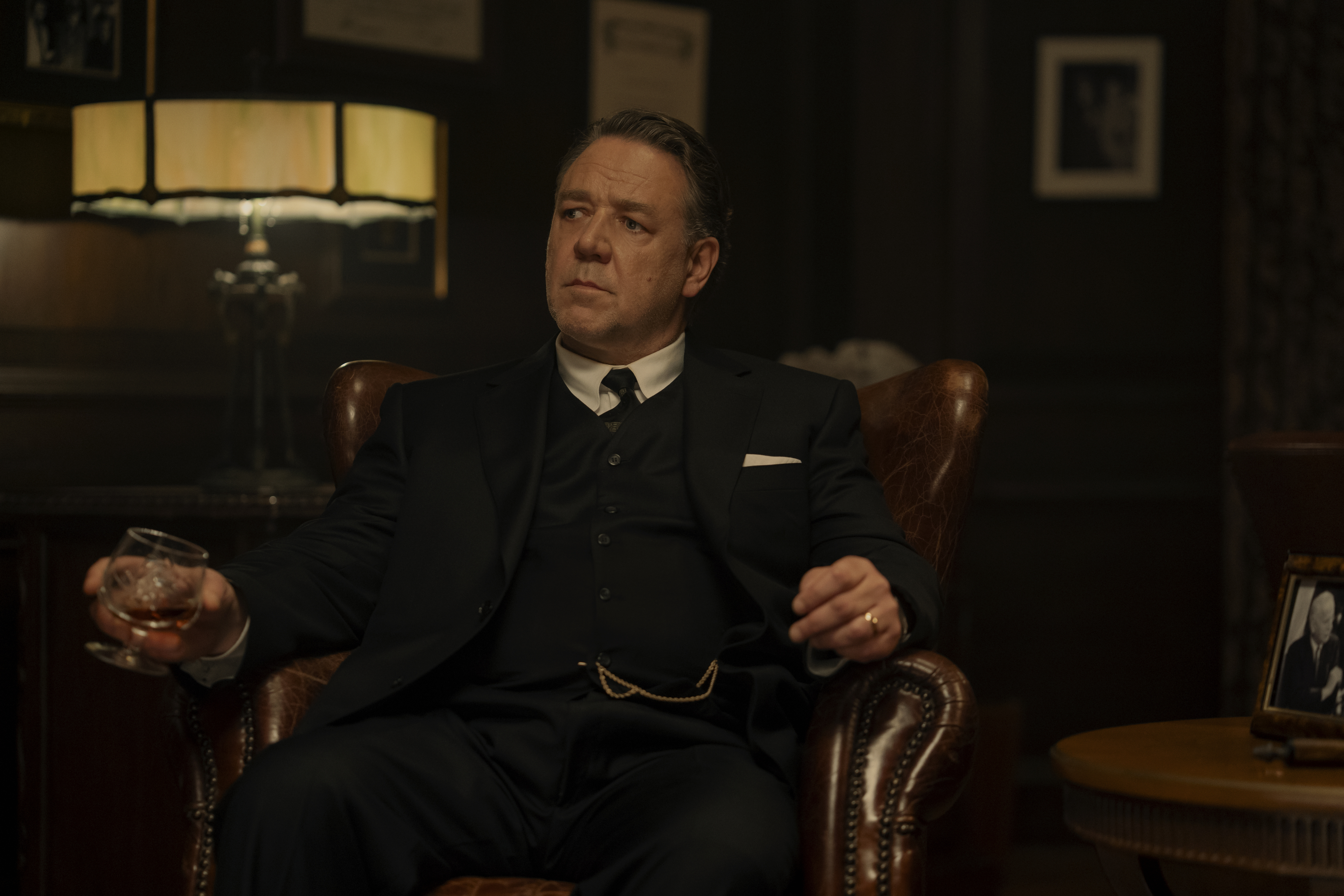
Unabomber. Russell Crowe as Henry Murray in Unabomber. Cr. Philip Boss/Netflix ©2026
Harvard has never published the documentation for these tests. Have you ever contacted the university to see if they would be willing to disclose it to you?
Nelson Graves: We looked to find them, and soon discovered that none of these things had been released, and it seems very typical in a place like this, Henry Murray, to cover up the bad things he did and not talk about them.
When you were writing these tests, how much information did you have about how it would go, how it was structured, and what dramatic license did you both feel comfortable with in those scenes as well?
Sam Chalson: There are a lot of test reports, you can also read them. The actual report he wrote about the tests, when he published it, is available to the public. Most of the stuff is taken from real sources. There are some tapes that came out of there, just typical of these tests that he was taking, and descriptions from other reports of other students who were part of it, and then from the actual study itself.
I mean, it just goes to show how crazy I think these tests were, that we didn’t take a lot of dramatic license in terms of heating the room. They would shine a big light on them, play the tapes and make them dissect their own performances. And the fact that these kids, of course, thought they were either going to discuss or share some ideas with a fellow undergraduate student, and instead there was a graduate student or law student across from them to question them, that’s 100% true.
It’s actually a little worse than what we see in the movie. In real life, in these diaries that they were filling, they were also encouraged to write down their secrets or sexual fantasies that they had or any other kind of shameful things. They thought that these journals were being read by a doctor, but in reality they were being given to their opponent on the other side of these interrogations. So, we kind of dramatize that in our own way deeper into the movie, but almost everything from those scenes is based on some kind of truth.
As two playwrights, you handle their relationship very well. You introduce it without explicitly saying: “Murray may have had a hand, whether small or not, in shaping Ted.”
Nelson Graves: Well, the real thing is that Ted was a troubled child. It is well documented that even before he got there, he had behavioral problems. But he was a child working under the study of one of the greatest psychological minds of all time. Instead of feeling it and helping this child, he was taken advantage of, which is absolutely true. To what extent this turns Ted into a terrorist is almost incidental to the film. The film is about something very specific that actually happened, and I think the story speaks for itself.
[ad_2]