









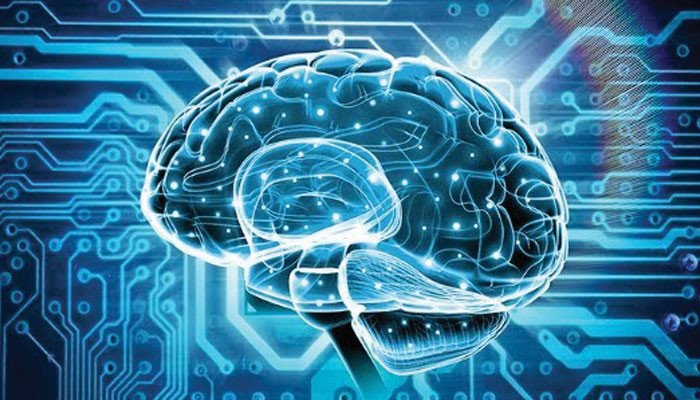
If there is one factor that has influenced the 21st century the most, it is the rapid development of knowledge and technology. From the industrial revolution to the digital revolution, man has come a long way, but in the form of artificial intelligence, AI and quantum computing, we stand at a juncture where human intelligence is being augmented by machines.
These technologies are not only changing economic and social structures, but are also having profound effects on the global balance of power, national security and human values. Do not consider them as mere scientific developments but examine them in the context of national strategy and human future.
ChatGPT’s amazing capabilities to write articles and provide other useful information in seconds is internationally acclaimed. Its upgraded version ChatGPT4 is even better in performance. OpenAI’s ChatGPT had 100 million monthly active users in January 2023, as people around the world queued up to use the chatbot, which mimics human-like conversations and writes the best articles after sifting through data from the Internet, based on the cues it’s given.
Intensive research and development is underway in this field, in efforts that many experts fear is leading humanity to its own destruction. About 50 such AI tools are now in the market including Bard AI, Bing AI, DialoGPT, Socratic, Chatsonic, Jasper Chat, LaMDA and others.
Google is working to upgrade its search engine as well as build one that relies on AI. Microsoft has introduced a “new Bing” search engine described as consumers’ “AI-powered copilot for the web.”
As AI evolves, it becomes increasingly difficult to predict how it will behave in certain situations. This can lead to unintended and potentially disastrous consequences. Another risk of AI is lack of accountability. AI systems operate on their own, making decisions without human input. This can create a situation where it is difficult to hold anyone accountable for the actions of an AI system. AI can also be weaponized, with devastating consequences.
Autonomous weapons, also known as killer robots, swarm drones have already been developed that can attack a hundred or more targets and make autonomous decisions to destroy their targets. Small drones measuring a few centimeters in size are equipped with facial recognition technologies to identify targets in crowded environments and fire shots with precision, selectively super-intelligent machines capable of rapidly improving themselves, greatly increasing their intelligence.
This could lead to a situation where machines become more intelligent than humans, threatening our very existence. Another major threat of AI is replacing humans in jobs. As AI becomes more advanced, it will have the potential to replace human workers in a wide range of industries, leading to mass unemployment and economic disaster.
Along with risks, AI has many benefits. It has the potential to revolutionize almost every aspect of our lives, from medicine to finance, from education to transportation. One of its most promising applications is in healthcare. AI has the potential to help doctors and healthcare professionals diagnose diseases more accurately and quickly, it can also help doctors develop more personalized treatment plans based on a patient’s unique medical history and genetic makeup. It also has the potential to transform education by providing students with personalized learning experiences.
Machine learning algorithms can analyze student data to identify areas of strength and weakness and deliver customized learning materials that are tailored to each student’s individual needs. In this regard, Khan Academy has launched a personal tutoring system called “Khanmego”, making it possible for every student to have a personal AI-based chatbot before long, to guide them in learning at their own pace and improving overall academic performance.
AI has the potential to make transportation safer and more efficient. Self-driving cars and trucks can reduce the number of accidents caused by human error and improve traffic flow. Machine learning algorithms can analyze traffic patterns and make real-time adjustments to optimize travel routes and reduce congestion. It can also help businesses improve their efficiency and productivity by automating repetitive tasks and providing insight into business operations.
Artificial intelligence is the most talked about topic in the world today. It is a field that is developing at an extraordinary pace and is impacting medicine, education, industry, economy, defense and almost every aspect of daily life. But while it has numerous benefits, its careless use can also pose serious threats to human survival. Therefore, it is important that we advance this technology based on wisdom, ethical principles and global norms rather than emotions.
Millions of people are using chatbots on a monthly basis that communicate in a human way and combine vast amounts of information to create coherent written content. A number of other similar AI tools have been introduced that have changed the way research, education, business, and communication work. But with rapid development comes risks.
Scientists have warned that if Artificial Intelligence begins to compete with or surpass human intelligence, this situation could be disastrous for human society. Technologies such as autonomous weapons, killer robots and ghoul drones have already been developed that can hit targets without human intervention. If they are not properly regulated globally, the consequences can be dire.
Similarly, a major problem with AI systems is the lack of accountability. If an automated system makes a wrong decision, who is responsible? Additionally, large-scale changes are also expected in the employment sector. Automated systems will take over repetitive tasks, allowing millions of people to find new employment opportunities. Automation of repetitive tasks in the business sector can increase efficiency and productivity.
According to global economic reports, Artificial Intelligence can create a trillion dollar economy in the next few years. If Pakistan captures even one percent of this emerging global market, the economy can add billions of dollars. In this context, artificial intelligence research centers are being established in the country, with the aim of developing local capabilities to global standards. With the effective use of AI in industry, agriculture, defense and business, Pakistan can gain prominence globally.
Combining quantum computing with artificial intelligence heralds a new era. Conventional computers operate on bits (0 and 1), while quantum computers use qubits that can exist in multiple states simultaneously. Because of this feature, they can solve problems in minutes that would take traditional supercomputers thousands of years to solve. The combination of AI and QC can lead to extraordinary advances in drug discovery, genetic research, material science, nanotechnology, energy systems and agricultural production.
This technology can be revolutionary in areas like cancer cure search, improved crop production, efficient energy storage and environmental monitoring. The combination of AI and QC in the defense field will give a new dimension to decision making, intelligence analysis, cyber security and autonomous systems. Quantum cryptography will enable highly secure communication systems. Countries that master these technologies will have a significant advantage in future wars.
Ultimately, artificial intelligence and quantum computing are not just technologies, but the foundation of a new era. They can provide humanity with unprecedented facilities, better health, stronger economies and safer societies, but this power can also be destructive if used irresponsibly. Hence the need of the hour is that we take a balanced path by combining knowledge, ethics and insight.
If Pakistan promotes timely investment, quality education and research leadership, it can not only join this global race but also emerge as a prestigious and independent academic power. The future will belong to those nations who will make knowledge power and research a national priority. Artificial intelligence and quantum computing undoubtedly have the potential to change the course of human history, but their safe and responsible use requires ethical principles, global laws and international cooperation.
Pakistan is currently facing political and economic challenges but this is the time to prioritize future technologies. If we adopt these technologies in education, research and industrial sector, we can not only stabilize our economy but also gain a prestigious position in the international community. The future belongs to those nations who make knowledge, research and innovation their motto.