
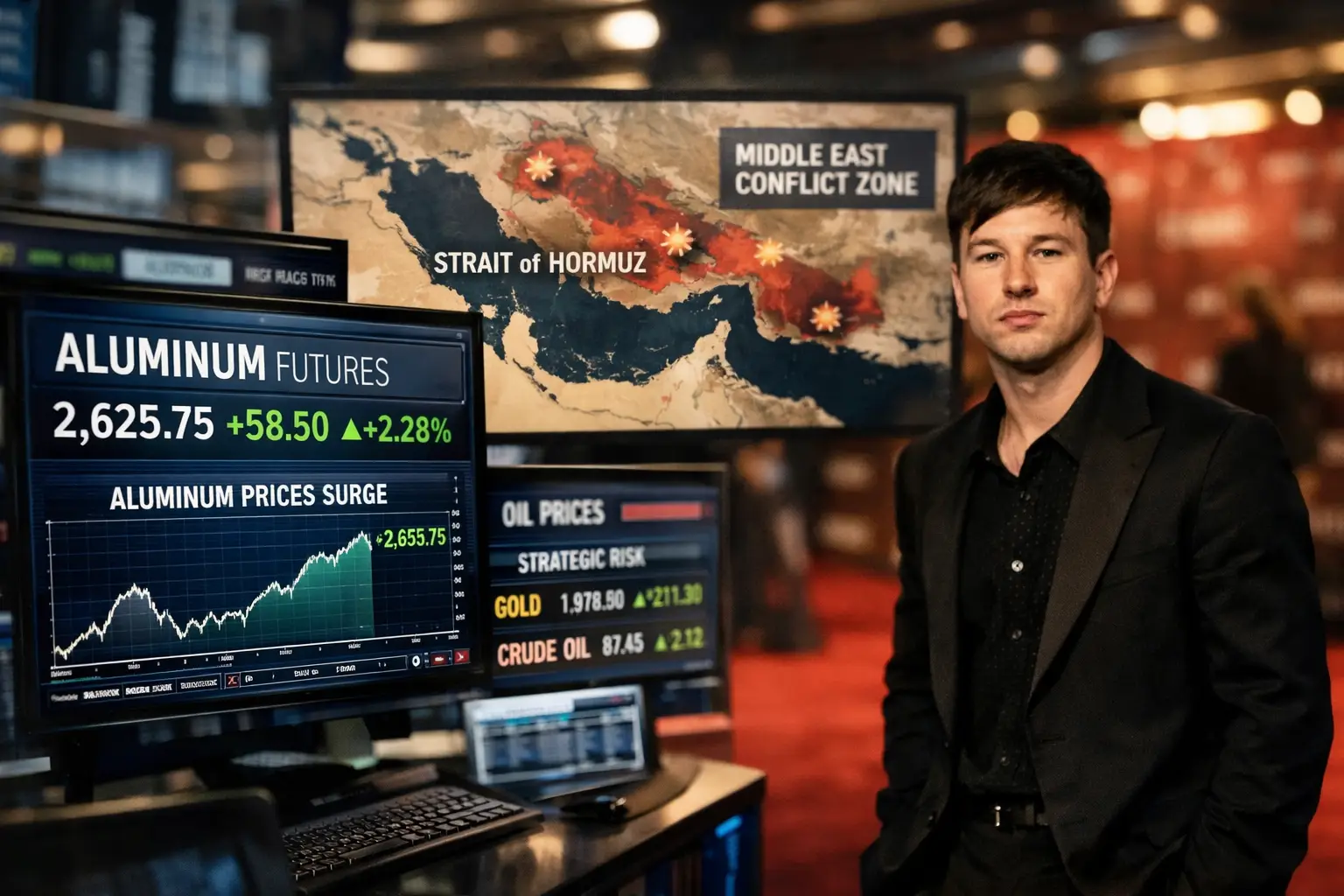

Global aluminum prices continued climbing this week as escalating tensions in the Middle East threaten to tighten supplies of the widely used industrial metal. The rally is unfolding alongside a surge in global market volatility, with U.S. manufacturers and traders closely monitoring disruptions that could ripple across construction, automotive, and packaging industries.
At the same time, Irish actor Barry Keoghan has been drawing attention in New York while promoting new projects, adding a cultural spotlight to a week otherwise dominated by geopolitical headlines and market turbulence.
Aluminum Rally Intensifies on Supply Risks
Aluminum futures have climbed for several consecutive sessions as the ongoing conflict involving Iran threatens production and shipping routes across the Middle East — a region responsible for a significant share of global aluminum output. Analysts say smelter disruptions and export bottlenecks could tighten supply quickly if the conflict expands.
Prices recently rose about 1.7% to roughly $3,516 per metric ton, the highest level since early 2022. Traders warn the rally may continue if shipments from Gulf producers remain restricted.
Market concerns center on the Strait of Hormuz, a critical shipping corridor for energy and industrial materials. Any prolonged closure could restrict exports of aluminum and other commodities, pushing prices higher worldwide.
Industry analysts note that Middle Eastern smelters account for about 9% of global aluminum production, meaning supply interruptions could quickly tighten inventories and boost premiums for buyers in Asia, Europe, and the United States.
U.S. Manufacturers Watching Closely
American manufacturers are already searching for alternative supplies as geopolitical tensions reshape global trade flows. Companies that depend heavily on aluminum — including aerospace, electric vehicle, and construction firms — are closely monitoring market signals.
Commodity strategists say the metal is particularly sensitive to geopolitical shocks because smelting is energy-intensive and concentrated in specific regions. If the conflict disrupts energy infrastructure or shipping lanes, production costs and delivery times could rise sharply.
Meanwhile, some trading firms have begun withdrawing aluminum from London Metal Exchange warehouses, a move that typically signals expectations of tighter physical supply.
Barry Keoghan Appears in New York Spotlight
While financial markets reacted to global tensions, actor Barry Keoghan made headlines in New York during the promotional run for the film Peaky Blinders: The Immortal Man. The movie — a continuation of the popular television series — premiered earlier this month and will stream on Netflix later in March.
Keoghan, who plays Erasmus “Duke” Shelby in the film, was recently photographed in Manhattan and attended the movie’s New York premiere alongside co-stars including Rebecca Ferguson and Cillian Murphy.
A brief red-carpet moment involving Keoghan helping adjust Ferguson’s gown also circulated widely online, illustrating how entertainment news can trend even as global markets remain on edge.
The actor has also been discussing future ambitions in interviews, including the possibility of playing a villain in a future James Bond installment.
Markets Face Continued Volatility
Economists warn that the broader Middle East conflict is already influencing multiple commodities, including oil and metals. Supply disruptions in energy markets have pushed oil prices above $100 per barrel, adding further pressure to global manufacturing costs.
For aluminum markets, traders say the next few weeks will be crucial. If shipping routes reopen and smelter operations stabilize, prices could ease. But a prolonged conflict could deepen the supply squeeze — and keep industrial metals climbing.
