
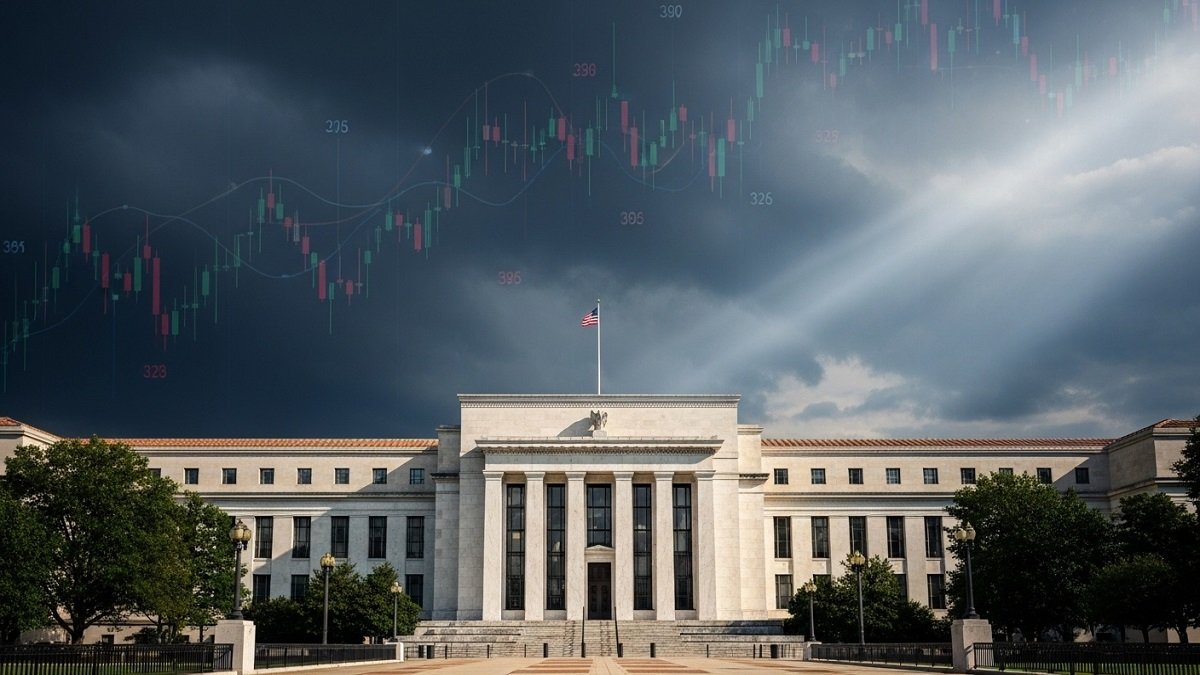

WASHINGTON — The Federal Reserve’s policy committee meets October 28–29, with investors widely expecting another quarter-point cut in interest rates. Yet growing divisions among policymakers and persistent inflation mean the outcome is not guaranteed.
Rate Cut Expectations
According to CME Group’s FedWatch tool, markets are pricing in a 25-basis-point reduction to a range of 3.75%–4%. That would mark the second consecutive cut since September, bringing the fed funds rate to its lowest level since December 2022. Nomura now forecasts additional easing in both October and December, reflecting mounting concern over the labor market.
Employment Concerns
Recent data show sharp labor market deterioration. June recorded the first net job losses in more than four years, while August added just 22,000 positions. Jobless claims are trending higher, raising fears of a broader slowdown. The September payrolls report, due October 3, will be closely watched, though a possible government shutdown could delay its release.
Inflation Still Elevated
At the same time, inflation remains above target. Core Personal Consumption Expenditures (PCE) rose 2.9% year-on-year in August, with tariffs cited as a key driver. The Consumer Price Index report, due October 15, will provide the final major inflation reading before the Fed meets.
Key Dates to Watch
- Oct. 1 — Possible U.S. government shutdown (could delay data releases).
- Oct. 3 — September Jobs Report (nonfarm payrolls, unemployment rate).
- Oct. 15 — Consumer Price Index (CPI) for September.
- Oct. 28–29 — FOMC meeting (rate decision on Oct. 29, 2 p.m. ET).
Policy Divisions Inside the Fed
Officials remain split over how far and fast to cut. Some argue additional easing is essential to prevent unemployment from surging. Others, including St. Louis Fed President Alberto Musalem, have urged caution, warning that premature rate cuts could entrench inflationary pressures.
“Cut too slowly, and the labor market could unravel. Cut too fast, and inflation expectations could become unanchored,” said Michael Linden, senior policy fellow at the Washington Center for Equitable Growth.
Political Pressure and Fed Independence
Adding to uncertainty, President Donald Trump is seeking to remove Fed Governor Lisa Cook, a Biden appointee, in a case now before the Supreme Court. A lower court blocked the ouster, but if Trump succeeds, it would mark a significant step in reshaping the central bank’s voting committee.
Market Outlook
Financial markets have been trading on expectations of easier policy. Treasury yields have drifted lower, equities have firmed modestly, and the U.S. dollar has weakened against major currencies as investors anticipate reduced yield advantages. Still, volatility remains a risk. A clear dovish signal could extend rallies in bonds and stocks, while any hesitation on cuts could spark sharp repricing across markets.
What Comes Next
The Federal Open Market Committee (FOMC), comprising 12 voting members, will release its decision at 2 p.m. ET on Wednesday, October 29. Fed Chair Jerome Powell will follow with a press conference outlining the policy stance and the Fed’s assessment of the economic outlook.
Markets are leaning toward a cut — but with inflation still elevated, jobs weakening, and political pressure mounting, the Fed’s balancing act has rarely been more precarious.
