
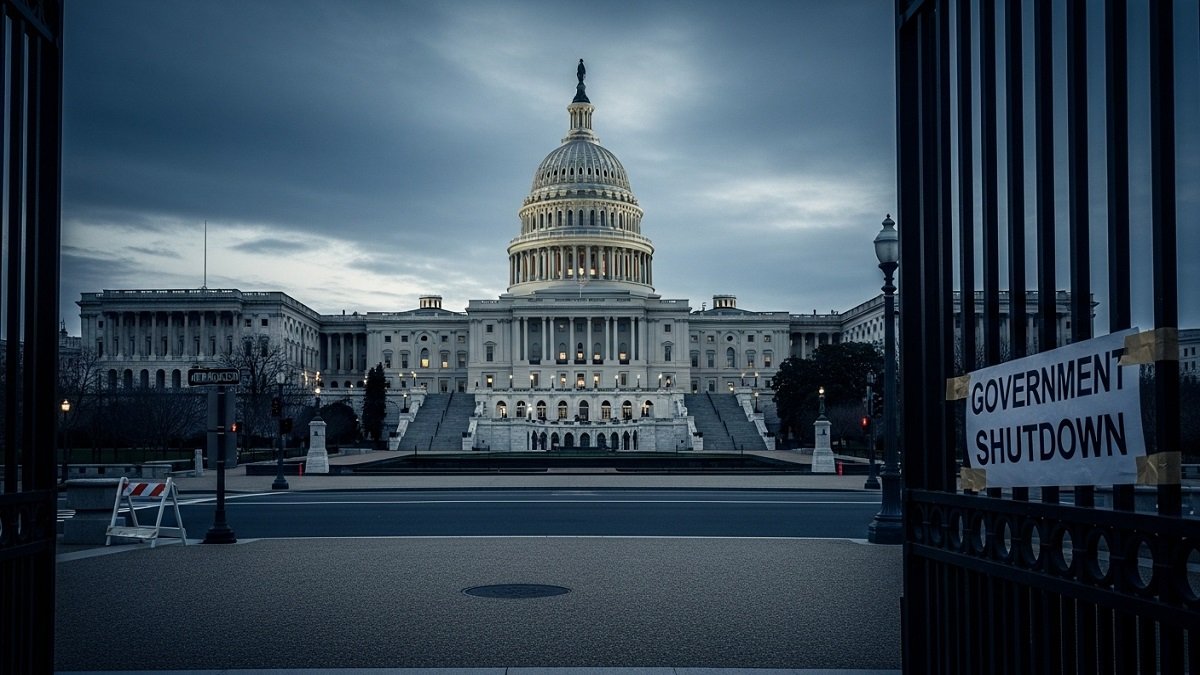

WASHINGTON — A partial U.S. government shutdown is increasingly likely as Republicans and Democrats remain at an impasse over federal funding, raising the prospect of near-term disruptions for workers, markets, and economic data releases.
President Donald Trump is expected to meet congressional leaders in a late push to keep the government open, but analysts see little chance of compromise. Betting exchange Polymarket has assigned a 72% probability to a shutdown beginning October 1.
Legislative Stalemate
The core dispute centers on healthcare. Democrats are demanding a reversal of Republican Medicaid cuts and an extension of Affordable Care Act premium tax credits. Republicans, who require Democratic support to overcome the Senate filibuster, have rejected those terms. Both sides blocked rival funding proposals last week, leaving no viable path forward.
Labor Market Effects
If a shutdown occurs, Goldman Sachs estimates roughly 900,000 federal employees could be furloughed, temporarily reducing government services. Historically, workers have received back pay, but a White House memo reported by Politico indicates the Trump administration may consider permanent layoffs, potentially accelerating staff reductions across agencies.
Macroeconomic Impact
Economists expect the drag on growth to build gradually. Nomura projects the shutdown would shave 0.1–0.2 percentage points from GDP per week, while temporarily inflating the unemployment rate as furloughed workers are classified as jobless. The hit could become more severe if the shutdown stretches beyond several weeks, particularly given the current backdrop of softening labor markets and tariff-driven inflationary pressure.
“The U.S. economy is already on a knife’s edge—the labor market has softened and inflation has risen,” said Michael Linden of the Washington Center for Equitable Growth. “Extended political brinkmanship could deepen consumer pessimism and slow spending.”
Market Repercussions
Investors may face heightened uncertainty due to delays in federal economic reports. Shutdowns in the past have postponed releases such as employment and inflation data, complicating monetary policy decisions and potentially unsettling markets. The closely watched September jobs report, due Friday, could be delayed, leaving the Federal Reserve and financial markets with limited visibility on labor market conditions.
While forecasters see limited damage from a short disruption, prolonged gridlock risks undermining confidence, destabilizing markets, and compounding existing economic headwinds.
