
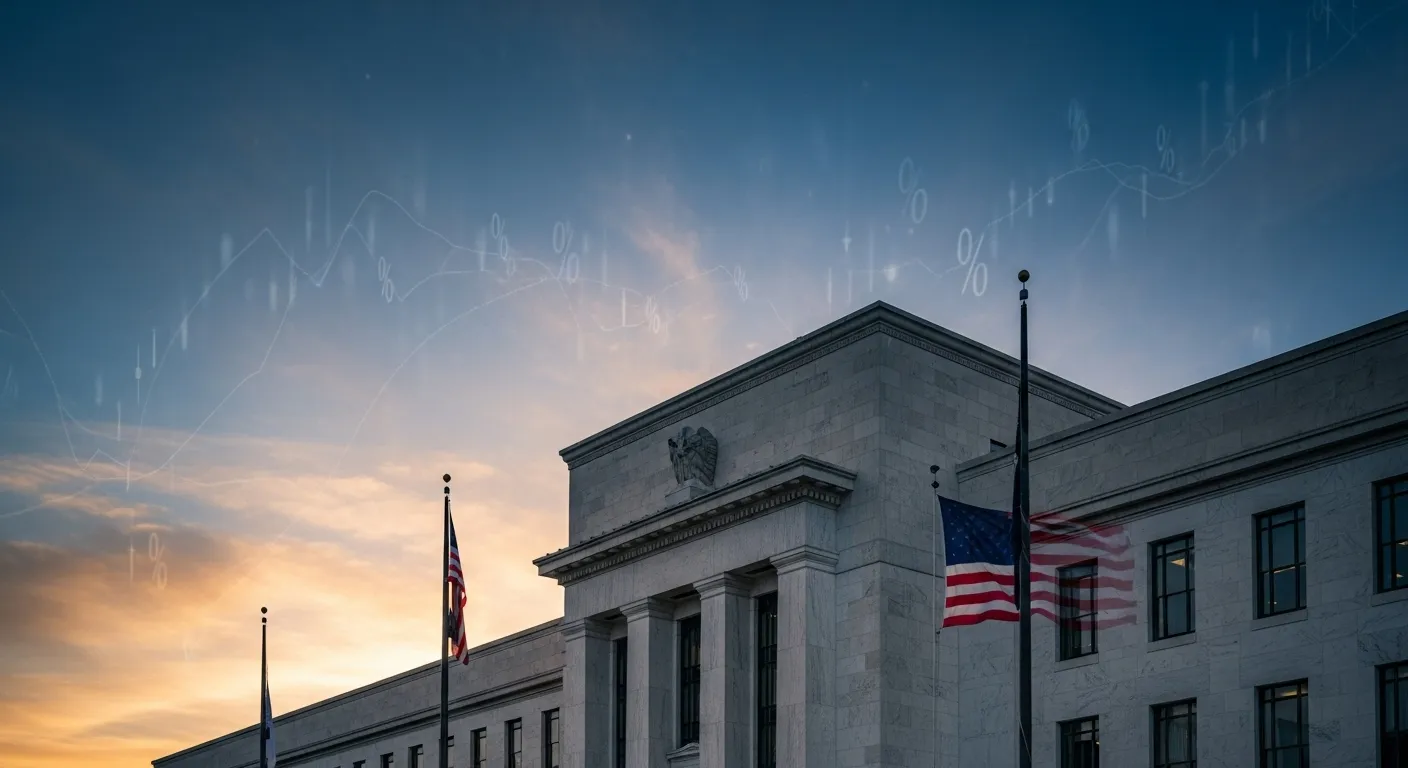

The First Test of 2026, Will the Fed Hold Steady?
The first Federal Reserve meeting of 2026 is less about rates and more about control.
As the Federal Open Market Committee meets on January 27–28, policymakers are widely expected to hold the Federal Funds Rate steady at 3.50% to 3.75%. After delivering three rate cuts in late 2025, the Fed now faces a more difficult task: convincing markets that patience, not momentum, defines the next phase of policy.
The Macro Backdrop, Growth Still Too Strong to Rush
Incoming data has complicated the easing narrative.
Core inflation progress slowed into year-end, with Core PCE still hovering near 2.8%, well above the Fed’s comfort zone. At the same time, growth has not cooled the way policymakers hoped. The Atlanta Fed’s GDPNow model is tracking Q4 growth near 5.4%, a pace that hardly signals economic fragility.
Labor data reinforces that message. Expectations for the January jobs report point to continued payroll gains and only modest loosening in labor conditions.
Put simply, the data does not force the Fed’s hand.
Expected Decision, A Clean Pause
The January meeting almost certainly delivers:
- Rate move: 0 basis points
- Policy signal: wait and see
- Forward guidance: fully data dependent
A cut at the first meeting of the year would require a clear inflation shock or sudden growth scare. Neither is present.
Holding steady allows the Fed to assess whether late-2025 easing feeds back into prices before committing to further action.
Inflation, The “Last Mile” Problem Remains
Inflation is lower, but it is no longer improving smoothly.
Recent trends show:
- Services inflation staying firm
- Shelter disinflation slowing
- Core measures flattening rather than falling
This is the “last mile” problem the Fed has warned about repeatedly. Cutting too quickly risks reigniting pressures that policymakers spent two years trying to suppress.
For January, inflation argues for restraint.
The Dot Plot Conflict, Higher for Longer 2.0?
There is no new dot plot at this meeting, but December’s projections still matter.
At the December meeting:
- The median dot implied one 25-basis-point cut in all of 2026
- The terminal rate penciled in near 3.25% by year-end
Markets disagree.
According to futures pricing tracked by the CME FedWatch Tool, traders are betting on rates reaching 3.00% as early as July. That creates a roughly 50-basis-point expectation gap between policymakers and markets.
This is where risk lives.
If the Fed allows that gap to persist unchecked, financial conditions may ease further, undercutting the inflation fight.
The Fiscal Sidebar, Why the Fed Is Extra Cautious
Monetary policy is no longer operating in isolation.
The 2025 tax and spending package, often referred to as the One Big Beautiful Bill Act, has introduced fresh fiscal stimulus into an economy that is already growing above trend. New tax incentives and infrastructure spending are supporting demand at a time when the Fed is trying to slow it.
This fiscal tailwind makes inflation harder to finish off and limits how aggressively the Fed can cut without losing credibility.
Powell’s Core Challenge, Messaging Over Moves
Chair Jerome Powell will spend this meeting walking a narrow line.
Expect him to:
- Push back gently against aggressive cut expectations
- Stress that policy is not on a preset path
- Emphasize inflation risks over growth fears
If asked about market pricing, Powell is likely to repeat a familiar message. Markets do not set policy. Data does.
The tone matters more than the decision.
Market Scenarios to Watch
| Scenario | Fed Signal | Likely Market Reaction |
|---|---|---|
| Dovish Pause | Rates unchanged, hints at March flexibility | Yields fall, equities rally |
| Hawkish Pause | Rates unchanged, stresses sticky services inflation | Yields rise, USD strengthens |
| The Wildcard | Mentions QT or balance sheet risks | Liquidity tightens, volatility spikes |
Final Take:
The January meeting is the Fed’s attempt to reclaim the steering wheel.
If Powell succeeds, he cools the market’s cut-fever without freezing the recovery. If he fails, easing financial conditions may force a tougher stance later in the year.
Either way, January is not the resolution point.
All eyes now shift to the March 17–18 meeting, where a new dot plot will finally force the Fed to show its hand.
