

KEY TAKEAWAYS
- The Dow Jones Industrial Average surged 1,125 points (2.49%) to close at 46,341.51 Tuesday, while the S&P 500 gained 2.91% and the Nasdaq Composite rose 3.83% — the best single day for all three indexes since May.
- Despite Tuesday’s surge, all three indexes posted their worst quarterly performance since Q2 2022 — the Nasdaq fell 7.1%, the S&P 500 dropped 4.6%, and the Dow shed 3.6% for Q1 2026.
- The Strait of Hormuz — just 21 miles wide at its narrowest point — carries roughly a fifth of the world’s daily crude oil supply. Its blockade is the single economic mechanism driving virtually every major market move in Q1 2026.
- Brent crude remained above $100 per barrel, while the national average for gasoline topped $4 for the first time since 2022, with diesel hitting $5.45 a gallon.
- Marvell Technology shares soared nearly 13% after announcing a $2 billion strategic investment from Nvidia and an expanded semiconductor partnership.
- Warren Buffett told CNBC he still makes daily investment calls at Berkshire Hathaway and recently made a mystery purchase — but isn’t ready to say what it is.
- Apellis Pharmaceuticals shares more than doubled after Biogen agreed to acquire the company for $41 per share in cash, valuing the deal at approximately $5.6 billion.
Tuesday’s session gave investors something they hadn’t felt in weeks: genuine optimism. Stocks staged their sharpest single-day rally since May — but the damage from one of the most turbulent quarters in recent memory was already done.
Stocks Close Sharply Higher as Iran Peace Signals Hit the Wire
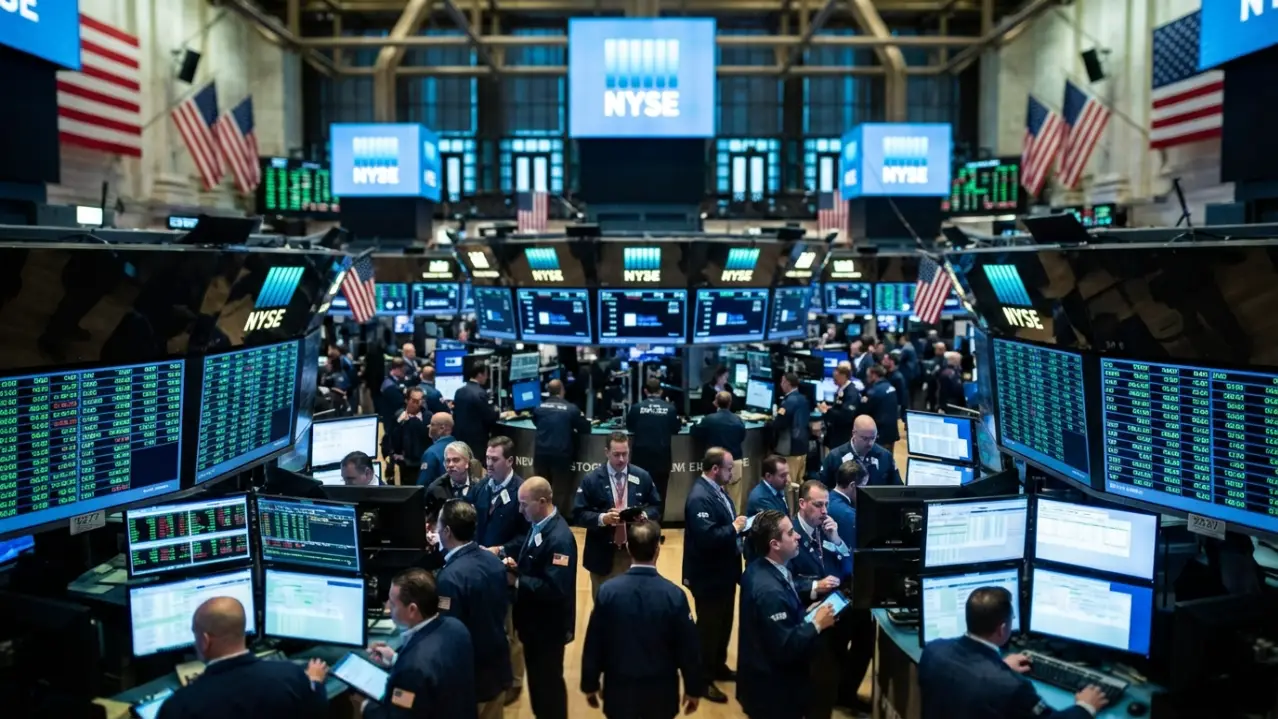
Stocks rallied sharply Tuesday to close out one of the roughest months and quarters in years. The Dow rose by 1,125 points, or 2.49%. The S&P 500 gained 2.9% and the tech-heavy Nasdaq Composite rose 3.8%. All three experienced their best trading day since May.
The move came after an unconfirmed report said Iranian President Masoud Pezeshkian is open to ending the war with security guarantees. State media later confirmed the statement.That single headline — even hedged by conditions and diplomatic uncertainty — was enough to trigger a broad-based buying surge that lifted nearly every sector.
President Trump told the New York Post on Tuesday that he believes the Iran war will likely end soon, adding, “we’re not going to be there too much longer.” The Wall Street Journal also reported Monday that Trump told aides he was willing to end the conflict without full reopening of the Strait of Hormuz — a significant shift that bond and equity markets had already begun pricing in.
The Brutal Quarter Underneath Tuesday’s Rally
Tuesday’s gains were real. So was the month and quarter that preceded them.
The S&P 500 fell 5.09% in March, and the Nasdaq Composite declined 4.75%. The U.S.-Israeli war on Iran and the near-total blockade of the Strait of Hormuz weighed heavily on markets throughout the month.
For the full quarter: the S&P 500 had its worst quarterly performance since 2022, dropping nearly 4.6%. The Nasdaq, with its heavy technology weighting, fell more than 7% — entering correction territory in the process.
Nasdaq Composite: Q1 2026 Correction Tracker
| Milestone | Level | Date |
|---|---|---|
| All-Time High (Peak) | ~22,490 | Late October 2025 |
| Q1 2026 Close | ~21,591 | March 31, 2026 |
| Q1 Quarterly Loss | –7.1% | Jan 1 – Mar 31, 2026 |
| Peak-to-Trough Intra-Quarter | –10%+ (correction territory) | Mid-March 2026 |
What “correction” means in plain English: A 10% decline from a recent peak is the threshold Wall Street calls a correction. It doesn’t predict a bear market — it signals that sellers have overwhelmed buyers enough to meaningfully reprice risk. At current levels, the Nasdaq is trading at roughly a 10% discount to its peak. Whether that’s a buying opportunity or the beginning of a deeper move depends almost entirely on how quickly the Strait of Hormuz reopens.
The U.S. stock market came into 2026 after three straight years of strong gains, with many international markets having outpaced it in 2025. Now investors’ attention is squarely on how long the Iran war will last, how much inflation could jump, and what that means for the economy.
The losses came almost entirely from one catalyst — the S&P 500 is down more than 7% since the start of the year, with those losses coming entirely after the U.S. and Israel launched strikes on Iran in late February. Before the war began, the index had been essentially flat for the year.
The Strait of Hormuz: The 21-Mile Chokepoint Moving the Dow
The Strait of Hormuz is the single most important chokepoint in global energy markets. At its narrowest, it’s just 21 miles wide — but roughly a fifth of the world’s crude oil transits through it every day during peacetime, making its blockade one of the most economically consequential events possible in commodity markets.
Every time a headline suggests the Strait might reopen sooner, oil falls and stocks rally. Every time it doesn’t, the opposite happens. That dynamic — a 21-mile-wide waterway dictating the direction of the Dow — is the defining market mechanism of Q1 2026. It explains Tuesday’s 1,125-point Dow surge just as cleanly as it explains March’s brutal selloff.
Brent crude has shot from roughly $70 per barrel before the conflict began to as high as $119 at times during the war. The jump in diesel is even more pronounced — the average for a gallon is now $5.45, up from about $3.76 before the war began, according to AAA.
West Texas Intermediate crude futures were down nearly 1% to around $102 a barrel at Tuesday’s close, with Brent holding near $104. The muted decline in oil — even on ceasefire news — signals that markets remain skeptical about how quickly the Strait actually reopens.
The 10-year Treasury yield hit 4.48% earlier this week — its highest level since July — before trading lower Tuesday to slip below 4.30%. That yield matters directly for consumers: it sets the floor for mortgage rates, auto loans, and virtually every other borrowing product in the country. A sustained decline in the 10-year would bring meaningful household relief.
Gas prices have topped $4 a gallon nationally for the first time since September 2022, up more than a dollar since March 1. Prices are up more than a dollar since the start of the month, marking the fastest 30-day increase in gas prices in more than five years. Higher gasoline functions as a direct tax on consumer spending, leaving households with less for everything else.
Gold futures advanced 3.4% to around $4,710 an ounce on Tuesday but remain well off their January peak above $5,625. Gold fell nearly 17% this month — its worst monthly performance since October 2008. Higher oil prices and the prospect of energy-driven inflation shifted the outlook for central banks, raising the opportunity cost of holding gold, which pays no income.
The U.S. Dollar Index fell 0.6% to 99.90. Bitcoin recovered to $67,700 from overnight lows below $66,000.
Marvell Soars 13% on Nvidia’s $2 Billion Investment
The day’s biggest single-stock mover outside of earnings was Marvell Technology, which closed up nearly 13% after announcing a strategic deal with Nvidia.
Marvell said Nvidia made a $2 billion investment and expanded a partnership that integrates more of Marvell’s semiconductors and networking products into Nvidia’s AI infrastructure. Nvidia shares climbed 5.6%.
Nvidia CEO Jensen Huang told CNBC that the partnership is expected to expand the total addressable market for both companies. The deal continues a pattern of Nvidia taking strategic minority stakes in semiconductor partners to secure supply chain flexibility and custom silicon access as AI infrastructure buildout accelerates globally.
All seven Magnificent Seven stocks ended comfortably higher Tuesday after finishing mixed Monday. Meta Platforms led the group again, closing up 6.7% — extending Monday’s 2% gain.
Nike Falls 9% After Hours on Weak Revenue Guidance and Deepening China Drag
Nike had a strong regular session — up more than 3% ahead of its earnings report. The after-hours reaction went in the opposite direction, and the China story was at the center of it.
Nike fell sharply in extended trading after the company warned that sales would fall for the rest of the calendar year, led by an expected 20% decline in its key China market during Q4. CFO Matt Friend said Nike expects sales for its current fiscal fourth quarter to drop between 2% and 4%, compared with Wall Street estimates of a 1.9% increase, according to LSEG.
That 20% China decline follows a 7% drop in Q3 — meaning the deceleration is accelerating, not stabilizing. Greater China represents one of Nike’s most strategically important markets and one of its most structurally challenged right now, with CEO Elliott Hill acknowledging the company has only recently gotten “clearer on the structural challenges” in the region. Until that market shows real inflection, the turnaround story remains incomplete regardless of what North America does.
CEO Elliott Hill acknowledged on the earnings call that the company’s turnaround is “taking longer than I’d like.” Nike did beat Q3 earnings estimates — posting EPS of $0.35 against a consensus of $0.28 — but a beat against a low bar on a quarter when the forward guidance completely missed didn’t prevent the after-hours selling.
Nike shares were down about 17% for 2026 through Tuesday’s regular-session close, before the additional post-earnings drop extended that loss further.
Snap Surges 15% After Activist Investor Discloses Stake
Snap shares surged 15% Tuesday after activist investor Irenic Capital Management disclosed a roughly 2.5% economic interest in the company’s Class A shares and sent CEO Evan Spiegel a letter outlining specific steps to unlock shareholder value.
Irenic’s proposal includes spinning off or shutting Snap’s AI eyewear unit (Specs), aligning employee incentives, and focusing AI investment on improving advertising monetization. The firm put a target value of $26.37 per share — or $35 billion — on what it believes the company could be worth following those changes.
The 15% jump is striking given the backdrop: Snap shares were priced at $17 in their 2017 IPO and entered Tuesday at $4.02. Even with Tuesday’s gains, the stock remains more than 40% lower year-to-date. Irenic’s letter describes its pitch as “Snap Back to Reality: Save Snap Now” — and tells Spiegel that “your second act, Saving Snap, the company, can be even more impressive than building Snap, the product.”
Warren Buffett: Still Investing, Recently Made a Mystery Buy
Three months into Greg Abel’s tenure as Berkshire Hathaway CEO, Warren Buffett told CNBC Tuesday that he hasn’t actually stepped back from investment decisions — and recently made something new.
The 95-year-old investor said he still comes into the office every day, continues to decide on major investments, and recently bought an undisclosed position. He declined to say what it was. “I can still contribute a tiny bit,” Buffett told CNBC’s Becky Quick.
Berkshire bought $17 billion in Treasury bills this week, adding to its sizable cash reserves, which Buffett says he could deploy if markets fall significantly. Buffett also said he sold Apple too soon and that at the right price, he’d buy more — “but not in this market.”
Buffett added that he calls Berkshire’s director of financial assets every morning before the opening bell, that all trades follow those conversations, and that Abel “gets the sheet every day” — Berkshire’s daily record of all investment activity. “I won’t make any investments that Greg thinks are wrong,” Buffett said.
Apellis Pharmaceuticals Doubles After Biogen Acquisition Deal
Apellis Pharmaceuticals shares more than doubled Tuesday after Biogen agreed to acquire the company for $41 per share in cash — a deal valued at approximately $5.6 billion.
Apellis shareholders also receive a contingent value right entitling them to two additional $2 payments per share, contingent on annual net sales thresholds for SYFOVRE, its age-related macular degeneration treatment. Biogen said the transaction is expected to be increasingly accretive to non-GAAP diluted EPS starting in 2027 and is expected to close in Q2 2026.
Apellis shares had closed Monday at $17.09 and jumped more than 135% to over $40 in Tuesday’s trading — now up 60% year-to-date. Biogen shares fell 4.5% on the news, a typical acquirer reaction, though the firm said the acquired commercial products generated $689 million in revenue in 2025 and are expected to grow in the mid-to-high teens through at least 2028.
McCormick–Unilever Deal Creates $65 Billion Food Giant
Spice maker McCormick agreed to merge with Unilever’s food business in a deal that would create one of the largest flavor-focused food companies in the world — and the market didn’t celebrate either side.
McCormick said it would pay $15.7 billion in cash and approximately $29.1 billion in stock for Unilever’s food brands division, valuing the combined entity just above $65 billion. The deal gives Unilever a 9.9% stake in the new company, with Unilever shareholders owning 55.1% and McCormick’s existing shareholders holding 35%. McCormick retains its name and NYSE listing.
McCormick shares sank more than 6% on the news. Unilever fell 5%. Both drops reflect the market’s standard reaction to large-scale mergers — uncertainty about integration timelines, balance sheet strain, and whether the strategic rationale justifies the complexity and immediate dilution.
Memory Stocks: Last Year’s AI Winners Are Getting Repriced
Memory chip stocks — among 2025’s standout performers — have given back significant ground over the past two weeks, and the reason is both technical and fundamental.
Micron shares are down nearly 30% since closing at an all-time high on March 18. Sandisk and Western Digital have dropped 22% and 19%, respectively, from their own highs the following day.
The proximate cause: Citigroup noted Tuesday that spot DRAM prices are down 6% since mid-March, attributing much of that decline to Google’s recent announcement of TurboQuant — a data compression method that improves the efficiency of AI models’ memory recall. If AI systems need less physical memory to perform the same tasks, the demand thesis that drove memory stocks to record highs gets structurally challenged.
Labor Market: Hiring at Pandemic-Era Lows Before the War Even Started
Tuesday’s jobs data added another layer of concern to the economic picture — and the data predates the war entirely.
The Bureau of Labor Statistics reported that the hiring rate fell to 3.1% in February from 3.4% in January — tying the low set in April 2020 during COVID-19 closures, and only lower during the Great Recession recovery in 2010. There were 6.9 million job openings in February, down from 7.2 million in January.
The number of layoffs remained at 1.7 million — close to historic lows — confirming the picture of a low-hiring, low-firing labor market. Workers aren’t losing jobs at alarming rates, but companies aren’t adding headcount either. That combination points to an economy hitting the brakes before the Iran war even began adding fuel costs to every balance sheet.
The Conference Board reported that its consumer confidence headline index edged higher to 91.8 for March — up 0.8 points from February and better than the consensus forecast of 87.5. But labor market expectations within the same survey worsened, with more respondents anticipating fewer jobs over the next six months than in February.
What Investors Are Watching Next
All eyes will remain on the price of oil and news out of the Middle East. As tensions ebb and flow from the region, so will the direction of the markets, according to Jay Woods, chief market strategist at Freedom Capital Markets.
The specific catalysts that could drive the next significant leg — in either direction — are well-defined: any confirmed diplomatic progress on the Strait of Hormuz, Friday’s March jobs report from the Bureau of Labor Statistics, and how the Federal Reserve responds to what is now a complicated dual-mandate challenge of slowing growth and rising energy-driven inflation.
Strategists at Goldman Sachs have warned that if the Strait of Hormuz remains closed through the summer, the S&P 500 could see an additional 5–7% decline as the impact on global GDP becomes more pronounced.On the other side, a swift ceasefire and falling oil could turn Tuesday’s rally into the start of a genuine recovery — historical data from Carson Group shows the S&P 500 rises an average of 3.4% in the six months following major geopolitical events, even after an average 0.9% loss in the first month.
For now, the market gave investors one good day to end a very bad quarter. Whether it’s the start of a turning point or a head fake depends entirely on developments in a 21-mile-wide waterway that no model can reliably predict.
