
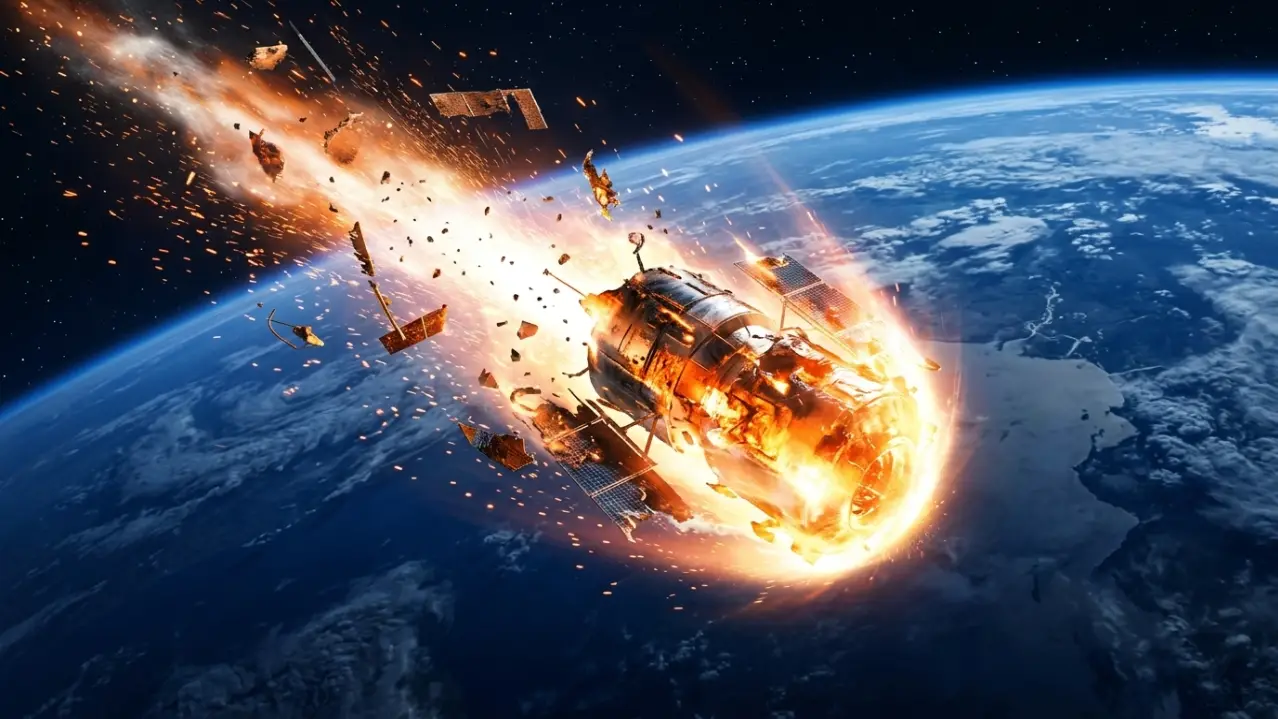

WASHINGTON — A decade-long mission to unlock the secrets of Earth’s radiation belts reached a fiery conclusion early Wednesday morning. NASA’s Van Allen Probe A, a 1,300-pound spacecraft, officially completed its mission as it careened through the atmosphere in an uncontrolled descent.
According to data from the U.S. Space Force, the nasa satellite crash earth event occurred at approximately 6:37 a.m. EDT on March 11, 2026. Tracking stations confirmed the spacecraft entered the atmosphere over a remote stretch of the eastern Pacific Ocean. While the agency anticipated that the vast majority of the probe would vaporize during the descent, officials noted that some durable components likely survived the plunge into the sea.
A Mission Extended by Excellence
Launched in 2012, the Van Allen Probes were originally designed for a short two-year stint. However, the twin spacecraft—A and B—proved remarkably resilient, surviving the harshest radiation environments in the solar system for nearly seven years before being decommissioned in 2019.
The mission provided critical data on the “Van Allen belts,” the doughnut-shaped rings of high-energy particles surrounding our planet. This research remains vital for protecting U.S. infrastructure, as these belts can interfere with GPS satellites, power grids, and communication systems.
Why the NASA Satellite Crashes Happened Early
While initial projections from 2019 suggested the probe would remain in orbit until 2034, Mother Nature had other plans. A surge in solar activity, known as the “solar maximum,” caused Earth’s upper atmosphere to expand. This extra density created significant drag, pulling the spacecraft toward Earth eight years ahead of schedule.
“The Sun’s current cycle was far more intense than our early models predicted,” said a NASA orbital debris analyst. “That increased friction turned a slow drift into a steady descent, leading to the nasa satellite crashes we are seeing this week.”
Safety and Risk Assessment
Despite the term “crash,” the risk to the American public was virtually nonexistent. NASA and the Space Force estimated the odds of any fragment striking a person at roughly 1 in 4,200. Given that 70% of the Earth is covered by water and most of the remaining land is uninhabited, the Pacific Ocean served as a natural landing zone for any surviving debris.
The probe’s twin, Van Allen Probe B, is still circling the planet. Experts expect it to follow a similar path, with its own nasa satellite crash earth event projected to occur sometime around 2030.
