
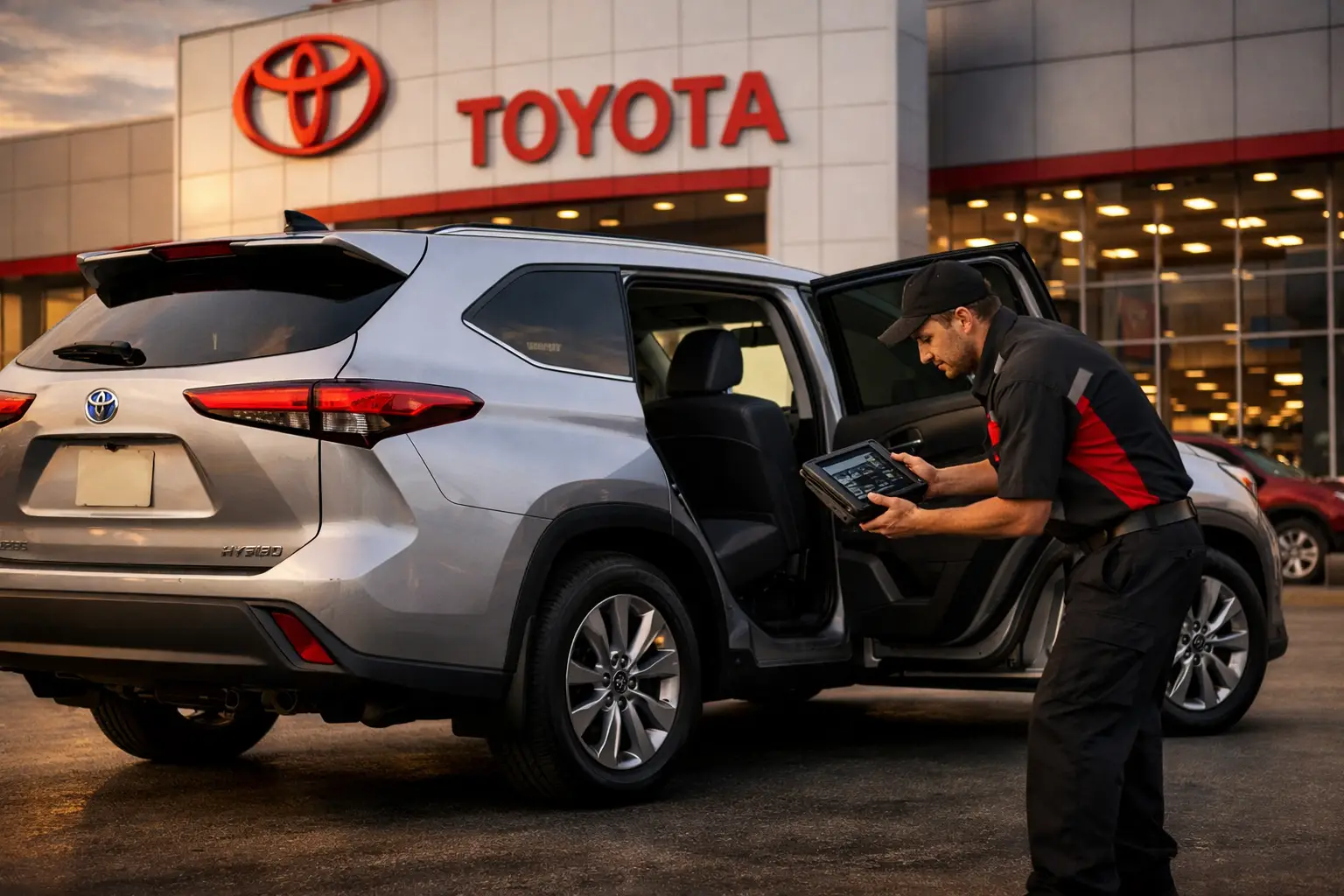

The Toyota is recalling hundreds of thousands of Toyota Highlander Hybrid SUVs across the United States after discovering a potential safety issue involving the vehicle’s rear seat assembly.
The recall affects several recent model years of the popular hybrid SUV, one of the most widely used family vehicles in America. Regulators say the issue could increase the risk of injury in the event of a crash.
Here’s what U.S. drivers need to know about the Toyota Highlander Hybrid recall, including the cause of the problem, the affected vehicles, and the steps owners should take next.
What Caused the Toyota Highlander Hybrid Recall
Toyota launched the recall after identifying a potential defect in the second-row seat structure in certain vehicles.
According to the company, a component inside the rear seat assembly may not have been properly secured during manufacturing. If the part loosens or fails to lock correctly, the seat may not provide the intended level of protection during a collision.
Because rear seats are part of a vehicle’s crash-safety system, even a small structural defect can trigger a large recall.
Toyota engineers discovered the issue during internal inspections and supplier quality reviews. The company reported the defect to regulators and began a voluntary recall campaign to address the problem.
Which Highlander Hybrid Model Years Are Affected
The recall mainly targets recent Highlander Hybrid SUVs sold in the United States.
Affected vehicles may include:
- 2020 Toyota Highlander Hybrid
- 2021 Toyota Highlander Hybrid
- 2022 Toyota Highlander Hybrid
- 2023 Toyota Highlander Hybrid
- Some early 2024 Highlander Hybrid models
These vehicles were produced for the North American market and sold through Toyota dealerships across the country.
Owners can verify whether their vehicle is included by entering their VIN on the recall database operated by the National Highway Traffic Safety Administration.
Safety Risks Linked to the Seat Problem
The recall focuses on a rear seat structural issue, which becomes dangerous in a crash scenario.
If the seat frame or locking mechanism fails, the seat could shift unexpectedly during impact. That movement could reduce the effectiveness of seat belts and other safety systems designed to protect passengers.
Possible risks include:
- Rear seats moving during a collision
- Seatbelt alignment becoming incorrect
- Reduced passenger protection during impact
Rear seats often carry children or passengers in booster seats, which makes seat integrity especially important.
For this reason, regulators classify seat-structure defects as serious safety concerns that require immediate correction.
What Toyota Owners Should Do Now
Owners of a Toyota Highlander Hybrid should take a few simple steps to determine whether their SUV is affected.
1. Check Your VIN
Visit Toyota’s recall page or the NHTSA website and enter your Vehicle Identification Number (VIN).
2. Wait for Recall Notification
Toyota typically sends official recall notices by mail to registered vehicle owners.
3. Schedule a Dealer Inspection
If your vehicle is included in the recall, a Toyota dealership will inspect and repair the rear seat assembly free of charge.
4. Complete the Repair Quickly
Even if the vehicle appears to function normally, owners should schedule the repair as soon as possible to maintain full safety protection.
Most recall repairs take only a few hours at a dealership service center.
The Toyota Highlander Hybrid ranks among the top-selling hybrid SUVs in America. Families often choose the vehicle for its fuel efficiency, reliability, and three-row seating.
Because of its popularity, a safety recall affecting the model can impact hundreds of thousands of U.S. drivers.
Toyota says it is working with federal safety regulators to ensure all affected vehicles receive repairs quickly and safely.
Final Thoughts
The Toyota Highlander Hybrid recall shows how closely automakers and regulators monitor vehicle safety systems. Even small manufacturing issues can trigger nationwide recalls to protect drivers and passengers.
For Highlander Hybrid owners, the solution is straightforward—check the VIN, confirm whether the vehicle is included in the Highlander recall 2026, and schedule the free repair if necessary.
Taking action ensures the SUV continues delivering the safety and reliability that drivers expect from Toyota.
