
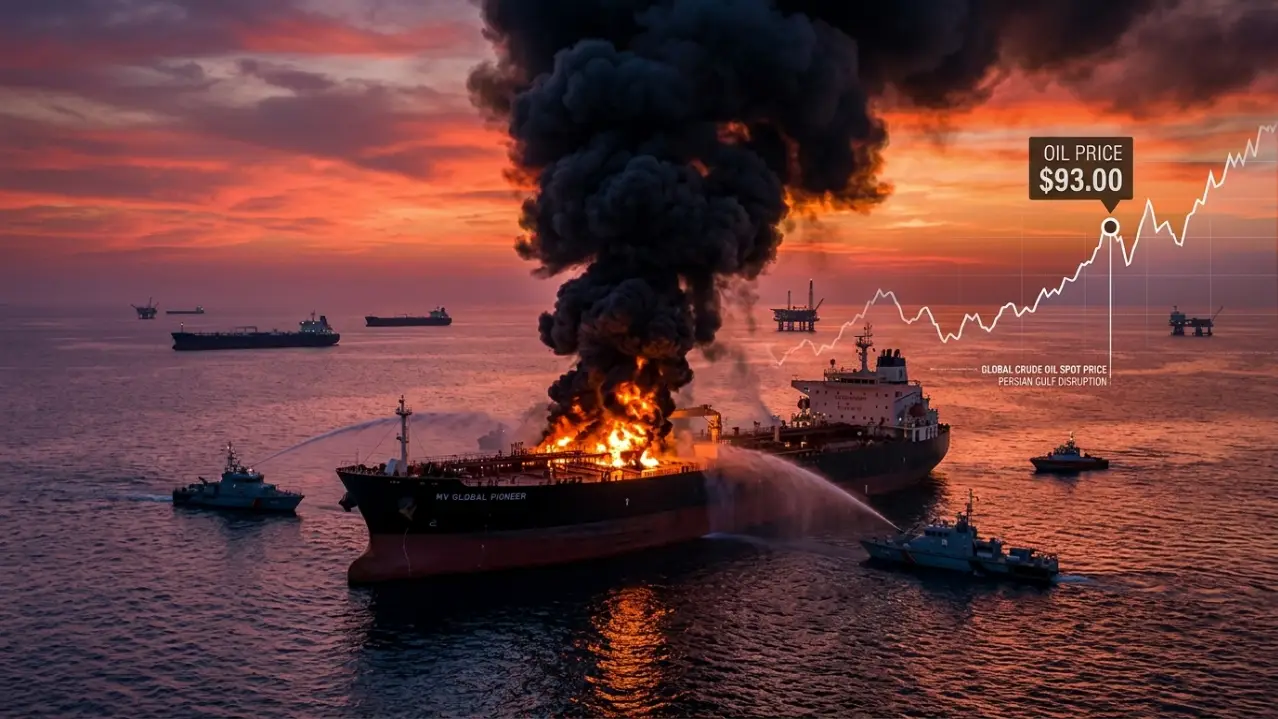

New York — U.S. crude oil prices surged above $93 a barrel Wednesday after reports of two new tanker attacks in the Persian Gulf, adding fresh pressure to global energy markets already rattled by escalating tensions in the Middle East.
Energy traders pushed prices higher following reports that an oil tanker caught fire off the coast of Iraq in what appeared to be an attack. The incident raised concerns that shipping routes carrying a large share of the world’s oil supply could face further disruptions.
The price spike reflects growing anxiety across global markets that the widening conflict in the region could threaten oil shipments moving through the Strait of Hormuz, one of the world’s most critical energy chokepoints.
Strategic Shipping Route Under Threat
The Strait of Hormuz handles roughly 20% of global oil and natural gas trade, making any disruption there a major risk for the global economy.
Since late February, the waterway has become increasingly volatile amid a widening confrontation involving Iran, the United States, and regional allies. Military activity and threats to commercial vessels have sharply reduced tanker traffic through the corridor.
Several ships have already been damaged in recent weeks, and many shipping companies have delayed or rerouted voyages to avoid the area.
Markets React to Supply Fears
Oil prices have been swinging sharply as traders assess the risk of prolonged supply disruptions. Brent crude, the international benchmark, recently jumped above $100 per barrel, the highest level in several years, before retreating amid volatile trading.
The renewed tanker attacks pushed U.S. crude futures back toward the mid-$90 range, highlighting how sensitive the market remains to developments in the Gulf.
Analysts say even limited damage to shipping lanes could tighten supply and quickly send prices higher.
Impact on U.S. Consumers
Higher crude prices typically translate into rising gasoline and diesel costs across the United States. Energy economists warn that if tensions continue to escalate, American drivers could begin seeing higher prices at the pump in the coming weeks.
The U.S. remains one of the world’s largest oil producers, but domestic fuel prices still track global crude markets.
Governments Weigh Emergency Measures
In response to mounting disruptions, the International Energy Agency and its member countries have discussed coordinated emergency oil releases to stabilize markets if supplies tighten further.
Meanwhile, naval forces operating in the region have increased patrols to safeguard commercial shipping lanes and prevent further attacks.
For now, markets remain on edge. Traders are closely watching the Persian Gulf for signs that the latest incidents could mark a broader escalation in the conflict — a development that could push oil prices even higher worldwide.
