
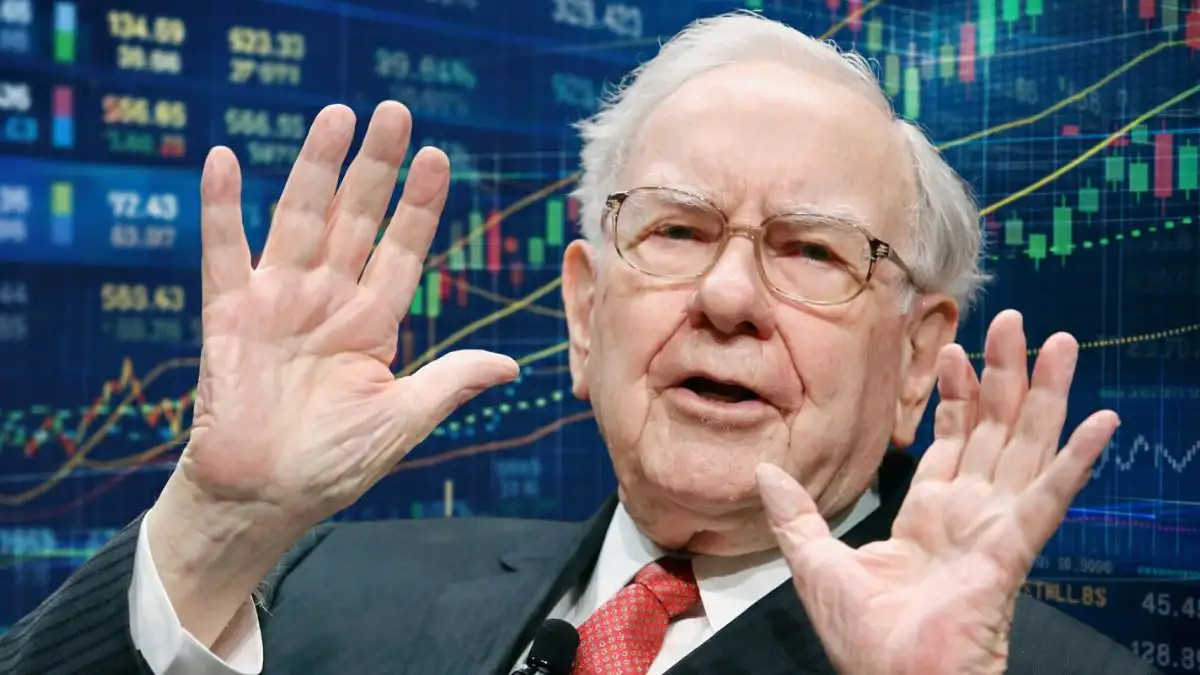

Warren Buffett’s “Fools Do in the End” Quote — And Why It Still Stings
Warren Buffett has said a lot of quotable things. But one line cuts deeper than most when you watch how markets actually behave: “What the wise do in the beginning, fools do in the end.”
He wasn’t being poetic. He was describing a trap that costs ordinary investors billions of dollars every market cycle — and that social media has made far more dangerous than it used to be.
Buffett wrote this line in one of his annual shareholder letters to Berkshire Hathaway investors, later compiled in The Essays of Warren Buffett: Lessons for Corporate America by Lawrence Cunningham. The book is essentially a masterclass in long-term value investing, and this quote sits at the center of Buffett’s worldview.
The idea is simple but brutal: by the time an investment becomes obvious to everyone, the opportunity is usually gone. The price already reflects the excitement. The early buyers are already thinking about when to sell — and they’re selling to you.
What Buffett Actually Means by “Wise” and “Fool”
The wise investor in Buffett’s model isn’t necessarily smarter. They’re earlier. They do their own research, identify undervalued assets before the crowd catches on, and hold with conviction while everyone else ignores the position.
The fool isn’t necessarily reckless, either. They’re just late. They see others making money, assume the trend will continue, and buy in — often at or near the peak. Their motivation is profit, but their timing is driven by social proof rather than fundamental analysis.
This maps directly to what behavioral economists call herding behavior — the tendency of investors to follow the crowd rather than their own analysis. Research from the CFA Institute confirms that retail investors consistently underperform the funds they invest in, largely because they buy after strong performance and sell after drawdowns.
The Fear-Greed Cycle Buffett Is Describing
Buffett built his fortune doing the opposite of what most investors do. While others sold in a panic, he bought. While others chased momentum, he waited.
The psychology behind the “fool” behavior comes down to two emotions: greed, which pulls people into rising assets, and fear, which pushes them out of falling ones. Both reactions feel rational in the moment. Neither tends to produce good returns.
The CNN Fear & Greed Index — which tracks investor sentiment across seven market indicators — routinely shows extreme greed readings at market peaks and extreme fear at bottoms. In other words, most investors feel most confident exactly when they should feel most cautious.
Two Market Cycles That Prove Buffett Right
The Dotcom Bubble (1995–2001)
In the mid-1990s, a legitimate insight drove early investment in internet companies: the web was going to transform commerce. That insight was correct. The early investors who bought companies like Amazon and eBay when they were still speculative bets made real money.
Then the fools arrived.
By 1999, any company with “.com” in the name saw its stock price surge, regardless of revenue, profit, or even a coherent business model. Pets.com raised $82.5 million in an IPO and collapsed within nine months. The Nasdaq peaked at 5,048 in March 2000 and lost nearly 80% of its value over the next two and a half years.
The early buyers sold into that frenzy. The late buyers held the wreckage.
Crypto Mania (2017 and 2021)
Bitcoin hit roughly $1,000 in early 2017. By December of that year, it touched nearly $20,000. The people who bought at $1,000 or even $5,000 had a genuine thesis about decentralized finance and held through volatility to see massive gains.
Then came the 2021 cycle. Influencers, meme coins, and celebrity endorsements pulled in a new wave of retail investors near the top. Bitcoin peaked above $68,000 in November 2021 and fell below $16,000 by late 2022 — a drop of more than 75%, according to CoinMarketCap data.
The pattern matched Buffett’s quote almost exactly. The wise bought early with a thesis. The fools bought late because of the hype.
Why This Trap Is Harder to Avoid Now
The psychological dynamic Buffett described isn’t new. But three forces have made it significantly more dangerous in the past decade.
Zero-friction trading. Apps like Robinhood, Webull, and Cash App allow anyone to buy any asset in seconds. There’s no cooling-off period, no broker to call, no paperwork. Impulse is now executable.
Social media amplification. Reddit’s WallStreetBets forum drove GameStop’s stock from around $4 in 2020 to a peak of $483 in January 2021. Much of the promotion came from people who already owned the stock and stood to profit from new buyers driving up the price. The SEC noted in its 2021 report on the GameStop situation that retail activity was heavily influenced by social media sentiment, not fundamental analysis.
Undisclosed conflicts of interest. Many of the loudest voices promoting an asset online already own it. When a crypto influencer tells their 2 million followers to buy a token, they rarely disclose their position. The FTC has taken action against several such cases, but enforcement lags far behind the volume of promotions.
None of this means every trending investment is a trap. But it means the signal-to-noise ratio has gotten much worse, and the speed at which hype cycles now move compresses the window between “early opportunity” and “late fool territory.”
How to Tell If You’re Acting Like a Fool
Buffett’s framework isn’t about avoiding risk — it’s about understanding why you’re taking it. A few questions worth asking before buying any hot asset:
- Can you explain the investment without referencing what others have made on it? If your only thesis is “it went up and people got rich,” that’s not a thesis. That’s FOMO.
- Would you still buy it if no one was talking about it? If the answer is no, the crowd is doing your thinking for you.
- Are you buying near an all-time high, following a major run-up? That doesn’t automatically mean it’s overvalued — but it means you need a stronger reason than momentum.
- Who benefits from you buying right now? If the people promoting the asset already own it, their incentive is your capital, not your return.
What Buffett Does Instead
Buffett famously bought heavily during the 2008 financial crisis while most investors were selling in panic. He bought Goldman Sachs preferred shares at a yield of 10% when banks couldn’t get financing anywhere. He bought Burlington Northern Santa Fe at what looked like a boring, unfashionable price. Both turned out to be extraordinary deals.
His method isn’t complicated: buy businesses he understands at prices below their intrinsic value, then hold. He doesn’t trade on sentiment, social media trends, or what’s been popular over the past six months.
As he put it in his 2004 shareholder letter, the stock market is a device for transferring money from the impatient to the patient.
The Bottom Line
Buffett’s quote isn’t a warning against optimism or taking risks. It’s a warning against borrowed conviction — buying something because other people’s enthusiasm makes it feel safe, even as that enthusiasm drives the price above what the asset is actually worth.
The wise act on analysis, early, and with patience. The fools act on hype, late, and with urgency.
Every major market cycle produces both groups. The only question is which one you’re in.
One actionable step: Before your next investment, write down in two or three sentences why you’re buying — without mentioning the price history or what anyone else made on it. If you can’t, wait until you can.
