
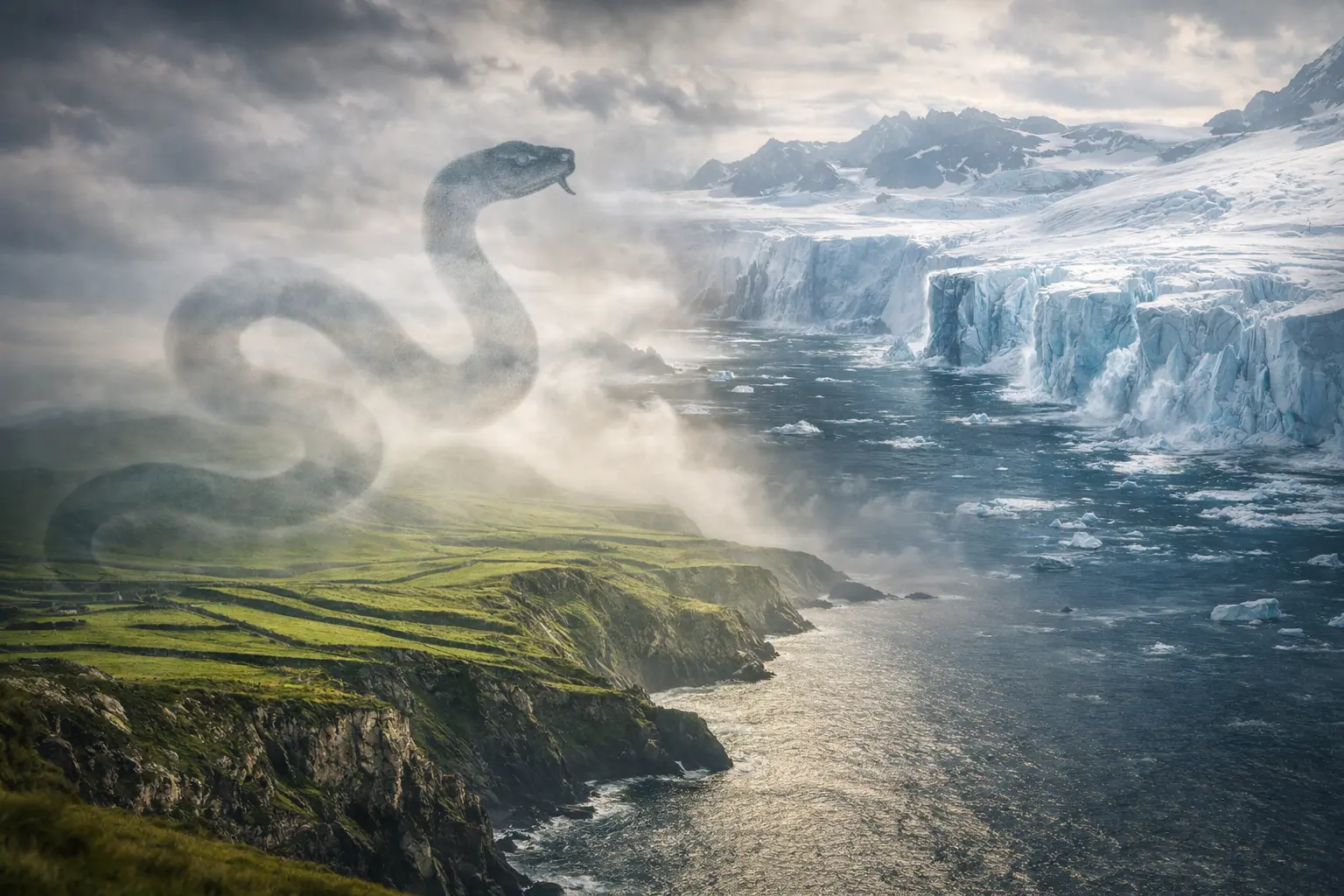

DUBLIN — The belief that snakes were driven out of Ireland by Saint Patrick is one of the most famous legends tied to the island. But scientists say the real explanation is far less mythical and far more geological.
Research into the island’s natural history shows that Ireland never had native snakes in the first place, and the reason dates back to the last Ice Age and the country’s isolation from mainland Europe.
The Ice Age Shaped Ireland’s Wildlife
During the last Ice Age, which ended roughly 10,000 years ago, glaciers covered large parts of northern Europe, including Ireland and Britain. The extremely cold conditions made the region unsuitable for reptiles such as snakes, which depend on external heat to survive.
When the climate began warming and the glaciers retreated, animals gradually migrated north across newly exposed land bridges connecting Europe to Britain and Ireland. But timing played a critical role.
Scientists say snakes were slow to spread northward, and by the time they reached Britain, rising sea levels had already cut off Ireland from the rest of the landmass.
Ireland Became an Island Too Soon
The key difference between Britain and Ireland is geography.
After glaciers melted, Britain remained connected to mainland Europe for longer. That allowed several snake species — including the adder, grass snake, and smooth snake — to migrate there.
Ireland’s land bridge disappeared about 8,500 years ago, leaving the island surrounded by water before snakes could arrive. Without a land route, reptiles had no practical way to reach the island.
Scientists note that snakes are land animals and cannot travel long distances across cold ocean waters, making natural colonization nearly impossible.
No Evidence of Snakes in Ireland’s Fossil Record
Researchers studying the island’s wildlife history have found no fossil evidence of snakes ever living in Ireland.
Natural history experts say that if snakes had once existed there, at least some physical evidence would appear in fossil collections. Instead, the records consistently show the island has been snake-free for thousands of years.
Today, the only native land reptile found in Ireland is the viviparous or common lizard, which likely arrived after the Ice Age.
The Legend of Saint Patrick
The famous story that Saint Patrick drove snakes into the sea during the fifth century remains a popular cultural tale.
Historians believe the story is symbolic rather than literal. Many scholars say the “snakes” may represent pagan beliefs that disappeared as Christianity spread across Ireland.
In reality, experts say there were no snakes for Saint Patrick to banish.
Ireland Is Not the Only Snake-Free Place
While Ireland is famous for its snake-free reputation, it is not unique. Several other large islands and regions around the world also lack native snakes.
Examples include:
- Iceland
- Greenland
- New Zealand
- Hawaii
- Antarctica
These areas share similar conditions — geographic isolation and climates that make it difficult for snakes to migrate or survive.
Why the Myth Still Fascinates People
The idea of a country without snakes continues to capture public imagination, especially around St. Patrick’s Day celebrations in the United States and Ireland.
But the scientific answer shows the real story behind Ireland’s snake-free landscape is rooted not in folklore but in ancient climate shifts and the island’s separation from mainland Europe.
In short, snakes never vanished from Ireland — they simply never made it there at all.
