
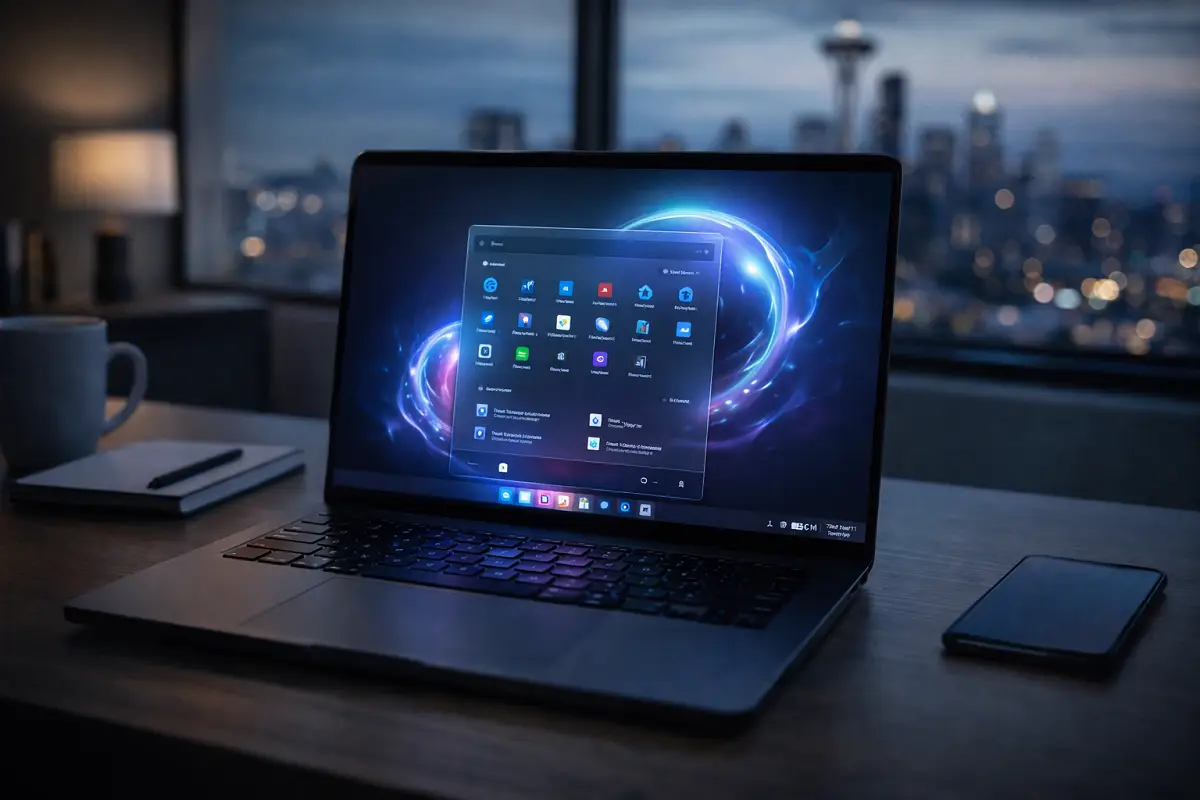

Windows 12 Rumoured for 2026 Launch with Modular Design and AI at the Core
REDMOND, Wash. — Speculation regarding the next evolution of personal computing is reaching a fever pitch as new reports suggest Microsoft is targeting a 2026 release window for its highly anticipated Windows 12.
According to industry insiders and leaked development roadmaps, the tech giant is moving away from the traditional “monolithic” operating system model. Instead, Windows 12 is reportedly being built on a revolutionary modular architecture—internally referred to as “CorePC”—designed to make the OS lighter, faster, and more adaptable across a wide range of devices.
A Modular Shift for the Modern American User
For decades, Windows has struggled with “legacy bloat”—carrying decades-old code to ensure compatibility. The shift to Windows 12 would allow Microsoft to strip down the OS for specific hardware. A tablet user might receive a lightweight, touch-optimised version, while a high-end gaming rig would load the full-performance suite.
This modularity is expected to significantly improve update speeds and system security by isolating the OS from user files and apps, a feature known as “state separation” that mimics the reliability of mobile operating systems like iOS and Android.
Artificial Intelligence: The New System Requirement
The “AI PC” era is no longer a marketing buzzword; it is the foundation of Windows 12. While Windows 11 introduced Copilot as an optional sidebar, Windows 12 is expected to integrate artificial intelligence into the system’s core.
However, this “AI-first” approach comes with a catch that may frustrate some American consumers. Reports indicate that to access the full suite of Windows 12 features, users will likely need a dedicated Neural Processing Unit (NPU) capable of at least 40 TOPS (Trillion Operations Per Second). This hardware requirement could effectively “gate” the most advanced AI features—such as real-time system-wide OCR and proactive digital assistants—to newer hardware, such as Intel’s Lunar Lake or AMD’s Ryzen AI chips.
The Subscription Rumours
Perhaps the most controversial detail to emerge from recent leaks is the mention of a “subscription status” in internal builds. While the standard Home and Pro versions of Windows 12 are expected to remain available via traditional one-time licenses (or free upgrades for Windows 11 users), certain “Advanced AI” capabilities may be locked behind a monthly fee.
This mirrors the “Windows as a Service” model Microsoft has been perfecting with Microsoft 365, potentially offering cloud-boosted AI power to users whose local hardware isn’t quite up to the task.
The timing of a late 2026 launch aligns perfectly with the end of life for Windows 10. With millions of American businesses and home users still relying on older OSes, Microsoft is expected to use the launch of Windows 12 as the primary catalyst to drive the market toward AI-capable hardware.
While Microsoft remains tight-lipped and has yet to officially confirm the “Windows 12” branding, the evidence from the “Canary” testing channels suggests the most significant change to the Windows ecosystem in over a decade is just around the corner.
