










Australia-EU Free Trade Agreement Signed: What It Means for Both Sides

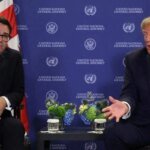
After eight long years of negotiations that stalled multiple times—most notably in 2023 over agricultural access—Australia and the European Union have finally concluded a comprehensive Free Trade Agreement (FTA). The deal was formally announced on March 24, 2026, during a visit by European Commission President Ursula von der Leyen to Canberra, where she met with Australian Prime Minister Anthony Albanese.

Key Provisions of the Deal

  • Tariff Eliminations on Goods: The FTA removes tariffs on nearly all European goods imported into Australia (over 99% coverage) and on almost all Australian critical mineral exports to the EU. This includes immediate cuts on popular EU products such as wine, chocolate, cheese, and electric vehicles, making them more affordable for Australian consumers. In return, Australia gains duty-free access for a wide range of its exports.
  • Critical Minerals Boost: Tariffs on Australian lithium, rare earths, and other strategic minerals are largely eliminated, enhancing competitiveness and supporting the EU’s green and digital transitions. This aligns with broader efforts to diversify supply chains away from single-country dependencies.
  • Agricultural Access: For Australian farmers, the deal provides new opportunities, with 94.8% of the value of agricultural exports eventually entering the EU duty-free. Full tariff elimination applies to items like wine, tree nuts, barley, seafood, honey, olive oil, and certain horticultural products. Sensitive sectors such as beef, sheep meat, dairy, sugar, and rice will benefit from tariff-rate quotas (for example, around 30,000–30,600 tonnes for beef).
  • Broader Economic Impact: Australian officials project an annual boost of approximately A$10 billion to the economy once fully implemented. EU exports to Australia could grow by up to 33% over the next decade, with tariff savings estimated in the hundreds of millions of euros. The agreement also includes provisions for services, investment, and sustainability.

Alongside the trade deal, Australia and the EU signed a Security and Defence Partnership, further deepening cooperation on strategic issues.

Winners and Losers: Praise vs. Criticism

Positive Reactions:

  • EU leaders, including von der Leyen, hailed the agreement as a boost for rules-based trade, decarbonization, and mutual economic growth.
  • Australian industry groups and retailers welcome cheaper imports and new export markets.
  • Critical minerals producers stand to gain significantly from barrier-free access to Europe.

Farmer Disappointment: Australian agricultural bodies, including the National Farmers’ Federation, have expressed strong concerns that the deal offers only limited market access for key products like red meat and dairy. Critics argue it fails to fully address the historical imbalance, where heavily subsidized EU farmers enjoy virtually tariff-free access to Australia, while Australian producers face ongoing barriers. Some have called it a “bad deal” that could lock in disadvantages at a challenging time for the sector.

EU farming lobbies had also raised worries about additional competition, though the quotas appear calibrated to limit impact compared to deals like Mercosur.

Strategic and Geopolitical Significance

Beyond economics, the FTA carries clear geopolitical weight. It strengthens ties between like-minded partners in the Indo-Pacific and Europe, supports supply chain resilience for clean energy technologies, and signals a commitment to diversified, secure trade networks amid rising global tensions. Provisional application could begin soon, with many tariff cuts taking effect within weeks or months, while full ratification follows standard parliamentary processes in Australia and EU member states.

Looking Ahead

The Australia-EU FTA is not perfect—particularly for farmers seeking deeper agricultural concessions—but it represents a hard-won compromise that delivers tangible benefits for consumers, miners, manufacturers, and broader strategic cooperation.As global trade fragmentation continues, deals like this highlight the value of building stronger bridges with reliable partners. Businesses on both sides should start preparing for the opportunities: reviewing supply chains, exploring new markets, and leveraging the reduced costs.What are your thoughts? Will this deal deliver the promised economic lift, or do the agricultural concessions fall short? Share in the comments below.

Charle Albert
Charle Albert

Charles Albert is a news editor and digital media professional with a sharp eye for what people are searching for — and an even sharper instinct for covering it fast.
As Chief Editor of FinexNews, Charles leads all editorial operations with one simple mission: get the right story published before the moment passes. He built his career around the belief that people deserve fast, clear, and accurate reporting on the topics that matter to them right now — whether that's a breaking sports result, a market story gaining traction, or a cultural moment everyone is suddenly talking about.
Charles reshaped FinexNews from the ground up to become a trend-driven news platform that tracks what America is actually searching for and delivers real answers without the filler. Under his leadership, the site covers everything from live sports scores and entertainment news to finance headlines and viral stories — all updated throughout the day as trends develop.
His editorial standard is straightforward: if a reader still has questions after reading the story, the job isn't done. Every piece published on FinexNews is written to inform quickly, clearly, and completely.
That reader-first approach has built a growing audience of people who come to FinexNews not just to skim headlines, but to actually understand what's happening — and why it matters right now.

Articles: 155

Leave a Reply

Your email address will not be published. Required fields are marked *