









This world in which man has attained bodhisattva is entirely associated with the existence of the basic matter. It is for this reason that mankind has struggled since the beginning to chalk out its hidden reality, and indeed a large part of life has been engaged in uncovering the invisible realities of matter in the cosmic environment.
Here, matter refers to all the things that exist in the universe and that have mass surrounding the space. For example, rock, mineral, wood, forest, metal, air and water are examples of material things that are “Non Living”. That is, they do not have the ability to grow, reproduce and move by themselves, while on the other hand, trees, insects, animals and humans are examples of “Living” substances.
Experts of almost every civilized nation of ancient times tried to find out the invisible reality of matter, but few philosophers and scientists of Greece seem to be the foremost in making valuable services in gaining access to reality.
Because for the first time it was revealed that the structure and texture of all material objects in the universe is made of very small grains which were named “essence or atom”. This is the destination from where the dim reflection of the nuclear imagination was revealed to the world.
In the 20th century, when the “essence” was a solid particle of any material object, it was thought to be an indivisible body, but modern research and development has revealed that the “essence” consists of different components with a specific closure and number. And its center is the nucleus, having a positive electrical charge. Some components have a negative charge and some have no charge at all.
Surrounding the center is a group of negative charges that are moving around the nucleus in an orbit that resembles a star system. That is, instead of being solid, they consist mostly of empty space.
All these gems naturally give rise to the element that creates a material object that cannot be transformed into any other material under normal conditions. As is the smallest particle of any element and has a certain mass or weight that makes it unique from the essence of other elements.
For example: hydrogen and oxygen etc. When two or more atoms or “atoms” are united, a complete material substance mixture (Compound) occurs in the universe. With the contribution of two hydrogen atoms and one oxygen atom, a material compound like “water” is born, as if all material objects, whether it is an element or a compound, are made up of “atoms”.
Scientists estimated that the tip of a pin can hold more than ten million gems in an equal space. If copper gems are placed side by side and make a row, ten million gems will fit in an inch long, but even if you look closely, no gem can be seen.
If viewed with a powerful microscope, the nucleus looks like a big room and a spot is seen in the middle of it. This is the center of the nucleus, i.e., the nucleus, around which the nuclei of matter appear to rotate.
In the form of electricity, it can pass through metal wires and can also remain free in the air. A number of these electrons move around the nucleus in desired paths. Each element has an equal number of electrons in its nucleus. For example: All atoms of a semi-metal have the same number of electrons.
That is, it has ninety-two (92) branches. These are negatively charged. In addition, twenty different types of particles are included in each form. One of them is a proton. It carries a positive charge. Each atom has a number of charges in its nucleus, the number of which is equal to the number of electrons revolving around the nucleus. All types of essence have more than one evil. Another type of particle in the nucleus is the neutron.
Since they are neutral, that is why it has been named Adliya. It has no electric charge. Each element has light and heavy elements. For example, hydrogen is a light element because it does not contain protons and neutrons, but uranium is a heavy element and is the main source of fuel for nuclear energy.
It is necessary to separate the fine clay, sandstone and other materials from the ore, then the ore is broken up, ground and sieved, then roasted and washed. After further processing, the amount of this material is greatly reduced, but it is now largely clean and pure. It should be remembered here that if several tons of ore are taken, only a few pounds of bright yellow material are obtained.
After that it is obtained in the form of grayish black powder which is uranium oxide. After further purification, it is converted into a green salt containing “every” uranium and fluorine. After fluorine undergoes further analytical processes, uranium is obtained in a pure shiny heavy and silver-like atomic form.
This “uranium” is not the kind that can be broken down to produce a lot of energy. Only a small part of it is the precious uranium 235, which can be estimated from the fact that one pound of uranium can produce energy equal to fifteen hundred (1500) tons of coal. Uranium-235 refers to each element that contains 92 protons and 143 neutrons.
This nucleus is surrounded by a certain number of electrons in seven different atoms which corresponds to the number of protons (92) in the nucleus. Uranium-235 atoms are more tightly bound than others, and certain pairs of atomic fragments bond together better, and rightly so, because some bonds can be broken more easily than others.
In order to break the nuclei of these atoms, the parts of the atoms present in each particle must be helped. For example, protons, neutrons and electrons are used. These tiny particles are hurled at the target at such lightning speed, that the particles penetrate the target and often scatter the target in all directions. When the outer particles are absorbed in a nawat or its inner particles come out, it means that the essence is torn.
That is, the mysterious force that binds the elements of Nawat to each other has been defeated. The process of splitting the core of the essence into two almost equal parts is called “Fission”.
At present, this release of nuclear energy is limited to heavy nuclear elements such as uranium, the fact that some nuclear elements can be broken more easily than others and some explode spontaneously.
At first, the use of nuclear energy came as a symbol of destruction and sabotage, but in the modern era, the world has also introduced constructive aspects as a resource. As far as the destructive effects of nuclear energy are concerned, it came to light during the last world war when the United States dropped nuclear bombs on two Japanese cities, Hiroshima and Nagasaki, in early August 1945.
Several hundred thousand people were killed by these two bombs and the number of others injured or damaged exceeded four hundred thousand. Both these cities were completely destroyed. Each bomb had more than 20,000 tons of TNT. Over the past 25 years, the art of nuclear bomb-making has made tremendous advances, which today can produce bombs that are more powerful than several hundred thousand tons of TNT and, according to experts, could wipe out a city of 15 million people in the blink of an eye. But on the other hand constructive work is also being taken from it.
Today, however, atomic farms are spread across the world, providing farmers with information that allows them to produce more food at a lower cost. Much of the work currently being done on nuclear farming is being done by large research institutions.
Cultivators will not work with the radioactive elements individually, but they will benefit from the issues that the research institutes will discover by working with these forces. Hundreds of new methods have also been used in industry and craft, so that better work can be done at lower cost. Nuclear energy has also been released into the ocean by submarines.
But after 1930, when the process of Har Shakuni was introduced, it gained great importance in the field of medicine. For example: When the cells in the body start growing randomly and uncontrollably instead of the natural order, then it is called cancer. Nuclear radiation destroys not only cancer cells but also other affected cells.
Because cancer cells grow faster, they are more affected by radiation than other cells in the human body. That is why the radiation emitted by nuclear explosions is being used frequently in the treatment of cancer.
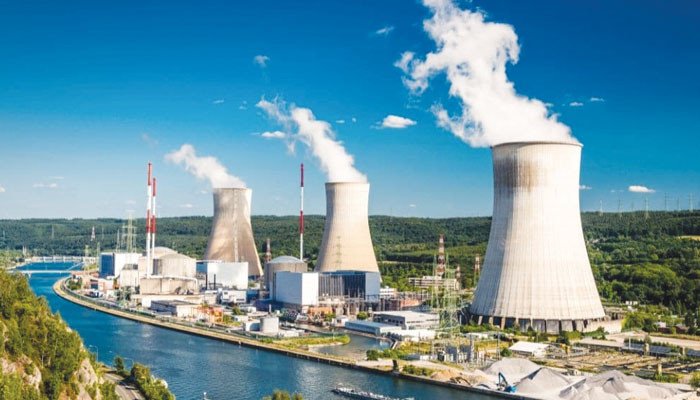
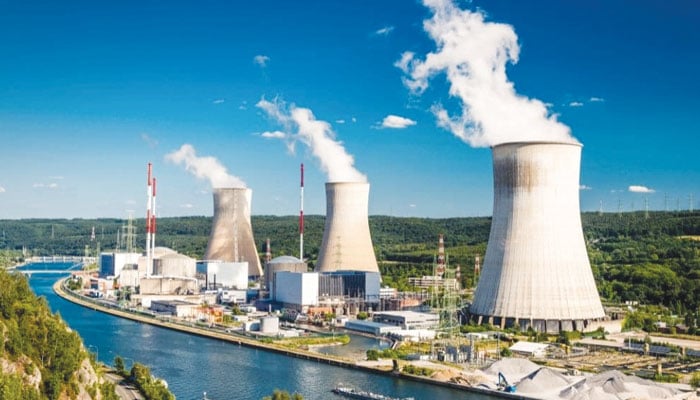
A day may come when nuclear power plants will be able to provide electricity to places where fuel is scarce. Even small tips can be used to provide electricity to disaster affected areas. It is quite possible that nuclear power will be brought into homes tomorrow. Rotate the wheels of the wrist watch and provide convenience in a variety of ways.
A person should be stunned to see it. Also, nuclear energy can play a significant role in the country’s security (in terms of balance of power). But the current international situation and the development of nuclear energy have created complex problems in the region. If these conditions are not controlled, the world will once again be engulfed in every war and the future of democracy is also threatened, which can be prevented by the leaders of democracy.