









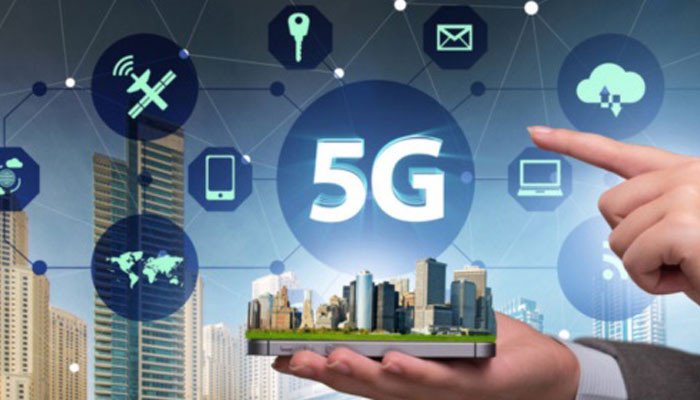
5G is designed to not only provide faster internet, but also better mobile, broadband services and other things that can change our lives. For example: faster, lower download speeds for anything and providing more capacity and connectivity for billions of devices, especially virtual reality (VR) and artificial intelligence. It enables access to enhanced experiences including instant access to cloud services, multiplayer cloud gaming, shopping with enhanced features, real-time video translation and more.
5G technology is spreading rapidly all over the world. The good thing is that now it has started to be used in Pakistan as well. Thanks to this new technology, the internet is faster than ever, call quality is better and connection is more stable.
Given the increasing demand for internet, the growing digital economy and the growing use of smartphones, 5G technology is being touted as a key driver of Pakistan’s future economic growth and technological modernization. The biggest benefit of this technology is ultra-fast internet. Current 4G networks in Pakistan typically provide speeds ranging from 10 to 40 megabits per second (Mbps), while 5G networks can provide speeds in excess of one gigabit per second (Gbps) under ideal conditions.
This means users will be able to download anything in seconds, enjoy ultra-high-quality video streaming and have an even better online gaming and video conferencing experience. High-speed internet will also increase the productivity of freelancers, software developers, digital marketers and IT professionals, as their work relies heavily on stable and high-speed connectivity.
Reliable high-speed internet for Pakistan’s growing digital workforce will play an important role in economic growth. Low Latency and Advanced Applications Another important benefit of 5G is low latency, which means less time required for communication between different devices. This feature is crucial for online gaming, remote surgeries, automated vehicles, smart factories and fintech services.
This low-latency capability can help modernize Pakistan’s key sectors such as health, transport, banking and industrial automation. Hospitals in remote areas will be able to use telemedicine and remote diagnostic systems more effectively, while businesses will be able to adopt modern cloud-based technologies with less latency.
The IT and freelancing sector in Pakistan can benefit tremendously from 5G connectivity. Pakistan is among the fastest growing freelance markets in the world, with thousands of professionals working for international clients. Better internet infrastructure will enable freelancers and software houses to compete more effectively in the global market. High-speed connectivity can also attract foreign investment in Pakistan’s technology sector, data centers, e-commerce industry and startup ecosystem.
Better digital infrastructure can help increase IT exports and create new employment opportunities for young professionals. Impact on Digital Economy The launch of 5G will further strengthen Pakistan’s digital economy. E-commerce, online banking, fintech applications, ride-hailing services, food delivery platforms and digital education systems all require high-speed internet infrastructure.
This technology not only greatly increases the speed of the Internet, but also provides lower latency (delay) between devices and greater connectivity. The data speed in this network can be very high. Experimentally, it has shown speeds of up to 10 gigabits per second, which is a huge difference compared to 4G. Since 5G will take less time to send and receive data packets, the latency will be much lower. According to a McKinsey report, 5G enables low-latency applications such as automated vehicles or medical devices. This network can handle many devices at a time.
According to a report, 5G can support a hundred thousand or more devices per square kilometer. This feature is especially useful for the Internet of Things (IoT), where thousands and millions of sensors and devices are connected to the Internet together.
Recent research has shown that 5G networks can be made more programmable and configurable thanks to software-defined networking (SDN) and virtualization. This means that network operators can create different “virtual network slices”, each slice designed according to its needs (eg, lower latency, higher bandwidth, or more devices).
According to a report by a private company, 5G is not only beneficial for consumers and industries, but can also increase global GDP, as it enables developing applications (eg, smart factories, healthcare and smart cities). A major reason for the speed of the 5G band is millimeter-wave applications, which operate at very high frequency bands (eg, 30 GHz to 300 GHz).
Experts say that 5G is 100 times faster than the current 4G network. This technology will change the way we work, learn, communicate and travel. Some telecommunication companies in Pakistan have already bought 5G.
This technology can contribute to better digital infrastructure, increase economic productivity, expand technology investment, create new employment opportunities and improve Pakistan’s global competitiveness. Its success will depend on continued investment, supportive government policies, availability of affordable equipment and expansion of network infrastructure across the country. If these goals are achieved, Pakistan can emerge as a strong digital economy in South Asia. The launch of 5G technology in Pakistan in 2026 is a historic step towards digital transformation.
Although some infrastructure and financing challenges remain, 5G has the potential to revolutionize the communications system and accelerate Pakistan’s transition to a modern digital economy. If the government, telecom companies and the private sector continue to invest in digital infrastructure, 5G could prove to be one of the most significant technological breakthroughs in Pakistan’s history.