










Throughout cinema, queer stories, as sentimental as they may seem, have been narrowly confined. Gradually, the boundaries expanded, and the stories became grander and more ambitious over time. Just when you thought Jane Schönbrunn was one of the few artists left making bold, startling, and apparently strange art—with Teen sex and death in Miasma camp Being one of the best players of the year – Spanish duo Javier: Ambrosi and Calvo (aka Los Javes), raise the bar with their boldness and greatness La Pola Negra.
The film marks the Spanish filmmakers’ second film in over a decade. Throughout 2020, they transitioned to television, and one of their greatest achievements was the fantastic bio-drama series Venenowhich honored the late Spanish icon La Veneno while bringing together her history with that of trans journalist Valeria Vegas. Like a lot Veneno, La Pola Negra He continues the themes of self-actualization, identity, and liberation—this time through a three-generational story that interprets the play of the late Federico García Lorca, the Spanish poet and playwright who was assassinated in 1936. In doing so, he demonstrates the importance of preserving gay people and figures of the past who were sacrificed to pave the way for the liberation of the Spanish LGBTQ community today.
An ambitious trilogy at the right time
Alternating between different time periods, the decade-spanning story focuses on three gay men in the throes of their identity.
In 1937, trombonist Sebastian (Guitaricadelafuente) is in his town celebrating what they believe is liberation. Until they saw troops flying above them, saluting them, and bombs falling on their village. Sebastian is the only survivor. He is found by far-right nationalist soldiers, forced into military occupation and assigned to guard Rafael (Miguel Bernardo), a former footballer and republican imprisoned for knowledge. The moment they meet, Sebastian slowly confronts his first ever crush and faces an internal war, as he falls in love with a man whose death is inevitable.
Then, in pre-war 1932, we meet Carlos (Milo Cueves), a young man who wants to join an exclusive social club. During the hearing, the Seniors Council votes with white balls to approve and black balls (hence La Pola Negra) to reject. Carlos was “blackballed” due to rumors of homosexuality.
Decades later, in 2017, we meet Alberto (Carlos González), a former playwright with a Ph.D. facing boredom—navigating Grindr relationships and feeling uncomfortable in his relationship with his estranged, emotionally distant mother (Lola Dueñas). When he learns that his late grandfather, whom he never met, specifically left him his inheritance, he embarks on a life-changing journey to uncover his family tree.
With its three timelines, La Pola Negra It carries the lyrical, interwoven nature of a Nolan film – precise, beautifully paced, and narratively easy to understand. Frequent Ambrosi and Calvo collaborator Alberto Gutierrez stacks the house of cards, leaving you drawn in by what he’s headed toward. Every pause to focus on one of the three threads keeps you fully engaged. Sure, the film becomes a little self-indulgent, losing momentum in locations and feeling padded; It would have shaved a good 15 minutes. But unlike many other international features shown during this festival this has long running times (this one clocking in at nearly three hours). Gentle monster or MinotaurThis ensures its pace and never seems to meander.
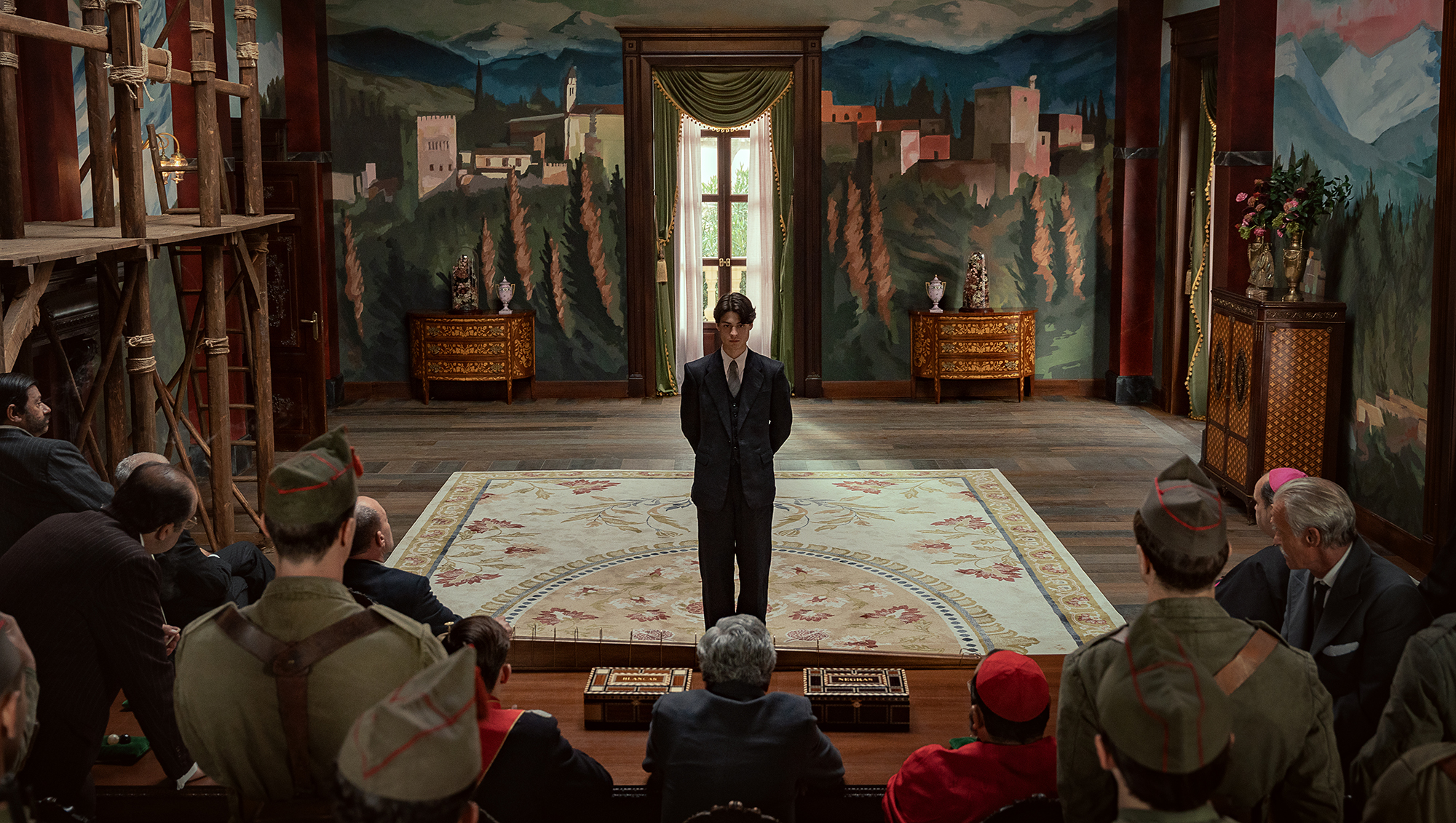
La Pola Negra. Milo Cueves as Carlos in La Bola Negra. Cr. Carla Osset/Netflix © 2026.
A visual and emotional masterpiece
Undoubtedly, La Pola Negra It is among the most innovative and fascinating films I have seen this year. It’s like watching the colorful, larger-than-life references from Los Javes’ previous works explode onto the big screen at the furthest point of their vision. Filmmaking techniques change over time, but never paradoxically – every cue feels natural yet dazzling. Every frame made me think, “Best Director at Cannes deserves it.” For starters, think an Iñárritu film mixed with the transcendent charm of a Burton film. Big fish And the intimate nature of Andrew Hay. The stylized elements live on more in stories set in the 1930s than in the 2017 series, which lends a more melodramatic feel. But the writing — penned by the directing team alongside co-writer Alberto Conejero — and the sumptuous, intimate narrative provide a surreal heft that is poignant, real, and poignant.
There is a level of lavishness within Gris Jordana’s clean, sweeping DP – whether the interpretation of Sebastian’s desire and intimacy with Rafael, the breathtaking Spanish landscapes in stunning colours, or the surreal music. Roger Bellis’s production design is endlessly immersive, modeling different Spanish cities, from the brutalist décor of war zones to the modern urbanism of Madrid. It adds to the film’s theme of liberation and freedom: for Sebastián, Madrid is a mecca of promising gay Spanish life, and compared to Alberto’s present-day isolation, it carries a terrifying weight.

La Pola Negra. Guitarricadelafuente as Sebastian in La Bola Negra. Cr. Carla Osset/Netflix © 2026.
Outstanding performance and a strong legacy
At the heart of the performances that bring the raucous film to life is Spanish music star Guitar Ricadillafuente, who shines in his first performance. As Sebastian, he provides a powerful, poetic portrayal of first love in all its intensity and intimacy. His wide eyes speak a thousand words with just a look, and his chemistry with Miguel Bernardo is sincere and full of sincerity and emotional tenderness. Another highlight is González as Alberto, a modern-day gay person who is indifferent to the normalcy of his lifestyle and discontent, which mounts particularly against the stunning Lola Dueñas who plays his mother.
There are also cameo appearances from Penélope Cruz and Glenn Close, both of whom make the most of their short screen time in one of the film’s most emotional scenes. Cruz becomes an asset in just minutes as he plays a flamboyant character named Nene Romero, who comes to sing and dance for the troops and briefly bonds with Sebastian. Her exuberant aura matches, if not elevates, the film’s overall extravagance. Then Close, who speaks only in Spanish, does the same with the film’s emotional elegance as the American historian Isabel Durand did in a delicate rhythm with González.
like La Pola Negra He plays his cards, the message creeps up on you and destroys you. Man, I couldn’t stop myself from crying in the theater. It powerfully does what Los Javes has been doing throughout his career: honoring architects who have sacrificed their identity in secrecy—not just so that society can live freely today, but so that they can pave inspiring works for generations to come.
There’s a reason why every screening at this year’s TIFF received a standing ovation. La Pola Negra It is a bold and stunning work of art, and one of the best films of the year. It reminds you of what a true cinematic epic feels like, equal parts style and massive, life-affirming substance. Marking a new landmark in LGBTQ storytelling, it’s unlike anything you’ve seen before, everything queer filmmakers should try to make, and something I’m already clamoring to see again.
La Bola Negra premieres on Netflix in the US on December 4, 2026.