
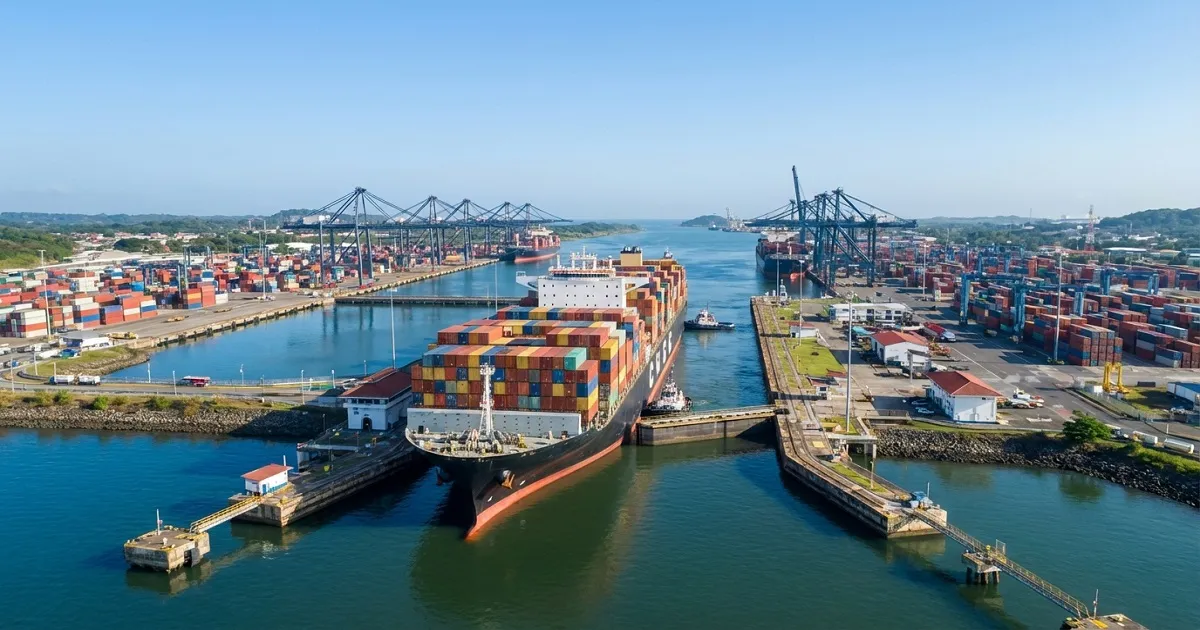

Rising online search activity surrounding Panama Canal ports signals renewed global attention on one of the world’s most important maritime trade routes. The canal, which connects the Atlantic and Pacific Oceans, remains a critical corridor for international cargo movement, and any developments affecting its ports can influence supply chains worldwide.
The Panama Canal’s port system is anchored by two major logistics hubs: Balboa on the Pacific side and the Colón port complex on the Atlantic side. These facilities handle millions of containers annually and serve as key redistribution centers for cargo moving between Asia, North America, Europe, and Latin America.
Industry observers say increased public interest may be linked to ongoing concerns about shipping capacity, climate-related operational risks, and evolving global trade patterns. In recent years, reduced rainfall levels affected the canal’s freshwater supply, prompting temporary restrictions on vessel drafts and the number of ships allowed to transit daily. Such measures forced some shipping companies to delay crossings or seek alternative routes.
Because approximately five percent of global maritime trade passes through the Panama Canal, even minor operational adjustments can have wide-reaching economic effects. Delays or congestion can raise transportation costs, influence delivery timelines, and impact sectors ranging from retail and manufacturing to energy exports and agriculture.
The canal also plays a central role in Panama’s domestic economy. Revenue from transit tolls, port services, logistics operations, and free-trade zones makes the maritime sector one of the country’s strongest economic pillars. Continued investment in infrastructure modernization, digital scheduling systems, and water-management projects aims to ensure long-term operational stability.
Shipping analysts note that monitoring canal transit bookings, weather conditions, and official announcements from canal authorities will be essential in the coming weeks. Any updates regarding capacity changes, infrastructure upgrades, or climate conditions could quickly affect global shipping strategies.
As worldwide trade networks remain sensitive to disruptions at major chokepoints, the renewed focus on Panama Canal ports highlights their enduring importance in keeping goods moving efficiently across continents.
