









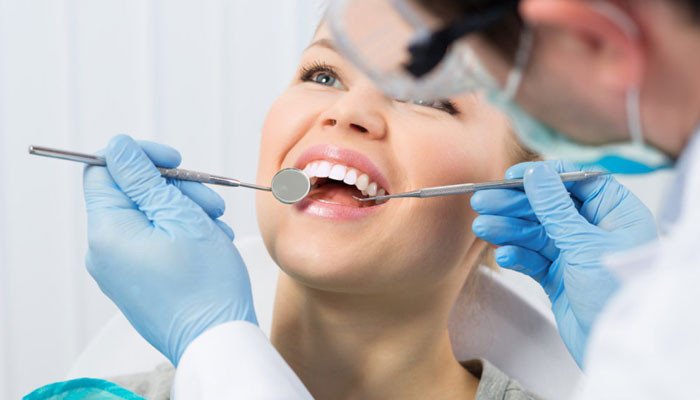
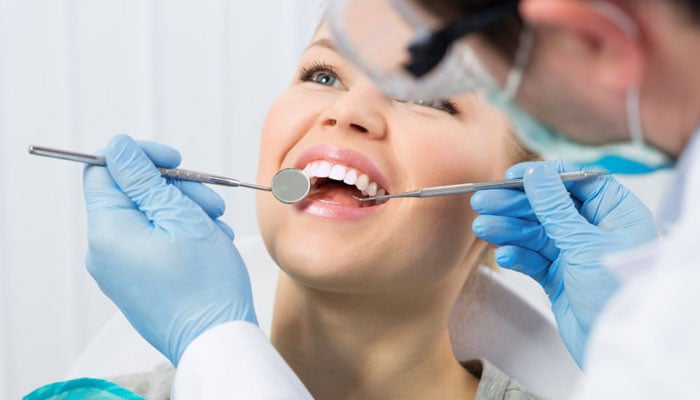
Teeth are the hardest material in the human body. Apart from chewing food, they also play an important role in speech. As an important organ, if you look at the tooth, it is not just like white bone, but it has several layers or layers. The topmost layer is called enamel, which is a white shiny layer. It is made of calcium phosphate, which is a rock-hard mineral compound. The next layer is called dentine, which is above the inner soft part of the tooth and below the enamel, i.e. between the two layers.
A tooth is a hard tissue or tissue, which contains microscopic tubes. If the tooth enamel is damaged, the tooth becomes exposed, causing the tooth to become sensitive and feel anything hot or cold in the tooth. The third layer of the tooth is called the pulp, which is the soft living inner structure of the tooth. It contains blood vessels and nerves.
Each tooth is attached to the upper or lower jaw by its root, and the gingiva, or fleshy part of the jaws, helps to connect and strengthen the two. Also, the layer of tissue on the root surface of the tooth called “cementum” makes the joint stronger. A normal human mouth has thirty-two teeth, the wisdom teeth are apart from these thirty-two teeth.
Enables chewing and swallowing of food and, apparently, about 700 million years ago, our early ancestors had long jaws with distinct pointed teeth in the upper and lower jaws.
About fifty-five million years ago, these pointed teeth began to become smaller, and three-five million years ago, our ancestors’ teeth began to form in rows, which resulted in a change in the structure of the jaw, which began to change from a long structure to a rounded structure.
Some 18 million years ago, the pointed teeth of our ancestors were dulled. The jaws were also shortened, due to which the face became vertical. By 250,000 years ago, our ancestors had shortened jaws and had pointed chins on their faces for added strength. The teeth were now small and arranged in a strong pattern or roundness.
If we talk about the diseases related to teeth, there are ten such diseases that are commonly found in human teeth. Among them, dental caries is the most common. In second place is inflammation or swelling of the gums. Both of these diseases are caused by not cleaning the layer of dirt that accumulates on the teeth, because in the presence of this layer, bacteria can easily multiply and become infected.
Bad breath is also caused by dry mouth and loose teeth. Tooth sensitivity is also a dental disease that usually starts after the enamel of the tooth wears down. In addition, teeth may be cracked or slightly broken, receding or receding gums, or having an infection at the root of the tooth, which is sometimes caused by receding gums.
Loss of tooth enamel or top layer, dry mouth and dental diseases are included. About two billion people worldwide suffer from tooth decay. This is followed by gum disease and then oral cancer. Next is an injury to the mouth such as a tooth breaking or coming out completely from the mouth, coming in fourth.
Most of the research done in Pakistan has been related to dental caries and gum disease. In our country, the incidence of dental caries is about twenty-five percent, including children and elderly people. Similarly, the rate of gum disease in the whole of Pakistan is an average of twenty-five percent. Dentistry generally involves the study, diagnosis, prevention, management and treatment of oral diseases, conditions and conditions.
It is specifically the study of the teeth and jawbone. According to the World Health Organization, oral diseases are a major public health problem. Tooth decay or gum disease is usually treated with restorative or surgical tooth extraction, tooth straightening, root canal treatment and cosmetic dentistry. Replacing the damaged part of the tooth with an artificial chemical substance or material where it cannot regenerate is the main goal of dental treatment.
The introduction of modern equipment and esthetic materials has changed the dentistry profession to a great extent. At the same time, the use of biological materials has begun to play an important role in the restoration of tooth structure and prevention of re-decay.
This is the reason why biologics are now being given importance in dentistry, not only in the prevention of tooth decay, but these biomolecules are also considered to be very suitable for regeneration. Biological materials, in contrast to chemical materials, play an important role in stimulating and differentiating cells, promoting the formation of hard tissue, and antimicrobial activity.
While the chemical material is injected into the structure of the tooth, it turns into a polymer or multi-molecular compound through the light beam and solidifies and the hole in the tooth or between the teeth is filled. Often this material also leaks out of these holes and has to be filled again by the dentist. These biomolecules include noraspermidin which is a type of polyamine, chydsan-based hydrogels, bioglass, platelet-rich fibrin, etc.
Polyetheretherketone is being used as a biomaterial to implant into teeth. Zirconia nanoparticles are also used to restore tooth structure. Research involves combining new molecules and metal particles to form a new mixture or compound and test them at different test times in the laboratory.
For example, the strength of the material, its durability, cracking, dulling of its color or color, staying in the hole or cavity, etc. These various composite materials are used as ceramic materials to replace tooth enamel or as glass ionomer cements and tooth fissure closures. Research studies in Pakistan are also ongoing on chemical substances and metals etc.
Common studies on dental filling materials include zinc neoparticles, zirconium, calcium compounds, sodium phosphate, conventional and non-conventional dental filling compounds or mixtures. In a research conducted at University of Karachi Proteomics Center, a compound used to fill dental cavities, which is sometimes used to make artificial dentures, was worked on. An attempt was made to check whether this material is released from the polymer as a single molecule after forming, and if so, for how long. are harmful to It was observed that this material, which is abbreviated as Tagdama, becomes monolithic and gradually detaches from its polymer.
This process can continue for about twenty-one days, which is high in the beginning and low in the end, and in a month, one molecule of the polymer ceases to be released. Similarly, another study is being done on the aspect that a tooth-forming component called hydro and some called patite. It can be extracted from the tooth and used as a component in the mixture used in dentistry. It can be extracted and used from teeth obtained from hydro and any petite cattle.
International research is also underway to use the patient’s own stem cells to repair his own tooth decay. For example, if certain raw cells are used as biological molecules in a tooth filling material that regenerates the inside of the tooth and fills the cracks or holes in the tooth structure again. This method of treatment can be very beneficial.
Dental treatment is usually an expensive treatment. With modern technology, this treatment can be converted into a cheaper treatment. Research work is going on very fast in this field. Research in dentistry on biomaterials in Pakistan is very limited.
However, now this field has started attracting attention. In the coming years, the studies conducted in this research from Pakistan will be published in international journals. It can be hoped that dentistry in our country will undergo this positive change and this treatment will become affordable for the underprivileged as well.