









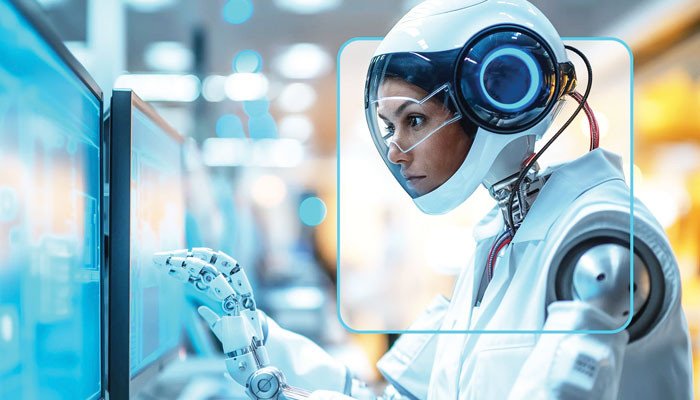
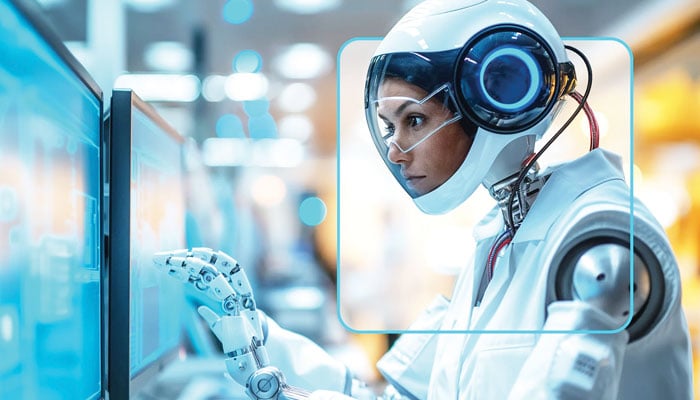
If the 21st century is called the century of the fastest changes in human history, then this claim will not be an exaggeration. In this era, the speed of knowledge, technology and information has completely changed human thought, society, economy and state system. At the heart of these changes is a force known as artificial intelligence.
Artificial intelligence is not just a branch of computer science, but an extension of human intelligence, a new form of decision-making and the basis of future civilization. Today, humans are not only using machines but also creating machines that learn, analyze and sometimes draw conclusions faster than the human mind.
Artificial Intelligence and Traditional Computing
The basic meaning of artificial intelligence is the development of computer systems and programs that can perform functions similar to human intelligence. These functions include learning, remembering, understanding language, recognizing images and sounds, solving problems, and making decisions in situations.
Traditional computer programs follow fixed instructions, while artificial intelligence-based systems learn from experience and improve their performance over time. This feature makes it exceptionally effective for human society.
Intellectual and Historical Background: From Turing to Dartmouth
To understand the intellectual background of artificial intelligence, it is necessary to go back to the mid-twentieth century. In the 1950s, British mathematician and scientist Alan Turing raised the question of whether machines can think. He used the Turing test to test the notion that a machine can be considered intelligent if it can communicate in a human-like manner.
Later, in 1956, the term artificial intelligence was formally used for the first time at the Dartmouth Conference in the United States. From here, this field became a permanent scientific field.
Technological Disruptions, Cold Ages and Modern Renaissance
In the early decades, artificial intelligence faced serious technical difficulties. Limited speed of computers, lack of data and unavailability of complex algorithms kept the development of this field slow. It has been claimed many times that artificial intelligence will soon achieve human-like capabilities, but practical results have fallen short of expectations.
This phase is called the Cold Age in the history of artificial intelligence. However, at the beginning of the 21st century, the situation changed completely. High-speed processors, the Internet, cloud computing and big data have given new life to artificial intelligence.
Machine Learning and Deep Learning
Modern artificial intelligence is based on machine learning. Machine learning is the process in which a computer system learns patterns from data and improves itself without explicit instructions.
Beyond this is the concept of deep learning, in which artificial neural networks are created inspired by neurons in the human brain. These networks have achieved extraordinary success in solving complex problems such as face recognition, language translation and voice recognition.
A revolution in health, education and journalism
Artificial intelligence in the health sector has played a revolutionary role in protecting and improving the quality of human life. Diagnostic systems used in modern hospitals identify early signs of disease by analyzing a patient’s medical data, laboratory reports and scans.
The usefulness of artificial intelligence in the timely diagnosis of cancer, heart diseases and mental disorders has become an established fact. Robotic surgery has made possible complex operations that do not involve the tremors or fatigue of the human hand.
In the field of education, artificial intelligence has adapted the learning process to the needs of the individual. Smart learning platforms analyze student performance and provide them with the content they need immediately. For teachers, these systems provide a clear picture of students’ strengths and weaknesses, making teaching more effective.
Online chatbots and digital assistants have made accessing knowledge easy. Especially for students who do not have access to traditional educational institutions. The role of artificial intelligence in communication and journalism is growing rapidly. Modern media organizations rely on artificial intelligence for data journalism, trending and news classification.
Some global organizations are also using this technology to automatically generate financial reports and sports news. Along with this, artificial intelligence is also playing an important role in identifying fake news and verifying the content.
Future challenges and human responsibility
Along with the benefits of artificial intelligence, its ethical and social aspects are also discussed. Questions are being raised about privacy protection, misuse of data and the role of machines in human decision-making. There is also concern that excessive automation may affect human employment.
However, experts believe that the problem is not technology but its unbalanced use. If artificial intelligence is used according to the principles of human welfare, transparency and accountability, it can be a source of development rather than a threat. Artificial intelligence is not actually a substitute for human intelligence, but a complement to it.
It helps a person to make better decisions, understand complex problems and plan for the future. In today’s world, the nations and organizations that adopt artificial intelligence wisely, gain superiority in the academic, economic and technological fields. This is the reason why artificial intelligence is being called as the most decisive technology of the present century.
Artificial Intelligence and Future Challenges
Artificial intelligence has fundamentally changed the structure of the modern economy. Today, decisions are being made globally in industry, commerce and financial systems based on human experience as well as algorithms and data analysis. Factories, banks, stock exchanges and trading institutions are using artificial intelligence to reduce production costs, increase speed and predict risks.
This technology has made decision making more scientific, systematic and predictable. Automation is the most prominent use of artificial intelligence in the industrial field. Smart machines not only produce products but also find opportunities for improvement by self-evaluating their performance. Artificial intelligence has brought transparency and security to a new level in the financial sector.
Banks and financial institutions are using automated systems to identify suspicious transactions that recognize potential fraud within moments. Credit scoring, loan approval and investment decisions are also being made through data-driven analysis. This has reduced the chances of human error and increased trust. Even in traditional sectors like agriculture, artificial intelligence is bringing a silent but profound revolution.
Modern agricultural systems provide timely guidance to the farmer by analyzing weather conditions, soil conditions and crop requirements. Crops are monitored through drones and sensors. This results in increased productivity and cost reduction, which is critical for food security.
The role of artificial intelligence in the field of defense and national security is becoming very sensitive and decisive. Modern states are relying on artificial intelligence for border surveillance, cyber security and intelligence analysis. Smart surveillance systems help in timely action by identifying suspicious activities. Drone technology and automated defense systems are changing the way warfare is done.
Artificial intelligence has permeated everyday life to such an extent that most people don’t even notice its presence. Smartphone assistants, navigation apps, online shopping suggestions and social media feeds are all powered by artificial intelligence algorithms. These systems provide personalized convenience by understanding the user’s habits, preferences and behavior.
As a result, life has become easier, faster and more integrated. The relationship between artificial intelligence and employment is one of the most discussed topics. It is a fact that automation has affected some traditional jobs, especially those that are repetitive.
However, along with this, new skills and employment opportunities in new sectors have also arisen. Fields like data science, cyber security, software development and digital marketing are the result of this change. The real need is to equip the workforce with new skills.
The ethical use of artificial intelligence has raised many serious questions. Who will have control over the data, how will transparency in decision-making be ensured and who will be held accountable if an automated system makes a wrong decision. Privacy protection is also a major issue, as artificial intelligence is based on extensive data analysis. Solving these questions is only possible through laws and codes of conduct at the global level.
Artificial intelligence is also becoming an effective tool in solving environmental problems. Data-driven analysis has become indispensable for climate change, pollution and natural resource conservation. Artificial intelligence is helping to predict weather trends, efficient use of energy and identification of environmental hazards. Thus, this technology can also play an important role for human survival.
Regarding the future, experts agree that artificial intelligence will become more deeply involved in every aspect of human life. Education will be more personalized, disease treatment in medicine will be more effective and decisions in governance will be more transparent and data-driven. However, all this is possible only if artificial intelligence is kept in the realm of human values, ethics and social justice.
In conclusion, it can be said that artificial intelligence is neither a simple technology nor a magic solution. It is a powerful tool, whose effectiveness depends on its use. If it is used for human welfare, promotion of knowledge and equality, it can prove to be the greatest blessing of the 21st century. Otherwise, this same power can create imbalances and new problems. Therefore, the real responsibility lies with the human being to what extent he uses and utilizes the artificial intelligence.