









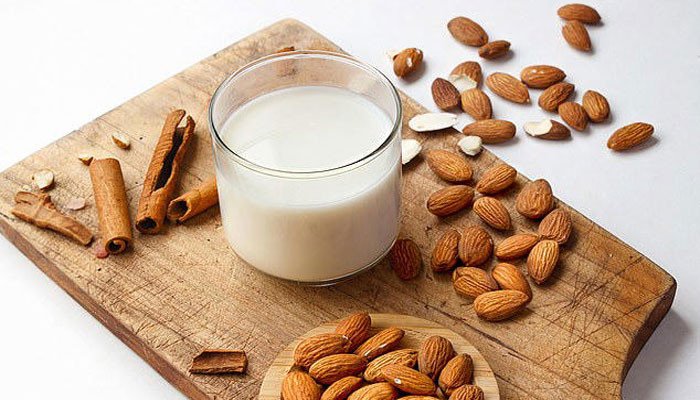
Almonds were once considered a junk food, but now they have earned their place as a superfood. While it is also possible that they can be used in the fight against dementia.
Perfect for topping yogurt or eating with your morning porridge, almonds have now risen from their humble status to a special place. Looking at its health benefits, it is useful for everything from dementia to improving gut health.
According to experts, almonds can be eaten in different forms and almost every form has the same health benefits. Although almonds have gained new popularity as a superfood in 2026, they are nothing new.
Archaeological evidence suggests that almonds were being cultivated in the Middle East and Central Asia as early as 3000 BC. There they were prized for their ability to be preserved for long periods of time and to provide instant energy. As if it were an ancient energy snack.
Although we all think of almonds as nuts, technically almonds are seeds that are obtained from the fruit of the almond tree. After removing the outer husk and hard shell, the edible seed inside can be eaten intact and roasted while it can be ground into butter or made into almond milk and flour.
Almonds first became widely popular in Europe through ancient trade routes, while Spanish missionaries brought almond trees to California in the 18th century. Later, this step led to the American state of California being called the almond capital of the world.
Almonds have long been considered a dieting dud because of their high calories, but nutritionists say that perception is misleading. Research has shown that when almonds are eaten raw, about 30 percent of their calories are not only absorbed by the body, but these calories serve as food for beneficial bacteria in the gut.
More importantly, almonds are rich in omega-6 fats, monounsaturated fats, fiber, vitamin E, and polyphenols. These nutrients are linked to better blood vessel health, lower risk of heart and blood vessel diseases, and better brain health.
This is where the real power of almonds comes in, as maintaining good blood vessel health is also linked to a reduced risk of dementia.
Nuts like almonds are a wealth of nutrition, according to Sarah Berry, chief scientist at Zoe (ZOE) and associate professor at King’s College London. They are rich in heart-healthy fats, fiber, and bioactive compounds that improve blood vessel function and the gut microbiome. Both of these factors are increasingly being linked to mental health and dementia risk.
They are also rich in polyphenols, which are bioactive substances that affect anti-inflammatory pathways in the body.
They also contain a special amino acid, arginine. Arginine helps make nitric oxide, and nitric oxide plays an important role in keeping blood vessels healthy and wide.
Note: This article is published for the information of the readers. Follow your physician’s advice on health-related matters.