









The American space agency NASA has successfully tested a powerful new thruster, which is likely to be used to send humans to Mars in a relatively short time in the future.
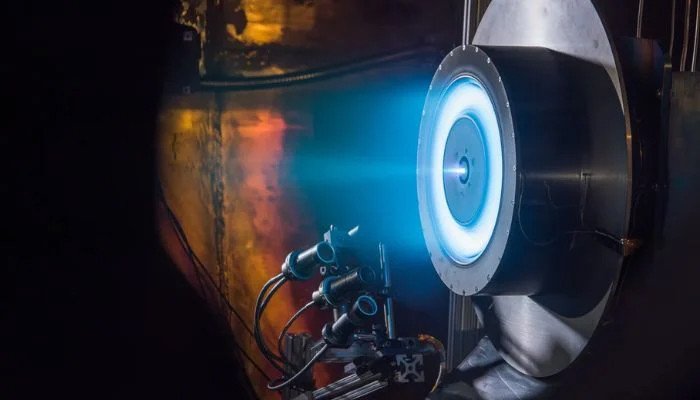
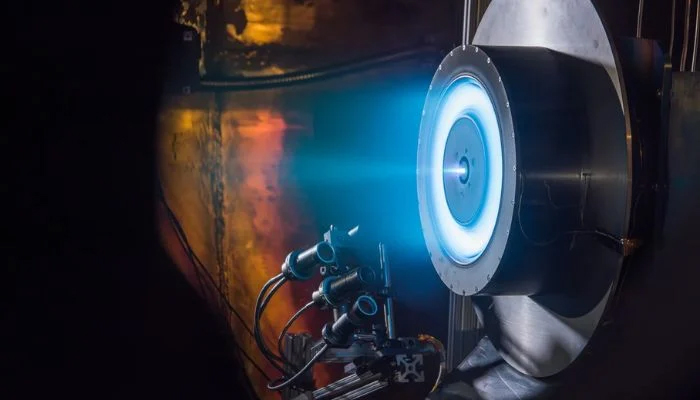
According to NASA, the lithium-powered magneto-plasma dynamic (MPD) thruster was tested at NASA’s Jet Propulsion Laboratory (JPL) in Southern California.
During testing, the electromagnetic engine produced about 120 kilowatts of power, more than 25 times the maximum power of the electric thrusters used in NASA’s Psyche space mission.
This technology differs from conventional chemical rockets, in that instead of burning chemical fuel, the system uses electrical energy to convert lithium into plasma, which is then ejected at high speed using electric currents and magnetic fields.
NASA Administrator Jared Isaacman has described this successful experiment as an important milestone towards sending American astronauts to Mars.
He says that NASA still has its eyes on Mars and this achievement shows real progress towards reaching the Red Planet.
According to NASA, the lithium thruster was fired a total of 5 times and each time the temperature of the thruster’s central electrode exceeded 5,000 degrees Fahrenheit.
The experiment was conducted in an 8-meter-long water-cooled vacuum chamber, specially designed for testing high-powered electric thrusters using metal vapor.
NASA researchers plan to increase the power of next-generation lithium MPD thrusters from 500 kilowatts to one megawatt, but several technical challenges remain to be overcome before the technology can be implemented for a human mission to Mars.
According to NASA estimates, a human Mars mission would require at least 2 megawatts of power to operate multiple thrusters simultaneously, and these thrusters would need to be able to operate continuously for more than 23,000 hours, to prove the long-term durability of their components in extreme temperatures.
Researchers at NASA’s Jet Propulsion Laboratory, Princeton University, and NASA’s Glenn Research Center have been working on this technology for about three years, as part of NASA’s Space Nuclear Propulsion Project.