







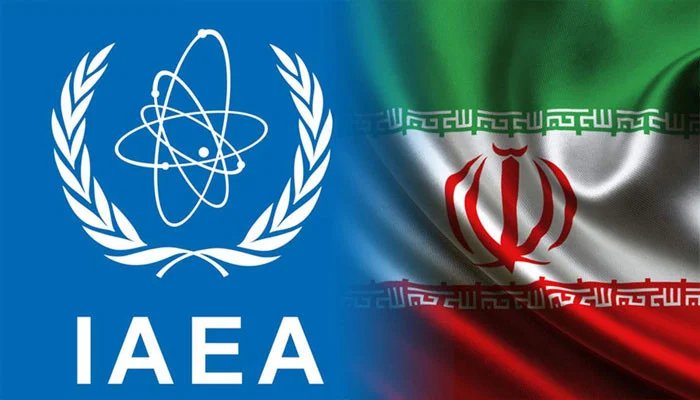
Iran has criticized Austria and the US for denying its nuclear chief Mohammad Eslami a visa to attend the IAEA conference.
Ismail Baqaei, the spokesman of the Iranian Ministry of Foreign Affairs, has accused the United States of putting pressure on Austria in this regard.
According to foreign media reports, Ismail Baqaei has said that Mohammad Eslami has been regularly attending and addressing the IAEA General Conference since being appointed as the head of Iran’s Atomic Energy Organization in 2021.
Iran says that America has made this decision from Austria through political pressure in the IAEA conference.
Addressing the opening session of the conference, Iran’s delegate to the IAEA, Reza Najafi, told the delegations that Mohammad Islami’s visa had been initially approved.
He described the decision as a direct violation of Iran’s rights as a member state and said that the denial of access, hindering our full and effective participation, is against both the spirit and the express provisions of the legal framework on participation in IAEA meetings.
Raza Najafi has said that Vienna’s decision not to issue a visa to Muhammad Islami is a violation of the host country’s responsibility.
According to media reports, the United States has barred Iran’s nuclear chief, Mohammad Eslami, from attending the annual general conference of the International Atomic Energy Agency (IAEA) in Vienna this week.
The move came after the UN Security Council rejected a request for exemption from snapback sanctions.
According to Iranian state media, Mohammad Eslami and his delegation had to cancel their visit to attend the 5-day conference after their visas were revoked by Austria.
According to media reports, the head of Iran’s Atomic Energy Organization falls under the UN Security Council’s travel ban, imposed under the pre-2015 multilateral snapback mechanism, which was reimposed by European parties last year.
The embargo requires member states not to allow entry into their borders or transit through their territory to designated Iranian officials linked to Iran’s nuclear and ballistic missile programs.
Both Iran and Russia have described the incident as a coordinated effort to obstruct the obtaining of international travel visas for Iranian officials.